
Basketball Was Born on the Blacktop. Now the Blacktop Is Being Priced Out.
In 1970, sports journalist Pete Axthelm made a declaration that has echoed through decades of American culture: "Basketball belongs to the cities." He was writing about the New York Knicks, the energy of New York's streets, and the asphalt playgrounds that had fused the sport with urban identity in a way nothing else could. More than 50 years later, as the New York Knicks face off against the San Antonio Spurs in the 2025 NBA Finals, that phrase still resonates — but with a complicated and bittersweet undertone.
Because while basketball may still belong to the cities, a growing number of city kids can no longer afford to belong to those cities themselves.
Two Cities, Two Urban Identities — One National Story
Part of what has made the 2025 NBA Finals so compelling isn't just the basketball. It's the cultural collision happening on the court. The New York Knicks represent a vertical, densely packed city where space has always been scarce and every inch of concrete has been fought for, celebrated, and mythologized. The streetball traditions of Rucker Park and the West 4th Street courts didn't just produce players — they produced a philosophy of play that influenced the entire sport.
The San Antonio Spurs, on the other hand, represent something entirely different: a sprawling, horizontal city that has long made the Spurs its singular major sports identity. San Antonio doesn't compete for cultural cachet the way New York does. It simply claims the Spurs as its own, deeply and without apology. As the only major professional sports franchise in the city, the Spurs aren't just a team — they are a civic institution.
These two identities feel like a microcosm of a larger American migration story, one that is reshaping cities, suburbs, and the demographic future of the country itself.
The Housing Crisis Is Quietly Changing Who Gets to Be a City Kid
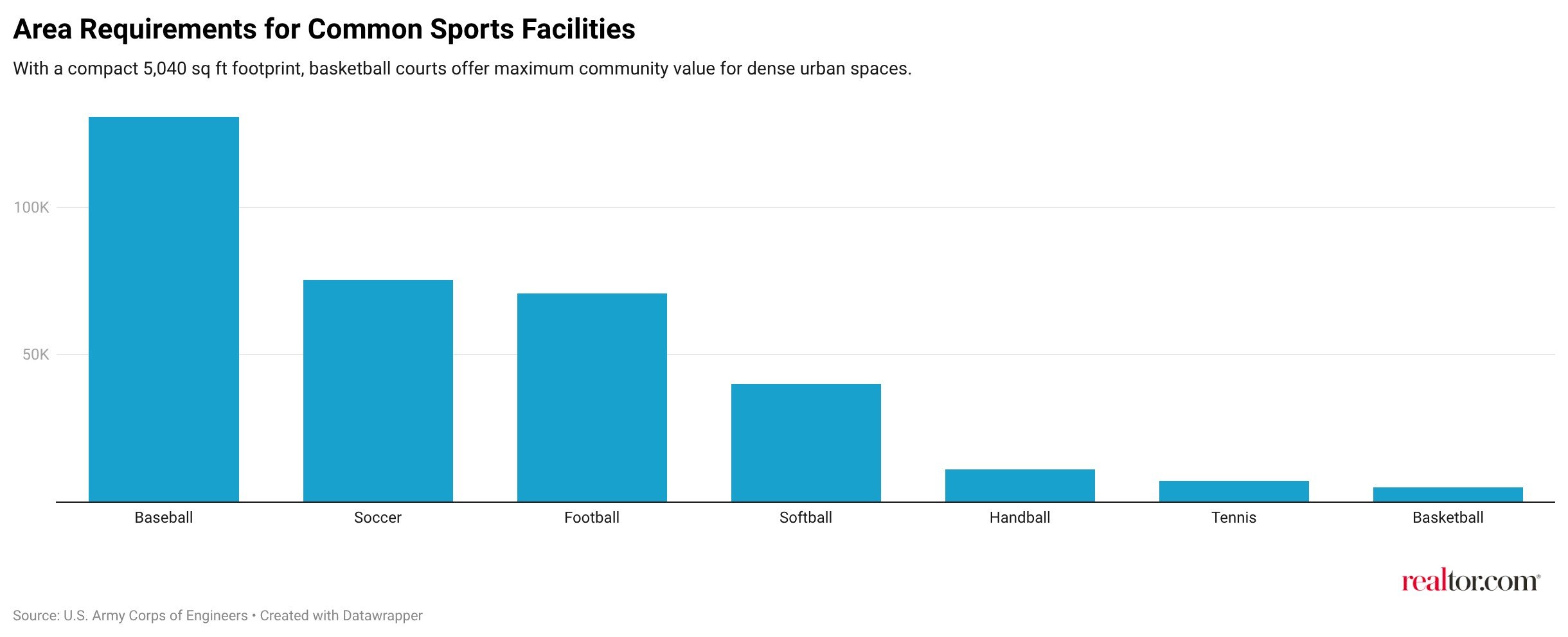
Since 2020, New York City has lost more than 150,000 children — a drop of roughly 9%. Families are leaving, and they aren't being replaced at the same rate. The reasons are well-documented: skyrocketing rents, limited inventory, and home prices that have climbed far beyond the reach of working- and middle-class families. The same scarcity of urban space that once made basketball a necessity — because a court only needs a few square feet of pavement — is now the very force pricing out the communities that nurtured the game.
This isn't a New York problem alone. Across high-cost coastal cities and even some Sun Belt metros, families with children are making the painful calculation that staying simply isn't viable. The result is a slow hollowing out of the urban core — not of wealth or development, but of the generational diversity and working-class culture that gave cities their texture, their creativity, and yes, their basketball.
San Antonio's Different Equation
San Antonio tells a different housing story, at least for now. The city has long been one of the more affordable large metros in the United States, with a housing market that, while facing its own pressures, has remained accessible to a broader range of residents than cities like New York, San Francisco, or Los Angeles. That affordability has helped the city retain its working-class character and its deep community ties — the same ties that make the Spurs feel genuinely woven into the fabric of everyday life there.
But even San Antonio is not immune to the national trend. As remote workers and domestic migrants from pricier cities continue to seek out affordable alternatives, pressure on Sun Belt housing markets has intensified. The question of whether cities like San Antonio can hold onto their character — and their affordability — is one that urban planners, housing advocates, and yes, basketball fans, are watching closely.
What Happens to the Game When the Players Can't Afford the City?
There is a deeper cultural question lurking beneath the housing data. Basketball's identity has always been rooted in urban scarcity — the creativity born from limited space, the community forged through shared courts, and the aspiration that pulses through neighborhoods where the sport offers one of the few visible paths to a different life. When the children of those neighborhoods are priced out and dispersed to suburbs or smaller cities, something intangible but essential shifts.
This isn't nostalgia talking. It's a structural concern. The pipeline of talent, style, and cultural energy that cities have historically fed into the sport depends on those cities remaining accessible to the communities that created that culture in the first place.
The Bigger Picture Behind the Finals
As fans watch the Knicks and Spurs battle in the 2025 NBA Finals, they are watching more than a basketball series. They are watching two cities navigate what it means to be a city in modern America — one fighting to hold onto its iconic density and cultural legacy, the other quietly exemplifying what urban life can still look like when housing remains within reach for everyday residents.
Pete Axthelm's words still ring true. Basketball belongs to the cities. But if we want it to stay that way — if we want the courts to keep producing the players, the style, and the spirit that make the game worth watching — then we have to reckon seriously with who gets to stay in those cities, and who is quietly being pushed out.
The game and the housing market are more connected than any box score will ever show.