
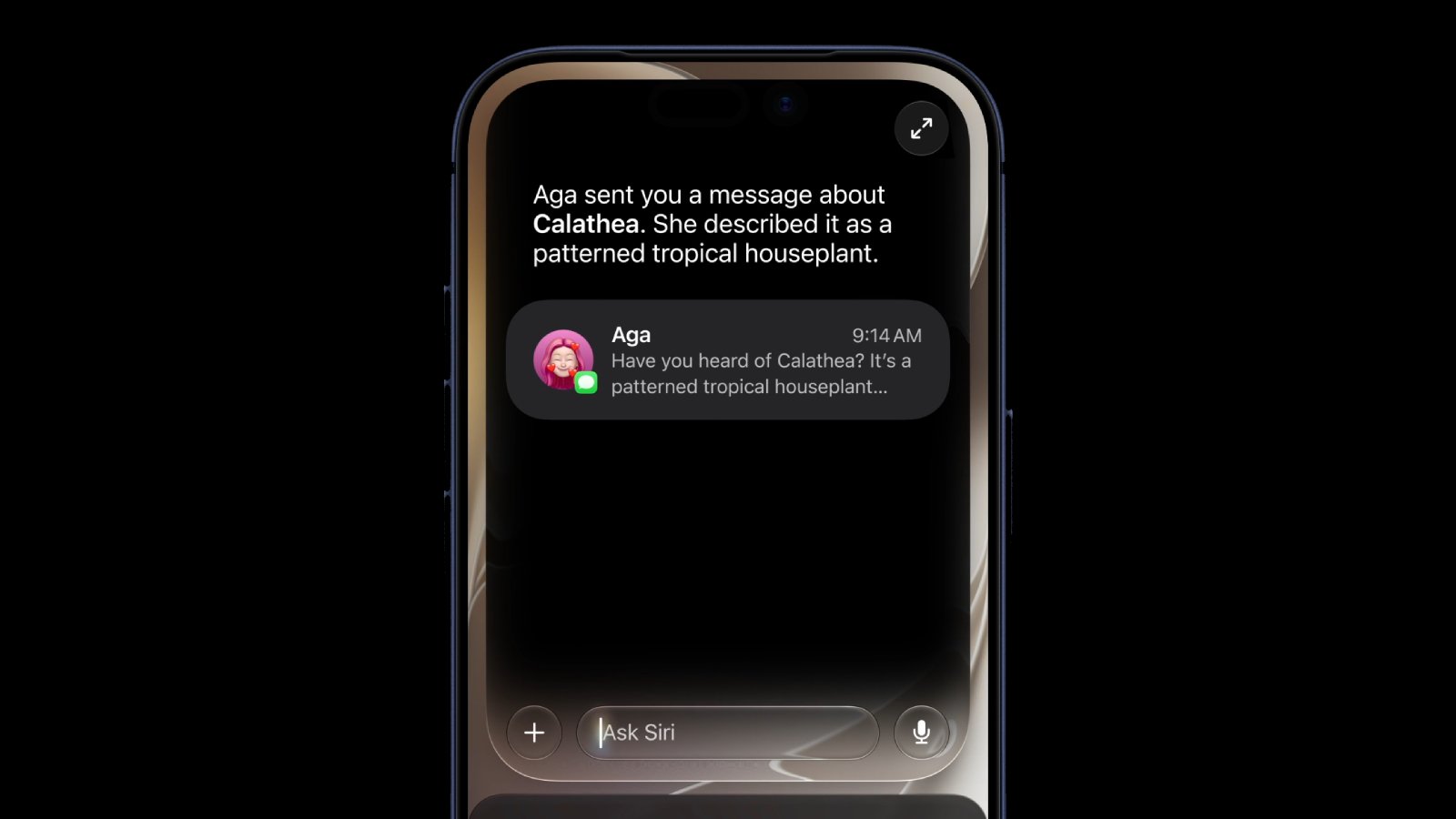
Apple's Siri Gets a Dedicated App in iOS 27 — Here's Why
When Apple unveiled iOS 27 at WWDC 2026, one announcement caught many observers off guard: a brand-new, standalone Siri app. For anyone who had been following Apple's AI strategy closely, this felt like a significant reversal. Just a year earlier, Craig Federighi and Greg Joswiak had gone out of their way to describe Apple's approach as the opposite of a "bolt-on chatbot on the side." So what changed? Federighi has now explained the reasoning directly, and the answer reveals a lot about how Apple thinks about AI integration, user behavior, and product design.
What Apple Said Before: No Standalone Chatbot
Following WWDC 2025, Apple's two most prominent software and marketing executives made the media rounds to draw a clear line between their approach to AI and what competitors were doing. Federighi and senior vice president of worldwide marketing Greg Joswiak described Apple Intelligence as a strategy rooted in weaving Siri seamlessly into a user's existing workflow. The vision was of an assistant that lived inside your apps, your documents, and your daily routines — not something you had to navigate to separately, like opening a chat window and typing questions into the void.
The message was pointed and deliberate: Apple was not building a chatbot. It was building an intelligent layer across its entire operating system. That framing was clearly designed to differentiate Apple Intelligence from products like ChatGPT, Google Gemini, and Microsoft Copilot, all of which operate primarily through dedicated chat interfaces. Apple wanted users to think of Siri less like a chat app and more like an invisible layer of intelligence embedded in everything they already do.
So Why Does iOS 27 Include a Siri App?
At first glance, launching a dedicated Siri app appears to contradict everything Apple said in 2025. But Federighi addressed the apparent about-face head-on during a post-keynote media discussion held at Apple Park following the WWDC 2026 keynote. His explanation reframes the decision not as a change in philosophy, but as a natural extension of the existing one.
According to Federighi, the core issue came down to a practical and persistent user need: the ability to return to and continue past Siri conversations. As Siri's conversational capabilities have grown more sophisticated through Apple Intelligence, users increasingly want to pick up where they left off — to review what Siri helped them with yesterday, or to continue a multi-step task they started earlier in the week. That kind of continuity requires a persistent, organized space to manage conversation history.
Apple determined that the most natural and intuitive place to offer that experience on its platform was a home screen app. On iOS, that is simply how users navigate to persistent experiences. An app is not a workaround or an afterthought — it is the native affordance the platform provides for exactly this kind of interaction. Forcing conversation history into some hidden system menu or burying it inside Settings would have been far more disruptive to the user experience than creating a dedicated app.
Reframing the Siri App: Extension, Not Contradiction
Federighi was careful to draw a distinction between what Apple has built and what it previously criticized. The Siri app, in Apple's framing, is not a chatbot in the sense of an isolated, disconnected product that users go to for casual conversation. Instead, it is a centralized hub for managing an AI assistant that remains deeply integrated with the rest of the operating system, users' files, apps, and personal context.
In his own words, Federighi described Siri as "an integral, conversational tool" rather than a separate place users go to "chit-chat." The app gives users a place to revisit what their AI assistant has done for them — not to replace the system-wide integration Apple has spent years building, but to complement it with a layer of history and continuity that users have been asking for.
Think of it this way: just because your email client has a dedicated app does not mean email is disconnected from your phone. It is still integrated with notifications, contacts, and calendar. The app is simply where you go to manage the experience in depth. Apple is applying the same logic to Siri.
What This Means for Apple Intelligence Going Forward
The launch of the Siri app in iOS 27 signals a maturation in Apple's AI strategy. When Apple Intelligence launched, the emphasis was on demonstrating that AI could live inside the tools people already use rather than demanding they adopt new ones. That foundational work appears to have succeeded well enough that Apple is now comfortable adding a dedicated layer on top of it — one that gives power users a way to manage, revisit, and build on their AI interactions over time.
This move also puts Apple in a more competitive position relative to other AI assistants that have long offered persistent chat histories. Users of ChatGPT, Gemini, and other services are accustomed to scrolling back through weeks of conversations and resuming complex tasks mid-stream. With the Siri app, Apple is closing that gap while still insisting — correctly, based on Federighi's explanation — that its approach remains architecturally different from a simple chat interface.
The Bigger Picture: Design Philosophy Meets User Reality
What makes Federighi's explanation compelling is that it does not abandon Apple's original vision — it honestly acknowledges where user behavior pushed the company to evolve it. Apple set out to build an AI that felt invisible and native. But as that AI became more capable and more integral to daily tasks, users naturally wanted a way to see and manage what it had been doing for them. The Siri app is Apple's answer to that demand, designed to feel like a natural part of the platform rather than a concession to competitive pressure.
- Conversation continuity: Users can now return to and continue past Siri interactions, something that was not possible before iOS 27.
- Centralized management: The app gives users a single, organized space to review everything Siri has helped with across their device.
- System integration intact: The standalone app does not replace Siri's deep integration with iOS apps, documents, and workflows — it sits alongside it.
- Native platform affordance: Apple chose an app because that is simply how iOS surfaces persistent, manageable experiences to users.
Whether you see this as a pivot or a natural evolution likely depends on how literally you took Apple's 2025 messaging. What is clear from Federighi's comments is that Apple sees the Siri app not as a retreat from its AI philosophy, but as a practical, user-driven addition that makes an already integrated assistant easier to live with over the long term. iOS 27 is shaping up to be a significant step forward for Apple Intelligence — and the new Siri app may be one of its most quietly consequential features.