
10 Discontinued Apple Products That Deserve a Modern Comeback
Apple has a long and storied history of creating products that shaped the way we live, work, and interact with technology. But not every groundbreaking device gets to stay in the lineup forever. Over the decades, Apple has quietly discontinued some genuinely beloved products — sometimes replacing them with something better, and sometimes leaving a gap that fans still feel today. With Apple's current chip prowess, AI integration, and design language at an all-time high, there has never been a better moment to ask: which discontinued Apple products deserve a second chance?
Here are 10 forgotten Apple products that could be spectacular if brought back and modernized for today's world.
1. iPod Touch
The iPod Touch was discontinued in 2022, and its absence is still felt — especially among parents looking for a kid-friendly iOS device without a cellular plan. A modern iPod Touch powered by an A16 or A17 chip, running the latest version of iOS, and featuring Apple Intelligence capabilities would serve students, young children, and budget-conscious users brilliantly. Pair it with Wi-Fi 6E and a refreshed design, and it could carve out a real niche in today's market.
2. AirPort Extreme and Time Capsule
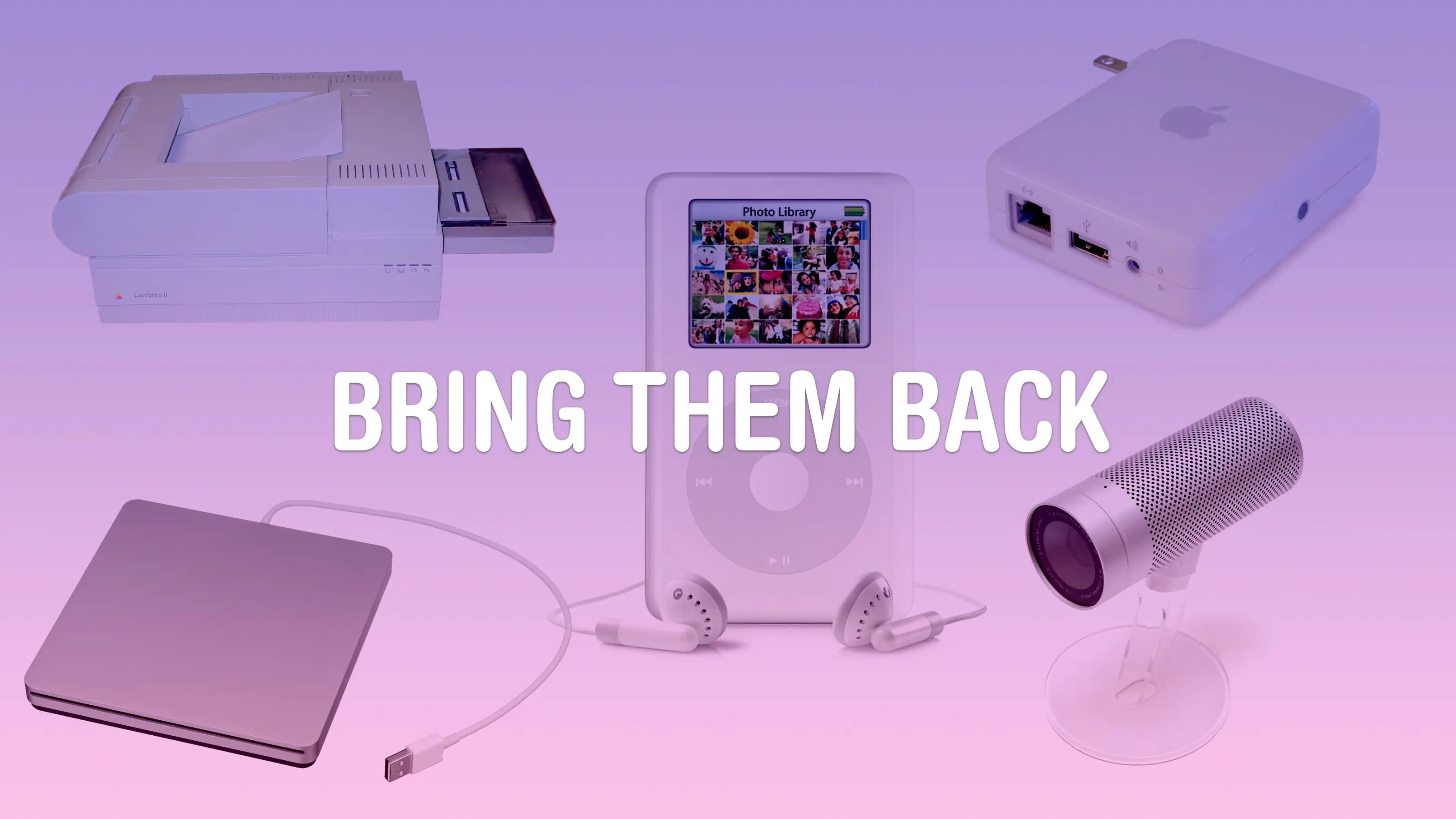
Apple exited the router market in 2018 when it discontinued the AirPort lineup, including the AirPort Extreme and the Time Capsule. This was a mistake that Apple fans have never quite forgiven. A modern AirPort router running Wi-Fi 7, with deep HomeKit integration, built-in iCloud backup functionality replacing Time Capsule, and tight macOS interoperability could be the ultimate Apple home networking solution. No third-party router integrates into the Apple ecosystem this cleanly — and that's a gap Apple itself created.
3. Apple Cinema Display
Before the Pro Display XDR existed, the Apple Cinema Display was the aspirational monitor for creative professionals. A revived Cinema Display at a more accessible price point — say $999 to $1,299 — featuring a Liquid Retina XDR panel, Thunderbolt 5 connectivity, and a built-in Apple silicon hub for USB-C peripherals would appeal to the millions of Mac mini and MacBook users who want a premium monitor without the $1,599 entry price of the Studio Display.
4. The 12-Inch MacBook
The ultra-slim 12-inch MacBook was ahead of its time. It launched with a single USB-C port and was criticized for it, but today that design philosophy is completely mainstream. Revived with an M4 chip, MagSafe charging, two Thunderbolt ports, and that iconic ultra-thin form factor, a new 12-inch MacBook would be the ultimate ultraportable for travelers and minimalists who find even the MacBook Air a little too large.
5. iPod Classic (Modernized)
There is a growing wave of nostalgia for dedicated music players, and Apple is perfectly positioned to ride it. A modernized iPod Classic with a redesigned click wheel (perhaps haptic-based), Apple Music integration, offline playback of lossless audio, and up to 512GB of storage would be a hit among audiophiles and music lovers who want their tunes separate from their smartphone. Think of it as Apple's answer to the high-res audio player market currently dominated by Sony and Astell&Kern.
6. Apple HiFi Speaker
The original Apple HiFi launched in 2006 and was discontinued just a year later. But with HomePod now in the lineup, a larger, more powerful premium speaker — an Apple HiFi successor with Spatial Audio, multi-room support via AirPlay, and Apple Intelligence voice integration — could challenge Sonos and Bose at the high end of the home audio market. Apple already has the ecosystem; it just needs the hardware to fill the living room.
7. Xserve
Apple's Xserve rack-mounted server was discontinued in 2011, pushing enterprise and research institutions toward third-party solutions. With Apple silicon now delivering world-class performance per watt, a modern Xserve built around the M4 Ultra or a hypothetical M4 Extreme chip would be a compelling option for data centers, universities, and creative studios running heavy compute workloads natively on macOS. It would also strengthen Apple's push into enterprise markets.
8. Apple TV with a Camera
The Apple TV has long been rumored to gain a built-in camera for FaceTime calls on the big screen. While not exactly a discontinued product, the smart home hub variant of Apple TV was never fully realized. A next-generation Apple TV with an integrated 4K wide-angle camera, running a dedicated home hub mode with Apple Intelligence, would transform every living room into a smart home command center and make FaceTime on the TV a genuine selling point.
9. MobileMe / iTools (Reinvented)
MobileMe was a troubled service, but the concept — a unified, premium cloud suite for Apple users — was visionary. A modern relaunch with AI-powered productivity tools, expanded iCloud storage tiers, collaborative documents powered by Apple Intelligence, and tighter cross-device integration could position Apple as a genuine alternative to Google Workspace and Microsoft 365 for personal and small business users.
10. Apple Bandai Pippin (Reimagined Gaming Console)
This one is a long shot, but the gaming market has never been more primed for an Apple entry. The original Pippin was a commercial failure in 1996, but an Apple gaming console built on Apple silicon, running a curated App Store library, and integrating with Apple Arcade could be a serious contender. With the iPhone already the world's most popular gaming platform, Apple has the software ecosystem — it just needs the living room hardware to match.
Why Apple Should Look Back to Move Forward
Apple's greatest product decisions have often come from knowing when to revisit an old idea with new technology. The iMac was a reimagining of the all-in-one. The iPhone was a reinvention of the phone. The Apple Watch brought personal computing to the wrist. Each of these built on lessons from the past.
- Nostalgia drives consumer interest and press attention
- Many discontinued products addressed genuine use cases that still exist
- Apple silicon makes nearly every old hardware concept viable again
- Ecosystem lock-in strengthens when Apple owns more device categories
- Gaps in Apple's lineup are being filled by third-party competitors
The products on this list aren't just nostalgic daydreams. Each one represents a real market opportunity that Apple has either walked away from or never fully realized. With the most powerful chips in consumer electronics, a thriving services business, and a loyal customer base hungry for new hardware, Apple has every reason to look back at what it left behind — and ask whether the time has finally come to bring it back, better than ever.
Whether it's a revived AirPort router for the smart home era, a sleek new 12-inch MacBook for minimalists, or a modernized iPod for audiophiles, the ideas are there. Now it's up to Apple to act on them.