
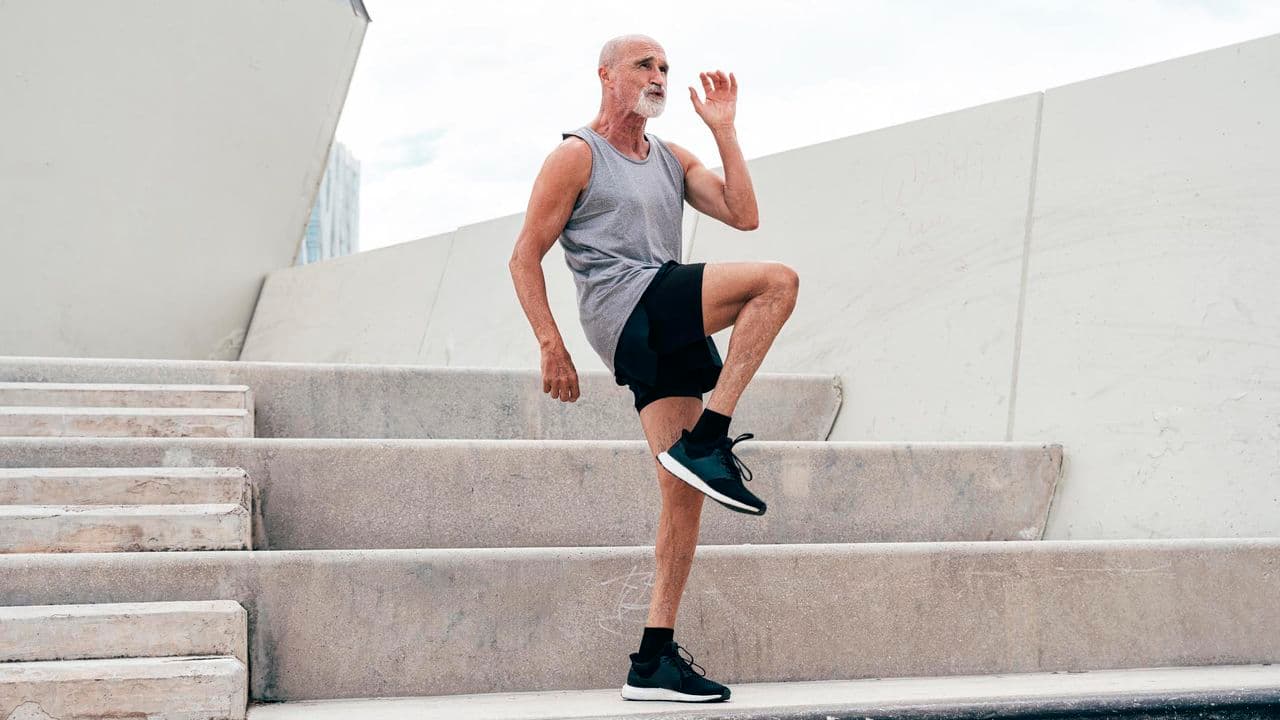
Why Mobility Matters More Than Cardio After 50
If you're over 50 and trying to stay active, chances are someone has told you to "just go for a walk." And while walking is genuinely good for your cardiovascular health, it may not be doing as much for your stability and functional movement as you think. That's the insight at the heart of what many mobility coaches are now teaching their older adult clients — and it's changing how people think about fitness after 50.
Mobility isn't just about flexibility. It's about your body's ability to move through a full range of motion with control, strength, and coordination. As we age, it's the loss of mobility — not just cardiovascular fitness — that leads to falls, joint pain, stiffness, and a reduced quality of life. The good news? You don't need to run marathons or spend hours in a gym to address it. In fact, just three targeted, low-impact moves done consistently can build more functional stability than a 30-minute daily walk.
What Walking Alone Can't Fix
Walking is a linear movement. It trains your body to move forward in a straight line, which is wonderful — but everyday life requires much more than that. You need to rotate, bend, balance on one leg, reach overhead, and transition smoothly between sitting and standing. These are the movement patterns that decline most dramatically after 50, and they're also the ones most responsible for injuries and loss of independence.
A mobility-focused approach specifically targets these gaps. Rather than simply moving your body through space at a steady pace, these exercises challenge your joints, your neuromuscular system, and your sense of balance in ways that walking simply doesn't replicate. The result is a body that doesn't just have endurance — it has control.
The 3 Low-Impact Moves That Build Real Stability
Here are three foundational exercises that mobility coaches consistently recommend for adults over 50 who want to move better, feel more stable, and protect themselves from injury over the long term.
1. The 90/90 Hip Switch
The hips are the center of your body's movement universe, and for most people over 50, they are chronically stiff and underused. The 90/90 hip switch directly addresses internal and external hip rotation — two ranges of motion that deteriorate significantly with age and that walking barely touches.
To perform this move, sit on the floor with both knees bent at 90-degree angles, one leg in front of you and one to the side. From there, slowly rotate your hips and switch the position of your legs so the back leg comes forward. The goal is to do this with control, keeping your spine upright, without using your hands for support if possible.
This single exercise improves hip mobility, challenges your core stability, and begins to restore the full rotational range that your hips need to support pain-free movement. Even five minutes of 90/90 switches a day can create noticeable improvements in how your hips feel during walking, climbing stairs, and getting up from low surfaces.
2. The Controlled Single-Leg Stand With Hip Circle
Balance declines significantly with age, and poor balance is one of the leading contributors to falls in adults over 65. Yet most people don't train their balance until after they've had a fall. The controlled single-leg stand with hip circle addresses balance, ankle stability, and hip mobility simultaneously — making it one of the most efficient exercises you can do.
Stand near a wall or sturdy chair for support if needed. Lift one foot slightly off the ground and balance on the standing leg. Once you feel stable, slowly draw a large circle in the air with the raised knee, moving it forward, out to the side, behind you, and back around. Repeat five to eight times in each direction, then switch legs.
This move forces your standing foot, ankle, and knee to engage deeply while your hip goes through a full range of motion. Over time, it builds the kind of proprioceptive awareness — your body's sense of where it is in space — that is essential for preventing falls and moving confidently on uneven ground.
3. The Deep Squat Hold With Supported Thoracic Rotation
The deep squat is a resting position used naturally in many cultures around the world, and the ability to get into and hold one is a reliable indicator of lower body mobility, ankle flexibility, and hip health. Most Westerners over 50 have lost the capacity to do it comfortably, but it can be restored with consistent, gentle practice.
Hold onto a door frame, TRX strap, or sturdy furniture and lower yourself into the deepest squat you can manage while keeping your heels on the floor. Once in the position, release one hand and rotate your torso, reaching your arm toward the ceiling. This addition of thoracic (mid-spine) rotation turns the squat into a full-body mobility exercise that targets the ankles, knees, hips, and spine together.
Holding this position for 30 to 60 seconds daily — even with support — will gradually increase your range of motion and remind your nervous system that these movement patterns are safe and accessible.
How to Add These Moves to Your Routine
The beauty of these three exercises is their simplicity and accessibility. You don't need equipment, a gym membership, or a large block of time. Ten to fifteen minutes, three to five times per week is enough to generate meaningful results. Many people find that doing them first thing in the morning helps reduce stiffness and sets a positive tone for movement throughout the day.
You can still walk — and you should. But think of these mobility exercises as the foundation that makes your walk, and every other movement in your life, safer and more effective. When your hips rotate freely, your balance is sharp, and your spine can move in multiple directions, you're not just exercising. You're investing in the kind of physical independence that allows you to live life on your own terms well into your later decades.
The Bigger Picture: Mobility as a Long-Term Strategy
One of the most empowering shifts in how fitness professionals approach aging bodies is the move away from "no pain, no gain" toward sustainable, intelligent movement. People over 50 don't need to work harder — they need to work smarter. And smart movement means addressing the specific physical changes that come with aging: reduced joint space, slower neuromuscular response, decreased tissue elasticity, and diminished proprioception.
These three low-impact moves were chosen precisely because they target those age-related changes directly. They are not beginner exercises in the sense of being easy — they are foundational in the sense of being essential. If you can do them consistently, you're building a body that moves with confidence, recovers more quickly, and resists injury in a way that no amount of walking alone can guarantee.
So the next time someone tells you to just take a walk, smile — and then get on the floor and do your 90/90 hip switches first.