
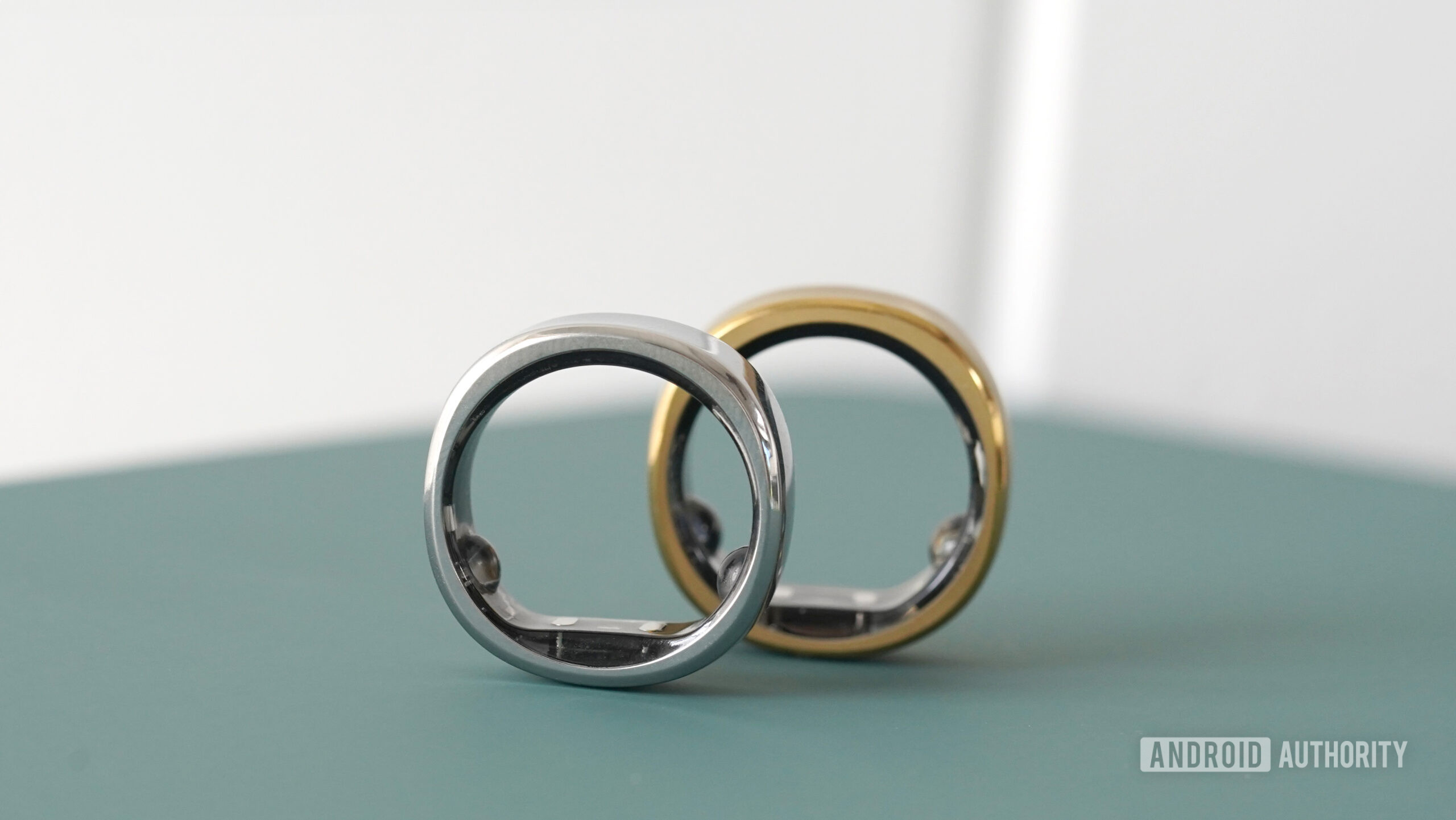
Apple May Be Entering the Smart Ring Market — And It Could Change Everything
The wearables market has quietly undergone a revolution over the past few years. While smartwatches still dominate headlines, a new category of health tracking devices has been steadily winning over users who want something more discreet, comfortable, and battery-efficient. Smart rings — led by names like the Oura Ring and Samsung's Galaxy Ring — have proven that you don't need a glowing display on your wrist to get meaningful health data. Now, a fresh leak suggests that Apple might be ready to throw its hat into this ring (pun very much intended).
The rumored device, being referred to by insiders as the "iRing," is still in the very early stages of speculation. Details are almost nonexistent at this point, but even the possibility of Apple entering this space is enough to make the entire smart ring industry sit up and pay attention. Here's everything we know so far — and what it could mean for the future of wearable health technology.
What Is the Apple iRing?
Based on a recent leak shared on X (formerly Twitter) by the account Kosutami_Ito, Apple appears to be internally exploring a smart ring product. The device has been tentatively dubbed the "iRing," though that name is purely unofficial at this stage. Beyond the existence of the leak itself, there is virtually no confirmed information about what features the iRing might include, when it could launch, or even whether it will ever make it to market at all.
Apple has a long history of carefully researching product categories before either committing fully or quietly walking away. The company famously explored numerous concepts before launching the Apple Watch in 2015, and it took years of internal development before the Vision Pro spatial computing headset became a reality. An iRing could follow a similarly long and cautious development arc — or it could never materialize at all.
For now, the iRing is a rumor. But it's a rumor worth taking seriously, especially given the trajectory of the smart ring market.
The Smart Ring Market Is Booming — and Apple Has Noticed
Smart rings have gone from niche curiosity to legitimate health tracking tools in a relatively short period of time. The Oura Ring, arguably the category's most recognizable name, has built a loyal following among athletes, biohackers, and sleep-focused consumers. It tracks heart rate, body temperature, blood oxygen levels, sleep stages, and readiness scores — all from a sleek, ring-shaped device that can last up to seven days on a single charge.
Samsung entered the space with its Galaxy Ring, bringing the backing of a major tech giant and deep integration with the Android and Galaxy ecosystem. The Galaxy Ring offers continuous health monitoring, menstrual cycle tracking, and syncs seamlessly with Samsung Health, giving Samsung users a compelling reason to add another wearable to their lineup.
Together, these devices have demonstrated that consumers are hungry for screenless, always-on health tracking. The smart ring market is projected to grow significantly over the next several years, and Apple — a company that has made health tracking a cornerstone of its Apple Watch strategy — would be a natural fit for the category.
What Could the Apple iRing Offer?
While there are no confirmed features for the iRing, it's reasonable to speculate based on Apple's existing health tracking capabilities and ecosystem strengths. If Apple does build a smart ring, here are some features users would likely expect:
- Sleep tracking: Apple has steadily improved sleep tracking on the Apple Watch, and a ring form factor is naturally better suited to overnight wear due to its comfort and smaller size.
- Heart rate and heart rate variability monitoring: These are standard features across all major smart rings and a natural fit for Apple's health-focused hardware strategy.
- Blood oxygen (SpO2) monitoring: Already available on newer Apple Watch models, blood oxygen tracking would be an expected inclusion.
- Body temperature sensing: Apple Watch Series 8 and later models include wrist temperature sensors, and this capability would translate well to a ring form factor.
- Deep Apple Health integration: Perhaps the biggest advantage Apple would have over rivals like Oura and Samsung is its ability to tie iRing data directly into the Apple Health ecosystem, iPhone, iPad, and Mac.
Apple could also differentiate the iRing through its custom silicon capabilities. The company's chip design expertise could enable richer on-device processing, longer battery life, and more sophisticated health algorithms than current competitors offer.
How Would the iRing Stack Up Against Oura Ring and Galaxy Ring?
The iRing would enter a market with two very established competitors. The Oura Ring 4 is widely regarded as the gold standard in smart ring design and accuracy, while the Galaxy Ring gives Samsung users a tightly integrated health companion. Both devices have strong brand identities and dedicated user bases.
Apple's key advantage, however, would be its unmatched ecosystem lock-in. For the hundreds of millions of iPhone users already invested in the Apple Health app, an iRing that natively syncs with their existing data would be an immediately compelling proposition — no third-party app required, no ecosystem friction.
That said, Apple typically prices its hardware at a premium. The Oura Ring 4 retails starting around $349, and the Galaxy Ring sits in a similar range. An Apple iRing could very likely land at $399 or higher, particularly at launch.
Should You Wait for the Apple iRing?
If you're an iPhone user currently considering a smart ring purchase, the iRing rumor is worth keeping in mind — but it shouldn't necessarily stop you from buying today. The leak is extremely early-stage, there's no timeline, and Apple has not confirmed anything. The iRing may be years away, or it may never launch at all.
If you need a smart ring now, both the Oura Ring and Galaxy Ring are excellent choices depending on your ecosystem. Android users will find the Galaxy Ring integrates beautifully with Samsung devices, while iPhone users may actually find the Oura Ring's app experience to be quite solid on iOS.
But if Apple does eventually deliver an iRing, the smart ring market will never be the same. Apple has a track record of entering established product categories and redefining consumer expectations entirely — just look at what the iPhone did to smartphones, or what the AirPods did to wireless earbuds. A polished, ecosystem-integrated Apple smart ring could do the same for health-tracking wearables.
The Bottom Line
The Apple iRing is, for now, little more than a whisper — a single leak with almost no supporting detail. But whispers have a way of becoming reality when Apple is involved. The smart ring market is growing fast, Apple clearly cares deeply about health tracking, and the iRing would slot naturally into the company's expanding wearables portfolio alongside the Apple Watch and AirPods.
Whether it launches in 2026, 2027, or beyond — or whether it quietly disappears from Apple's internal roadmap — one thing is already clear: the mere possibility of an Apple smart ring is enough to shake up a market that was already heating up. Keep your eyes peeled, and stay tuned for updates as more information emerges.