
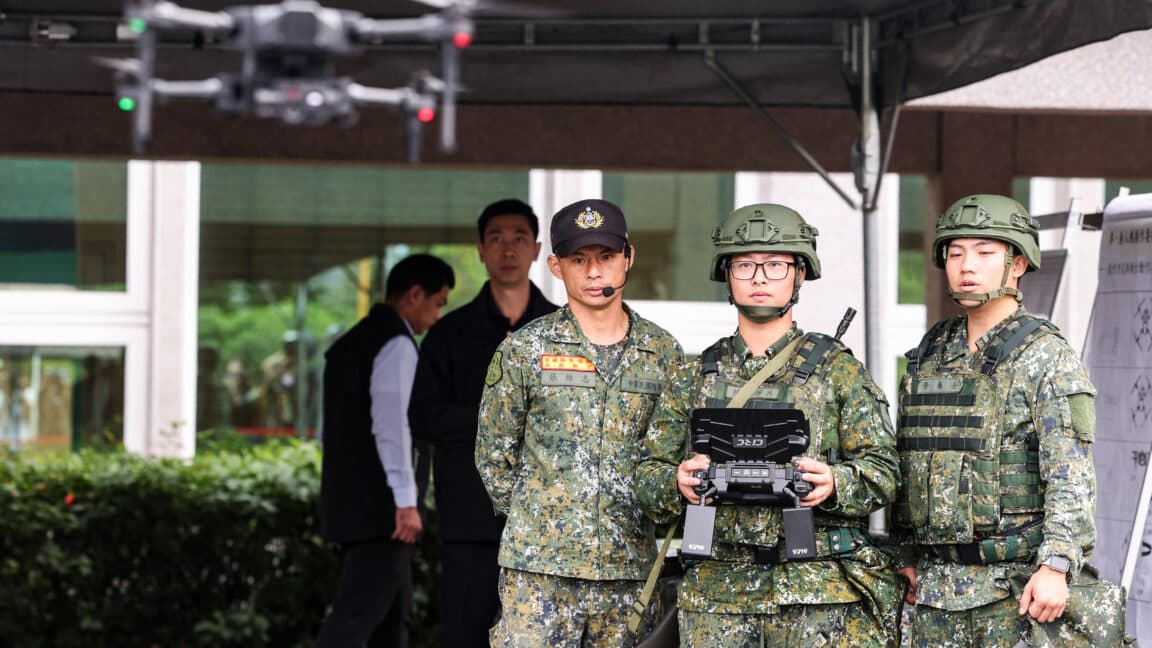
Taiwan's Drone Strategy: Preparing for the Threat Across the Strait
In an era defined by rapidly evolving warfare, unmanned aerial vehicles have become one of the most critical tools in any nation's defense arsenal. For Taiwan, a self-governing democracy that has long lived under the shadow of potential military aggression from mainland China, drones are no longer just a tactical asset — they may be an existential necessity. As Beijing continues to assert its claim over the island, Taipei is accelerating drone production, expanding civilian training programs, and forging international partnerships that could reshape the military balance in the Indo-Pacific region.
A $6.6 Billion Commitment to Drone Defense
Taiwan's Ministry of National Defense has proposed an ambitious special budget that underscores just how seriously the island is taking the drone revolution in modern warfare. Presented on June 18, the proposal calls for spending $6.6 billion over six years — from 2026 to 2031 — on domestically manufactured drones and uncrewed systems. The scale of the plan is striking.
According to Taiwan's Central News Agency, the budget would fund the procurement of more than 208,000 coastal attack drones, over 1,400 coastal reconnaissance drones, and 1,320 uncrewed surface vessels. This represents an extraordinary leap for a military that currently fields only around 5,000 attack drones combined — both US-made and domestically produced — according to reporting by Resilience Media.
The proposed investment signals a fundamental shift in Taiwan's defense doctrine. Rather than relying purely on conventional weapons systems or hoping for rapid foreign military intervention, Taiwanese defense planners appear to be embracing a strategy of asymmetric warfare — one in which waves of low-cost, hard-to-intercept drones could make any amphibious invasion from China prohibitively costly.
Lessons from Ukraine: Why Drones Matter So Much Now
Taiwan's drone buildup does not exist in a geopolitical vacuum. The war in Ukraine has offered the world a real-time demonstration of how unmanned systems can neutralize far larger and better-equipped forces. Ukrainian forces have used relatively inexpensive commercial and military drones to devastating effect against Russian armor, naval vessels, and logistics infrastructure. Defense analysts across the globe have taken note, and Taiwan is no exception.
The Taiwan Strait presents unique geographic and logistical challenges for an invading force. Any large-scale Chinese military operation would require landing enormous numbers of troops and equipment across open water — a scenario in which swarms of coastal attack drones could prove decisive. A fleet of over 208,000 such drones, capable of targeting vessels before they reach the shore, could represent a formidable deterrent against even the most sophisticated amphibious assault.
Military Exercises and Real-World Drone Deployment
Taiwan is not just planning for drone warfare — it is actively training for it. During military exercises held in early June, Taiwanese soldiers deployed Altius-600 loitering munitions, also known as "kamikaze drones," from towed flatbed launchers. These drones, manufactured by AREA-I, a subsidiary of US defense technology company Anduril Industries, were used to strike offshore targets, demonstrating Taiwan's growing capability to integrate advanced foreign systems into its force structure.
In a separate exercise earlier in the year, Taiwanese Marines used domestically produced drones to strike sea-based targets. These exercises highlight a dual-track approach: leveraging cutting-edge US military technology while simultaneously developing homegrown capabilities that reduce dependence on foreign supply chains — a critical consideration in any prolonged conflict scenario.
Taiwan and the US Military: A Growing Drone Partnership
The relationship between Taiwan and the United States in the drone sector extends well beyond simple arms sales. Taiwanese companies are actively forming international partnerships aimed at supplying drones not only to Taiwan's own military, but also to the US armed forces and other overseas buyers. This represents a significant evolution in the Taiwan-US defense relationship.
For the United States, which is itself working to scale up domestic and allied drone production amid growing strategic competition with China, Taiwan's manufacturing expertise and geographic position make it a valuable partner. For Taiwan, these commercial and military partnerships offer economic benefits, technology transfers, and — perhaps most importantly — deeper integration with the US defense ecosystem, which itself serves as a deterrent to Chinese aggression.
Civilian Drone Training: Building a National Defense Culture
Beyond the military and industrial dimensions of Taiwan's drone strategy, there is a grassroots component that deserves attention. Taiwanese citizens are signing up in growing numbers for drone flight training programs. This mirrors a broader trend seen in countries preparing for the possibility of modern conflict, where civilian skills in operating unmanned systems can translate directly into military utility.
This civilian participation reflects a recognition that in a future conflict, Taiwan's defense cannot rest solely on professional soldiers and expensive weapon platforms. A population trained in drone operations could serve as a significant force multiplier, contributing to surveillance, logistics, and even combat roles in a decentralized, resilient defense network.
The Road Ahead: Challenges and Strategic Implications
Despite the ambition behind Taiwan's drone buildup, significant challenges remain. Scaling domestic production to deliver over 200,000 attack drones within six years will require substantial investment in manufacturing infrastructure, supply chains, and skilled labor. Questions also persist about the integration of these systems into broader military command and control frameworks, electronic warfare resilience, and the ability to sustain operations under hostile conditions.
Nevertheless, the direction of travel is clear. Taiwan is making a strategic bet that drone warfare will be central to any future conflict in the Taiwan Strait, and it is investing accordingly. With China's military capabilities continuing to grow, Taiwan's accelerating drone program may prove to be one of the most consequential defense decisions of the decade — not just for the island itself, but for the broader balance of power across the Indo-Pacific.
Conclusion
Taiwan's $6.6 billion drone budget proposal, its expanding military exercises, its civilian training programs, and its deepening partnerships with US defense companies all point to a single, urgent conclusion: the island is preparing seriously and systematically for the possibility of conflict with China. In the drone age, deterrence is measured not just in fighter jets and missile batteries, but in the sheer volume and sophistication of unmanned systems a nation can deploy. Taiwan is working hard to ensure that number is high enough to give any would-be aggressor serious pause.