
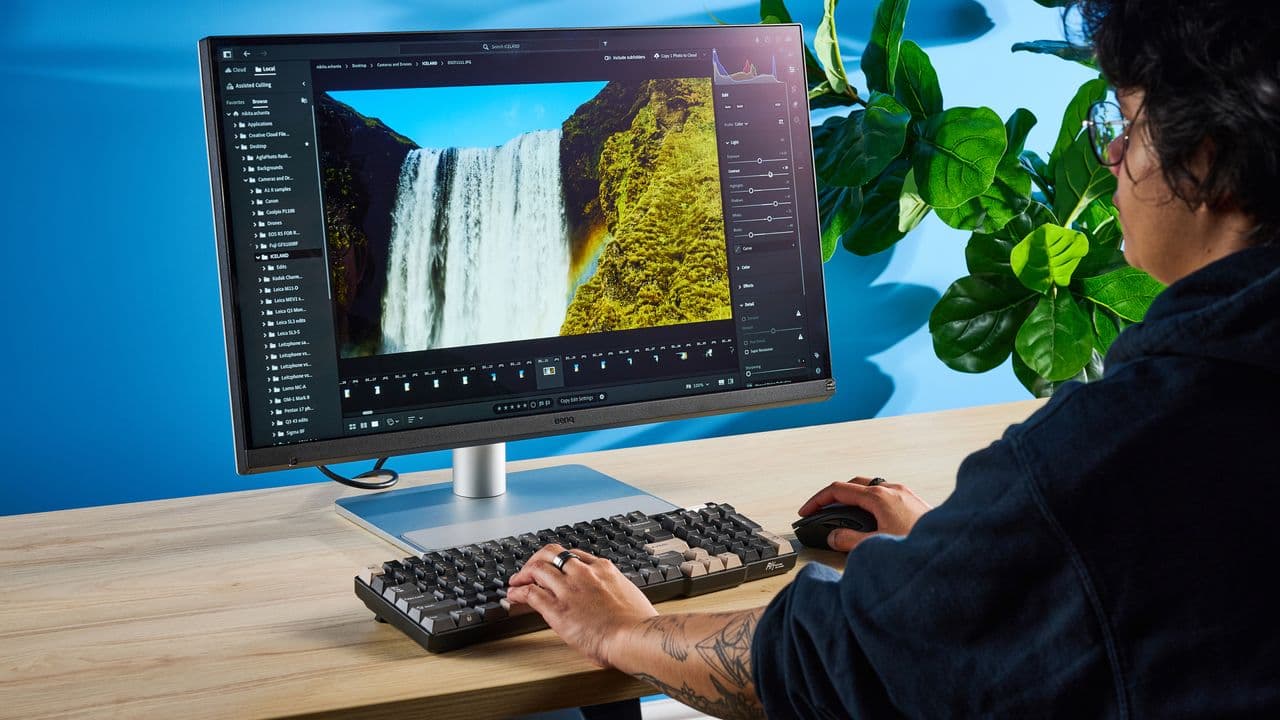
The Best MacBook Monitor You Haven't Heard Of — And It's $600 Cheaper Than Apple's Option
If you've been searching for the perfect external monitor to pair with your MacBook, chances are the Apple Studio Display has come up in your research. With its stunning 5K Retina panel, Center Stage webcam, and seamless macOS integration, it's long been considered the gold standard for Apple users. But at $1,599 — or a jaw-dropping $1,999 with nano-texture glass — it's a serious investment. That's why a new wave of third-party monitors with nano-texture glass is making a compelling case for MacBook users who want premium quality without the premium price tag.
We recently put one such monitor through its paces, and the results were genuinely impressive. Priced at roughly $999 to $1,199, this display undercuts the Apple Studio Display by up to $600 while delivering many of the same features that make Apple's offering so beloved. Here's everything you need to know.
What Is Nano-Texture Glass and Why Does It Matter for MacBook Users?
Before diving into the review, it's worth understanding what nano-texture glass actually is and why Apple charges so much for it. Traditional monitors use either glossy glass, which delivers vibrant colors but produces distracting reflections, or matte coatings that reduce glare but can introduce a hazy, washed-out look.
Nano-texture glass takes a different approach entirely. The glass surface is etched at a nanoscopic level, scattering light in a way that dramatically reduces reflections while preserving color accuracy, contrast, and sharpness. The result is a display that looks stunning in virtually any lighting condition — a major advantage if you work near a window or in a brightly lit office.
For MacBook users who rely on color accuracy for creative work — photo editing, video production, graphic design — this is not a luxury feature. It's a practical necessity. And now, you don't have to pay Apple's premium to get it.
Key Features of This Apple Studio Display Alternative
The monitor we tested checks nearly every box a MacBook user could want. Here's a breakdown of the standout specifications:
- Resolution: 4K or 5K panel options delivering razor-sharp clarity that matches Retina-quality standards on par with what macOS users expect.
- Nano-texture glass: Anti-glare etched glass that rivals Apple's own implementation, dramatically cutting reflections without sacrificing color vibrancy.
- Color accuracy: Coverage of the P3 wide color gamut with factory calibration, making it a serious tool for creative professionals.
- USB-C / Thunderbolt connectivity: Single-cable connection to MacBook for both display signal and power delivery — just like the Studio Display.
- Built-in webcam and speakers: Integrated peripherals that reduce desk clutter and integrate cleanly into macOS's input/output ecosystem.
- Ergonomic stand: Height, tilt, and swivel adjustment options that Apple's Studio Display famously lacks without a costly VESA adapter upgrade.
How Does It Compare to the Apple Studio Display?
Side by side, the differences are smaller than the price gap would suggest. The Apple Studio Display still holds certain advantages — its 12MP Center Stage webcam is outstanding, its speaker system with spatial audio is genuinely excellent, and its deep integration with macOS means features like True Tone and automatic brightness work flawlessly out of the box.
However, the third-party alternative closes the gap in meaningful ways. The nano-texture glass implementation is nearly indistinguishable to the naked eye in real-world use. Color accuracy is excellent right out of the box, and the single USB-C cable workflow feels just as seamless with a MacBook Pro or MacBook Air. For users whose priorities are image quality and anti-glare performance — rather than webcam capability or spatial audio — the savings are hard to argue with.
It's also worth noting that the Apple Studio Display's stand is notoriously limited. Tilt adjustment is its only built-in option. Upgrading to a VESA mount adapter adds another $200 to the already steep price. The competing monitor includes a fully adjustable stand as standard, which is a meaningful ergonomic win for anyone who spends long hours at their desk.
Who Should Buy This Monitor Instead of the Apple Studio Display?
This monitor makes the most sense for a specific type of MacBook user. If you're a photographer, video editor, graphic designer, or content creator who needs accurate color, excellent brightness, and glare-free performance in variable lighting — and you don't need Apple's premium webcam or high-fidelity speaker array — this is a genuinely compelling buy.
Students and professionals working in open-plan offices or home setups near windows will also appreciate the nano-texture glass. Glare is one of the most persistent productivity killers on a display, and this monitor tackles it head-on at a much more accessible price point.
The Verdict: Is the $600 Savings Worth It?
For most MacBook users, yes. The Apple Studio Display remains the definitive choice if you're deep in the Apple ecosystem and want every feature to work perfectly out of the box with zero configuration. It's a beautifully crafted piece of hardware that justifies its price for the right user.
But if you're budget-conscious, or simply prioritize display performance over peripheral integration, this nano-texture glass alternative deserves serious consideration. It delivers the core experience — sharp, color-accurate, glare-free visuals with a clean single-cable setup — for significantly less money.
In a market where Apple's pricing often feels aspirational rather than accessible, it's refreshing to see a monitor that matches so much of what makes the Studio Display great while leaving $600 in your wallet. That's money you could put toward a faster MacBook, better peripherals, or simply your next creative project.
Final Thoughts on Choosing the Best Monitor for Your MacBook
The external monitor market for MacBook users has never been better. As more manufacturers invest in nano-texture glass technology, USB-C power delivery, and wide color gamut panels, the gap between Apple's first-party displays and third-party alternatives continues to narrow. Whether you ultimately choose the Apple Studio Display or opt for a more affordable nano-texture glass competitor, the most important thing is matching the monitor's strengths to your actual workflow. Do your research, prioritize the specs that matter most to you, and remember — the best monitor for your MacBook is the one that makes your work look great without breaking your budget.