
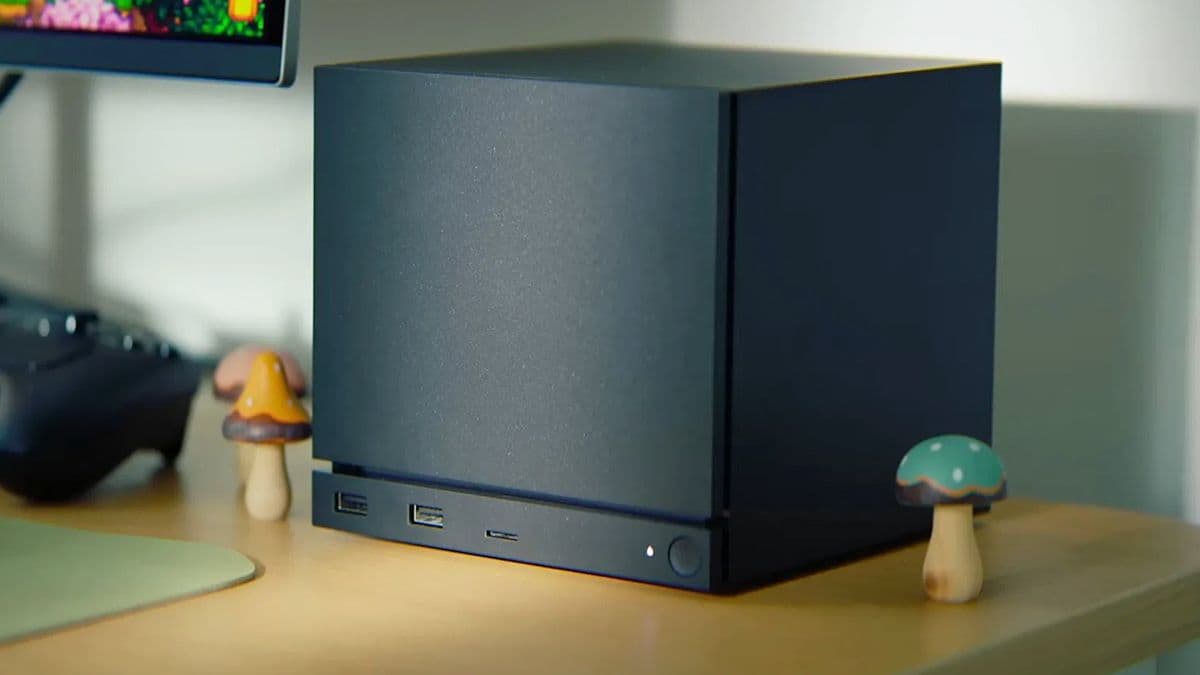
Valve Officially Confirms DIY Steam Machines Are Here — Here's Everything You Need to Know
If you've been watching the gaming PC market with a mix of frustration and curiosity, Valve just dropped some genuinely exciting news. The company has officially confirmed that with the release of SteamOS 3.8, you can now build your very own Steam Machine using whatever PC components you choose. That's right — no need to buy a pre-built unit carrying a stomach-dropping price tag. The DIY route is now fully on the table, and Valve is actively working to make it even better.
The announcement comes at a particularly charged moment. The official Steam Machine's pricing revelation landed with considerable backlash, largely due to its over-$1,000 cost — a consequence of the ongoing RAM shortage that has driven up component prices across the board. Even Valve itself has expressed disappointment over how expensive the living room gaming PC ended up being. Against that backdrop, the confirmation that enthusiasts can roll their own Steam Machine feels like a welcome pressure valve.
What Did Valve Actually Say?
In an interview with The Verge, Valve engineer Pierre-Loup Griffais laid out the situation clearly. "Starting with the SteamOS 3.8 release, you can put together your own Steam Machine using whatever PC parts you want," Griffais said. This is a significant shift in how Valve is positioning SteamOS — moving it from a platform tightly coupled with specific hardware toward something more universally applicable to a wide variety of desktop PC configurations.
Griffais also noted that Valve is actively working to improve SteamOS compatibility with a broader range of desktop hardware. One of the most anticipated areas of improvement is support for Nvidia graphics cards. Currently, SteamOS is best suited for AMD-based systems, but Griffais confirmed that Valve is collaborating closely with Nvidia to bring that support to the platform. The caveat, however, is that Nvidia compatibility might not arrive within this calendar year, so enthusiasts with green-team GPUs may need to exercise some patience.
AMD Systems Have a Head Start — But It's Been Complicated
Technically, running SteamOS on a custom AMD-based system has been possible for some time. However, the process has never been particularly user-friendly or as polished as alternatives in the Linux gaming ecosystem. Distributions like Bazzite, which is purpose-built for gaming on Linux, have often offered a smoother experience for those looking to set up a Steam-centric gaming rig outside of official Valve hardware.
Griffais openly acknowledged this gap and said that improving the out-of-the-box experience is a core priority for the SteamOS team. The goal is to make SteamOS a genuinely compelling option for custom builds — not just technically possible, but actively pleasant to use.
What Kind of Setup Works Best?
Not every PC configuration is going to be a perfect fit for SteamOS right out of the gate. Griffais was careful to clarify where the current sweet spot lies. According to him, SteamOS should offer a "good experience" on console-like PC setups — machines that are dedicated to gaming rather than serving as multi-purpose workstations.
He put it plainly in his interview: "If you have something that is similar to the use case of a Steam Machine, where you have a PC that's gonna be plugged into a TV, and has a single hard drive that you're not going to try and dual boot, you can put SteamOS on there."
This opens up some interesting possibilities. A compact mini PC connected to a television, a handheld console running SteamOS, or a purpose-built small form factor rig could all function as a legitimate Steam Machine. The vision is clear — SteamOS as a dedicated gaming operating system for the living room, not a jack-of-all-trades desktop environment.
The Caveats You Should Know About
As promising as all of this sounds, there are some important limitations to keep in mind before you start ordering components or flashing a USB drive.
- No HDMI-CEC support for non-Steam Machine devices: Devices that aren't official Steam Machines will miss out on HDMI-CEC functionality, which allows your TV and connected devices to communicate and be controlled together. This could be a meaningful drawback for those building a polished, integrated living room setup.
- Potential compatibility issues with the new Steam Controller: Non-certified hardware may not work as seamlessly with Valve's updated Steam Controller, which could affect the couch gaming experience the platform is designed around.
- No dual-boot support yet: The SteamOS installer is not currently designed to support dual-booting. This means you cannot install it alongside Windows or another Linux distribution on the same machine — it's an all-or-nothing proposition for now. Valve has signaled this is something being worked on, but it's not available yet.
What About Non-Steam Machine Alternatives?
For those who aren't ready to go all-in on SteamOS or who need a more versatile setup, there are solid alternatives worth considering. The Linux gaming ecosystem has grown remarkably in recent years, and distributions like Bazzite have built strong reputations specifically for gaming-oriented use cases. These options may offer broader hardware support, more flexible installation options, and features like dual-boot compatibility that SteamOS currently lacks.
It's also worth noting that the RAM shortage making headlines isn't going away overnight. Building a capable gaming PC right now still comes with a higher-than-usual price tag regardless of which software stack you choose. Shoppers should factor this into their planning and budget accordingly.
Why This Matters for the Future of PC Gaming
Valve's decision to open SteamOS to custom-built hardware is more than just a workaround for high pre-built prices — it's a statement about the direction the company wants to take PC gaming. By turning SteamOS into a viable, DIY-friendly operating system, Valve is effectively inviting the maker community and hardware enthusiasts to participate in building the Steam Machine ecosystem from the ground up.
The Steam Deck proved that there's a real appetite for Valve-powered gaming devices running a Linux-based OS. Extending that philosophy to the desktop and living room, even with its current rough edges, represents a genuine and ambitious expansion of what the Steam platform can be.
If Valve delivers on its promise of broader hardware compatibility — especially Nvidia GPU support — and resolves lingering issues like dual-boot installation, SteamOS could become a compelling mainstream alternative for budget-conscious gamers who'd rather build than buy. For now, AMD users with console-like setups have the clearest path forward, and SteamOS 3.8 is the best starting point yet.