
Can Your Smartwatch Detect Sleep Apnea?
Millions of people around the world live with sleep apnea without ever receiving a formal diagnosis. The condition, which causes breathing to repeatedly stop and start during sleep, is notoriously difficult to identify without a clinical sleep study. So when smartwatch manufacturers began advertising sleep-tracking features, a natural question emerged: can your smartwatch actually detect sleep apnea? The short answer is no — but the longer answer is far more interesting and genuinely useful for your health.
What Is Sleep Apnea, and Why Is It Hard to Detect?
Sleep apnea is a serious sleep disorder characterized by repeated interruptions in breathing throughout the night. The most common form, obstructive sleep apnea (OSA), occurs when the throat muscles relax and block the airway. Central sleep apnea, a less common variant, happens when the brain fails to send the correct signals to the muscles that control breathing.
Symptoms include loud snoring, gasping for air during sleep, morning headaches, excessive daytime fatigue, and difficulty concentrating. Because most of these events happen while a person is unconscious, sufferers often have no idea anything is wrong. Traditionally, the only reliable way to diagnose sleep apnea has been through a polysomnography (PSG) study — an overnight test conducted in a sleep clinic where electrodes, sensors, and monitors track everything from brain activity to oxygen levels.
That level of clinical precision is something no consumer smartwatch can replicate. However, the gap between what wearables can and cannot do is narrowing.
What Smartwatches Can Actually Track
Modern smartwatches are packed with sensors — optical heart rate monitors, accelerometers, blood oxygen (SpO2) sensors, and even skin temperature readers. While none of these tools are certified medical diagnostic instruments, they do collect data that can reveal patterns associated with sleep-disordered breathing.
Blood Oxygen Saturation (SpO2)
One of the most relevant metrics for sleep apnea is blood oxygen saturation. When breathing stops during an apnea episode, oxygen levels in the blood drop. Many modern smartwatches — including models from Apple, Garmin, Fitbit, and Samsung — can measure SpO2 during sleep. A healthy person's blood oxygen level stays at or above 95% while sleeping. Repeated dips below that threshold overnight can be a meaningful indicator worth discussing with a doctor.
It is important to note that consumer-grade SpO2 sensors are not as accurate as clinical pulse oximeters, and readings can be affected by movement, skin tone, wrist fit, and ambient light. That said, consistent trends captured over multiple nights can still carry informational value.
Heart Rate Variability (HRV) and Resting Heart Rate
Heart rate variability — the variation in time between heartbeats — is a useful marker of autonomic nervous system health and overall recovery. People with untreated sleep apnea often show reduced HRV and elevated resting heart rates because their bodies are under repeated physiological stress throughout the night. Smartwatches that track HRV over time may reveal anomalies that prompt further investigation.
Sleep Stage Tracking and Restlessness
Many smartwatches attempt to categorize sleep into light, deep, and REM stages using movement data and heart rate patterns. People with sleep apnea often spend less time in restorative deep sleep and REM sleep because their bodies are constantly aroused by breathing disruptions. Consistently fragmented sleep data reported by your wearable could be a signal worth exploring further.
Snoring Detection
Some devices and companion apps — particularly those that pair with your smartphone's microphone — can detect snoring patterns during the night. While snoring alone does not confirm sleep apnea, loud and frequent snoring is one of its most common symptoms. Apps like Google's Pixel sleep features and third-party options like SnoreLab can supplement what your smartwatch is already measuring.
Which Smartwatches Go the Furthest?
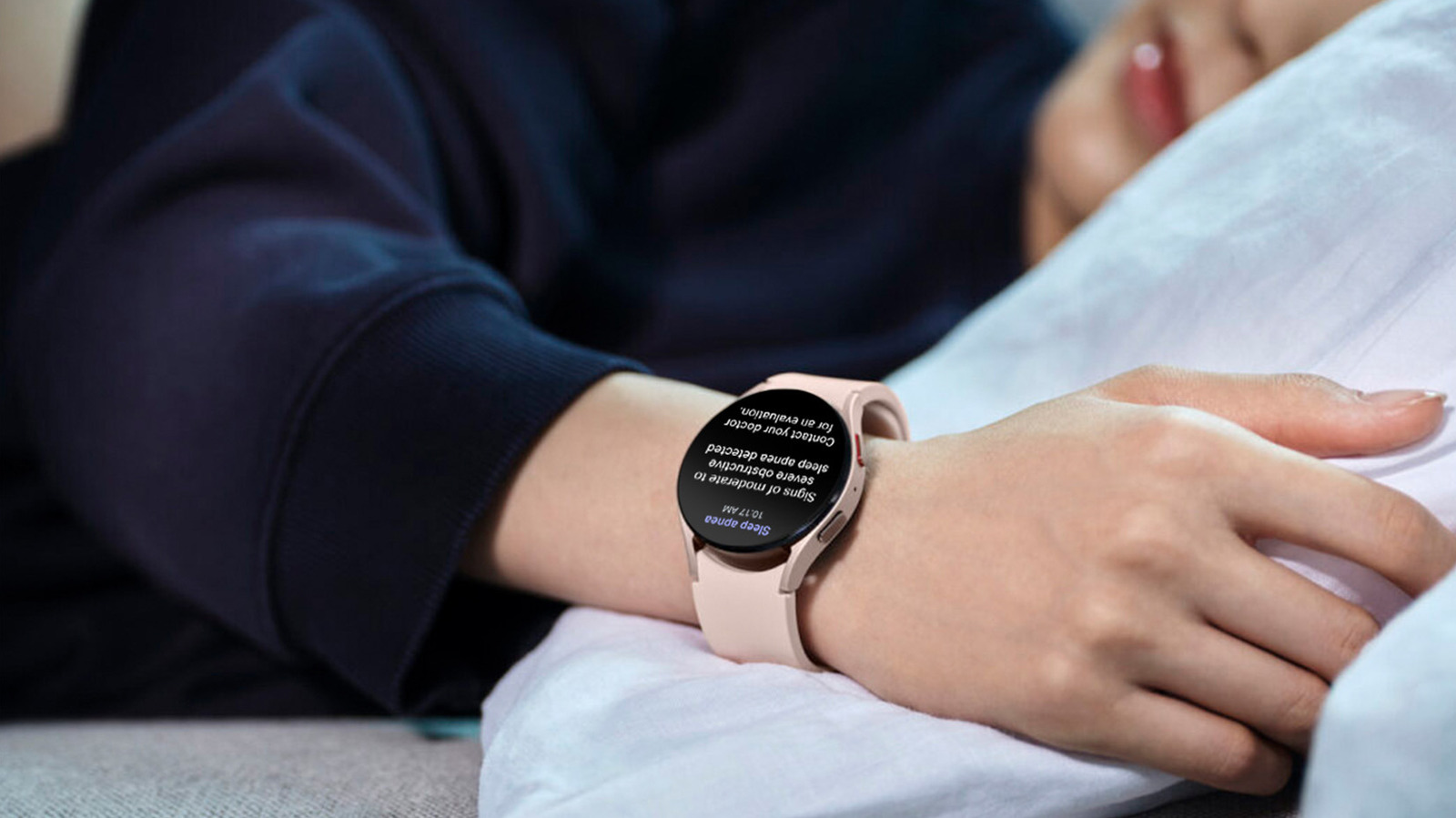
As of mid-2025, a handful of devices have earned FDA clearance or De Novo authorization for sleep-related features. The Apple Watch Series 9 and Ultra 2 include sleep apnea notifications, a feature Apple received FDA clearance for that analyzes wrist movement data to detect breathing disturbances — a metric Apple calls "wrist temperature deviation." Samsung's Galaxy Watch series uses its BioActive sensor to assess sleep breathing and can flag potential apnea risk in some markets. Withings has developed dedicated sleep tracking mats that go under your mattress and offer more sophisticated respiratory monitoring than a wrist-worn device.
These features are steps forward, but they come with important caveats. FDA clearance for a notification feature is not the same as clearance for a diagnostic tool. These devices can tell you that something may be worth checking out — they cannot tell you definitively whether you have sleep apnea or how severe it might be.
When Should You See a Doctor?
If your smartwatch is consistently flagging low SpO2 readings overnight, showing fragmented sleep patterns, or even directly alerting you to possible breathing disturbances, treat that data as a prompt to speak with a healthcare professional — not as a diagnosis. The same advice applies if you are regularly waking up exhausted despite a full night in bed, if a partner mentions your snoring, or if you notice daytime brain fog and difficulty staying alert.
A physician can refer you for a home sleep apnea test (HSAT) or a full in-lab sleep study, both of which produce clinically valid results. Many HSATs can now be completed with equipment sent directly to your home, making the diagnostic process more accessible than ever before.
The Bottom Line
Smartwatches are powerful wellness tools, but they are not doctors. No wearable device currently on the market can diagnose sleep apnea, and treating a smartwatch alert as confirmation of a medical condition — or dismissing real symptoms because your watch shows nothing — could both lead to poor health outcomes.
What your smartwatch can do is serve as an attentive, around-the-clock wellness companion that notices trends you might otherwise miss. If it consistently flags patterns associated with poor sleep or breathing irregularities, that is valuable information. Use it to start a conversation with your doctor, not to end one.
Sleep apnea affects an estimated one billion people globally, and the vast majority remain undiagnosed. If a smartwatch nudges even a fraction of those people toward a real clinical evaluation, it is doing something genuinely meaningful — even if it cannot do the diagnosing itself.