
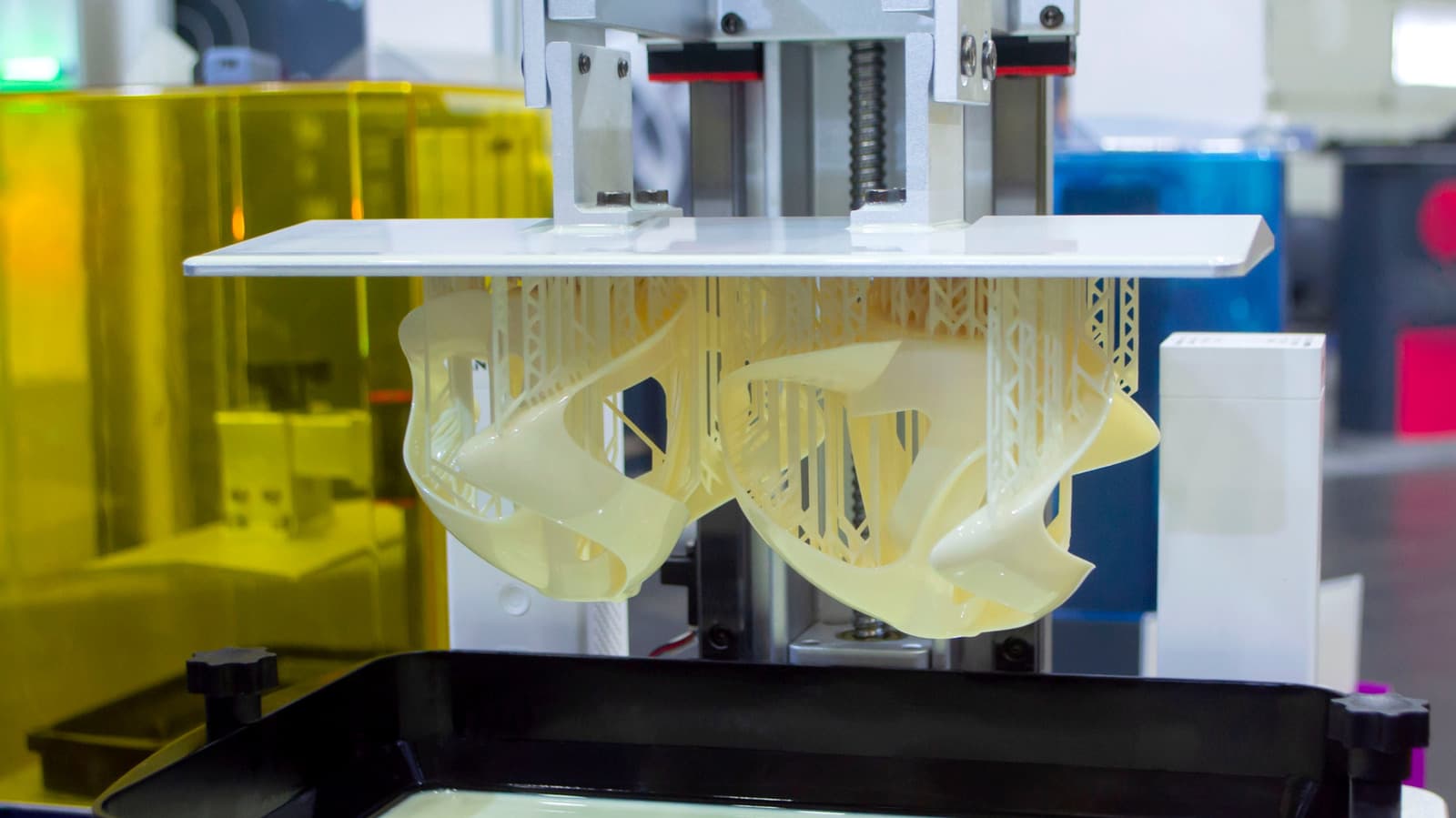
China's Revolutionary 3D Printing Breakthrough: Objects Formed Almost Instantly
3D printing has already transformed the way we think about manufacturing, prototyping, and design. But even with all its promise, traditional 3D printing has always carried one significant drawback: it's slow. Layer by layer, objects are built up over minutes, hours, or even days depending on complexity. Now, a team of scientists in China may have just rewritten the rulebook entirely. Their new 3D printing method can form solid, three-dimensional objects almost instantaneously — and it could change the future of fabrication as we know it.
What Is China's New Instant 3D Printing Method?
The breakthrough comes from a research team in China who have developed a technique capable of producing three-dimensional objects at speeds that dwarf anything currently available in conventional 3D printing. Rather than depositing material one layer at a time, this innovative approach works by solidifying a volume of material all at once — or near enough to all at once that the difference is almost imperceptible to the naked eye.
This concept is rooted in the manipulation of light and photosensitive resin. By projecting carefully calculated patterns of light into a liquid resin bath, the researchers can trigger rapid polymerization across an entire three-dimensional space simultaneously. The result is an object that essentially "appears" in the liquid rather than being built from the bottom up.
While volumetric 3D printing is not a brand-new concept in the broader scientific community, the Chinese team's implementation pushes the technology further than it has gone before, achieving new levels of speed and structural precision that make it a genuine contender for real-world applications.
How Does Instant 3D Printing Work?
To understand why this method is so fast, it helps to understand why conventional 3D printing is so slow. Most consumer and industrial 3D printers use a process called Fused Deposition Modeling (FDM) or stereolithography (SLA), both of which build objects one thin layer at a time. Each layer must be deposited or cured before the next can begin — a sequential process that adds up quickly when you're printing anything more than a simple shape.
China's new approach sidesteps this limitation almost entirely. By using controlled light projection into a photoreactive liquid medium, the entire geometry of an object can be encoded into a single burst of light. The resin reacts to the light patterns by hardening in precisely the right places, effectively sculpting the object from the inside out rather than from the bottom up.
The Role of Photosensitive Resin
Photosensitive resin — also called photopolymer resin — is the key material that makes this process possible. When exposed to specific wavelengths of light, the liquid resin undergoes a chemical reaction that causes it to solidify. By engineering the light patterns with extraordinary precision, scientists can dictate exactly which parts of the resin harden and which remain liquid, leaving behind a perfectly formed solid object once the excess liquid is drained away.
Computational Power Behind the Process
One of the most impressive aspects of this instant printing technique is the sheer amount of computation required to make it work. Generating the exact light patterns needed to produce a desired three-dimensional shape requires sophisticated algorithms and powerful computing hardware. The researchers had to develop custom computational models capable of translating a digital 3D design into a precise volumetric light exposure plan — all in real time.
Why This Matters: The Advantages of Near-Instant 3D Printing
The implications of a near-instantaneous 3D printing method are staggering. Speed is one of the most cited barriers to widespread adoption of 3D printing in industrial and commercial settings. If objects can be produced in seconds rather than hours, the calculus around manufacturing changes dramatically.
- Faster prototyping: Product designers and engineers could iterate on designs at a pace previously impossible, dramatically shortening development cycles.
- Medical applications: Custom implants, surgical tools, and even drug delivery structures could be produced on-demand in clinical settings with little wait time.
- Reduced energy consumption: Because the printing process takes seconds rather than hours, the total energy required per object could be significantly lower than traditional methods.
- Smoother surface finishes: Because objects are not built in layers, the tell-tale layer lines of conventional 3D printing are eliminated, resulting in smoother, cleaner surfaces straight out of the printer.
- Complex geometries: Structures that are difficult or impossible to print layer-by-layer — such as internal lattices or interlocking components — become far more achievable with volumetric methods.
Challenges and Limitations Still to Overcome
As exciting as this development is, it would be premature to declare conventional 3D printing obsolete. The technology still faces several meaningful challenges before it can move beyond the laboratory.
Current implementations of volumetric instant printing are generally limited in the size of objects they can produce. The larger the object, the more difficult it becomes to ensure that light penetrates evenly and triggers polymerization consistently throughout the resin volume. Scaling this process up to print large industrial parts remains an open engineering problem.
Material diversity is another constraint. At present, the technique works specifically with photosensitive resins, which represent only a fraction of the materials used in modern manufacturing. Expanding instant printing to work with metals, ceramics, or multi-material composites will require significant additional research.
China's Growing Role in Advanced Manufacturing Technology
This breakthrough is also worth viewing through a broader geopolitical and industrial lens. China has made advanced manufacturing a cornerstone of its national development strategy, investing heavily in robotics, AI-driven production, and next-generation fabrication technologies. A homegrown leap forward in 3D printing speed and capability aligns closely with these national priorities and signals that Chinese research institutions are operating at the very frontier of materials science and manufacturing engineering.
For the global 3D printing industry — projected to be worth hundreds of billions of dollars within the next decade — innovations like this raise the stakes considerably. Companies and research institutions worldwide will be watching closely to see how quickly this technique can be refined, scaled, and commercialized.
What Comes Next?
The researchers behind China's instant 3D printing method have demonstrated a compelling proof of concept, but the road from laboratory breakthrough to commercial product is rarely short. Future research will likely focus on expanding the range of compatible materials, increasing the maximum printable object size, and reducing the computational overhead required to generate volumetric light patterns.
If those challenges can be met, the world may soon be looking at a manufacturing paradigm where the gap between a digital design and a physical object collapses to near zero — a genuine revolution not just in 3D printing, but in how humanity makes things altogether.
For now, China's near-instant 3D printing achievement stands as one of the most exciting developments in additive manufacturing in recent memory, a reminder that some of the most transformative innovations don't improve existing processes incrementally — they reimagine them from the ground up.