
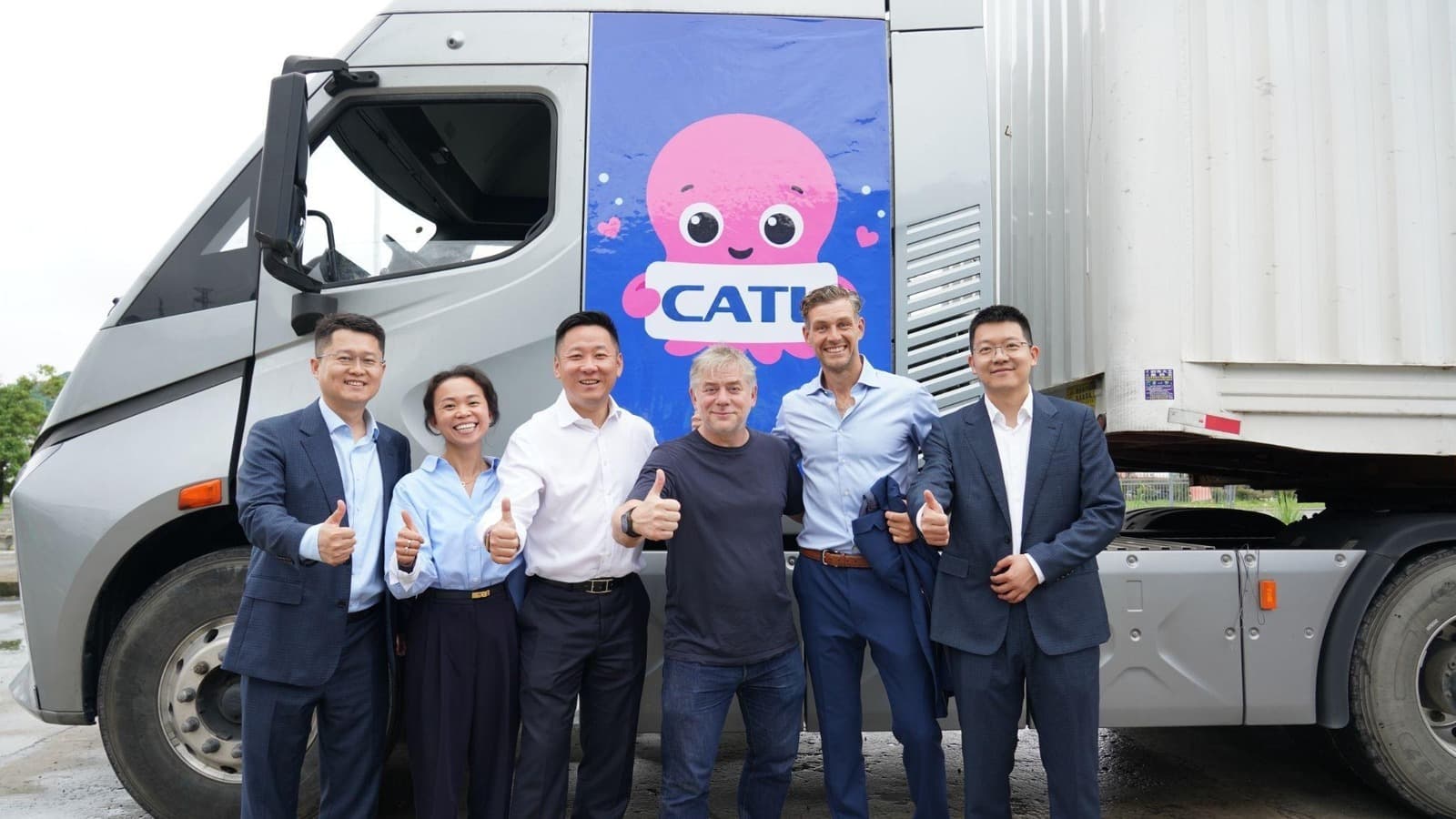
EV Battery Swap Stations Are Heading to Europe — Here's Why It Matters
The electric vehicle revolution has long been dominated by plug-in charging infrastructure, but a powerful alternative technology that has already reshaped transportation in China is now preparing to make its mark on European roads. Octopus Energy and battery giant CATL have joined forces to deploy a network of battery swap stations for heavy-duty electric trucks across Europe, signaling a potentially transformative shift in how the continent approaches long-haul freight electrification.
This partnership could not have come at a more critical time. As European Union regulations tighten around commercial vehicle emissions and logistics companies face mounting pressure to decarbonize their fleets, the question of how to keep electric trucks on the road without costly downtime has become urgent. Battery swapping may well be the answer the industry has been waiting for.
What Is a Battery Swap Station and How Does It Work?
Unlike conventional EV charging, which requires a vehicle to remain stationary for anywhere between 30 minutes and several hours depending on the charger type, a battery swap station works on an entirely different principle. The depleted battery pack is mechanically removed from the vehicle and replaced with a fully charged one — a process that can be completed in just a few minutes.
For heavy trucks operating on tight logistics schedules, this distinction is enormous. A long-haul truck driver cannot afford to sit idle for an extended charge session every few hundred kilometers. Battery swapping reduces refueling time to something comparable to a traditional diesel stop, fundamentally removing one of the biggest operational objections to adopting electric trucks in commercial freight.
The swap stations themselves house banks of batteries that are constantly being charged when not in use, meaning the infrastructure is working around the clock even when no vehicle is present. This also allows grid operators and energy companies like Octopus to optimize charging times, drawing power during off-peak hours when electricity is cheaper and greener.
The Chinese Blueprint: A Proven Model Ready for Export
Battery swapping for commercial vehicles is not an experimental concept. In China, the technology has been deployed at scale for several years, with CATL playing a central role in building out that ecosystem. Chinese heavy truck operators have embraced the model enthusiastically, and the numbers back up the enthusiasm — thousands of battery swap stations now dot the Chinese highway network, serving hundreds of thousands of electric truck trips every day.
CATL, the world's largest EV battery manufacturer, has developed both the battery packs and the swapping hardware to a level of industrial maturity that makes European rollout not just feasible but logistically credible. By partnering with Octopus, a company with deep roots in the European energy market and a proven appetite for innovative clean energy solutions, CATL gains the local knowledge, regulatory relationships, and energy infrastructure access needed to make the transition work on this side of the world.
Why Heavy Trucks Are the Priority
It might seem counterintuitive that battery swapping is being targeted at trucks rather than passenger cars first, but the logic is straightforward. Heavy-duty trucks are among the highest-emitting vehicles on European roads, and they are disproportionately difficult to electrify using conventional charging alone due to the sheer size of battery packs required and the operational demands placed on commercial fleets.
Passenger car drivers have the luxury of charging overnight at home or waiting at a fast charger during a coffee break. Truck operators do not have that flexibility. Their vehicles need to maximize uptime, their drivers are bound by strict working hour regulations, and the weight penalty of carrying an oversized battery to compensate for slow charging is a real economic concern. Battery swapping sidesteps all of these problems in one move.
- Swap times of under five minutes eliminate charging downtime entirely for commercial operators.
- Standardized battery packs mean fleets do not need to own the batteries outright, reducing upfront capital costs significantly.
- Swap stations can be strategically placed along major freight corridors, mirroring the placement logic of traditional truck stops and motorway service areas.
- Energy companies can use the stored battery banks as grid balancing assets, creating additional revenue streams that help subsidize infrastructure costs.
Octopus Energy's Role in the European Rollout
Octopus Energy brings more than just capital to this partnership. As one of Europe's most forward-thinking energy retailers, Octopus has built considerable expertise in smart grid technology, demand-side management, and vehicle-to-grid integration. Their experience with home EV charging through products like Intelligent Octopus gives them a nuanced understanding of how to manage large fleets of batteries intelligently — exactly the kind of capability needed to operate a network of swap stations efficiently.
The company's presence across multiple European markets also positions it well to navigate the patchwork of national energy regulations, grid connection requirements, and planning permissions that a continent-wide infrastructure rollout inevitably involves. This is not a trivial advantage — many ambitious EV infrastructure projects have stalled in Europe not because of a lack of technology or funding, but because of the complexity of working across dozens of different regulatory environments simultaneously.
Challenges and the Road Ahead
Despite the compelling case for battery swap technology, the European rollout faces real challenges. Standardization is chief among them. For swap stations to work across different truck manufacturers, the battery packs and mounting interfaces need to follow a common standard — something that is still being negotiated across the industry. Without broad manufacturer buy-in, the network risks becoming a proprietary ecosystem rather than the open infrastructure the sector needs.
There are also questions about the sheer capital investment required to build out a pan-European network at meaningful scale. Highway freight corridors in Europe span tens of thousands of kilometers, and a swap station network needs to reach a critical density before it becomes genuinely useful to operators planning long-distance routes. That initial investment phase, before the network effects kick in, is where many infrastructure projects falter.
Nevertheless, the momentum behind this initiative is real. With regulatory tailwinds from EU emissions legislation, a proven technology model imported from the world's largest EV market, and two well-capitalized partners with complementary strengths, the Octopus-CATL battery swap network represents one of the most credible attempts yet to crack the heavy truck electrification challenge in Europe. If it succeeds, it could reshape the continent's freight sector — and accelerate the broader energy transition in the process.