
Classic Electronics That Took Baby Boomers Back to Their Childhood
There is something undeniably powerful about nostalgia. A single sound, image, or object can instantly transport you decades into the past, flooding your mind with memories of simpler times. For Baby Boomers — those born roughly between 1946 and 1964 — a handful of classic electronics serve exactly that purpose. Long before smartphones, streaming services, and voice-activated assistants redefined everyday life, a remarkable set of gadgets shaped the routines, entertainment habits, and imaginations of an entire generation. These were not just tools; they were cultural landmarks that defined what it meant to grow up in mid-twentieth-century America.
Today, many of these devices sit in antique shops or dusty attic boxes, but their emotional weight remains enormous. Whether you are a Boomer walking down memory lane or a younger person curious about how your parents and grandparents lived, this look at the iconic tech of the Boomer era is sure to spark a sense of wonder.
1. The Transistor Radio: Music in the Palm of Your Hand
Few pieces of classic electronics carry as much nostalgic power for Baby Boomers as the transistor radio. Introduced to the mass market in the mid-1950s, the transistor radio was a revolutionary leap forward. For the first time, music and news were truly portable. You did not need to sit in the living room next to a hulking piece of furniture to listen to your favorite station — you could take the radio to the park, the beach, or under the covers at night when you were supposed to be sleeping.
For Boomers coming of age during the rise of rock and roll, the transistor radio was the gateway to a cultural revolution. Catching the latest Elvis Presley or Chuck Berry song on AM radio felt thrilling and almost rebellious. Brands like Sony, Zenith, and RCA competed fiercely for the market, producing sleek, pocket-sized devices that became treasured possessions. Even today, the sight or sound of a crackling AM broadcast can send many Boomers straight back to their teenage years.
2. Black-and-White Television Sets: The Original Family Screen
Television was still a relatively new invention when Baby Boomers were children, and for many families, owning a TV set was a genuine milestone. The boxy, black-and-white television that occupied a corner of the living room was not just a piece of classic electronics — it was the centerpiece of family life. Entire households would gather around the flickering screen to watch variety shows, westerns, and early sitcoms.
Programs like The Ed Sullivan Show, I Love Lucy, and Howdy Doody were communal events, discussed at school the next morning as though they were shared rituals. The television antenna perched on the roof, often adjusted by a frustrated parent while a child shouted "better!" from inside, became a symbol of the era. For Boomers, the transition from black-and-white to color TV later in childhood felt like witnessing magic firsthand.
3. Reel-to-Reel Tape Recorders: The First Home Studios
Before cassette tapes or digital audio workstations, the reel-to-reel tape recorder was the pinnacle of home audio technology. These large, mechanical machines — with their spinning spools of magnetic tape — allowed families and hobbyists to record their own voices, music, and family moments for the very first time. For many Boomers, a reel-to-reel recorder in the home felt like having a professional recording studio right in the living room.
Children would spend hours recording themselves singing, putting on radio shows for their siblings, or simply marveling at the sound of their own voice played back to them. Brands like Ampex, Sony, and Wollensak were household names in this category. While reel-to-reel machines were eventually replaced by the more convenient cassette tape, they remain some of the most beloved classic electronics of the Boomer generation.
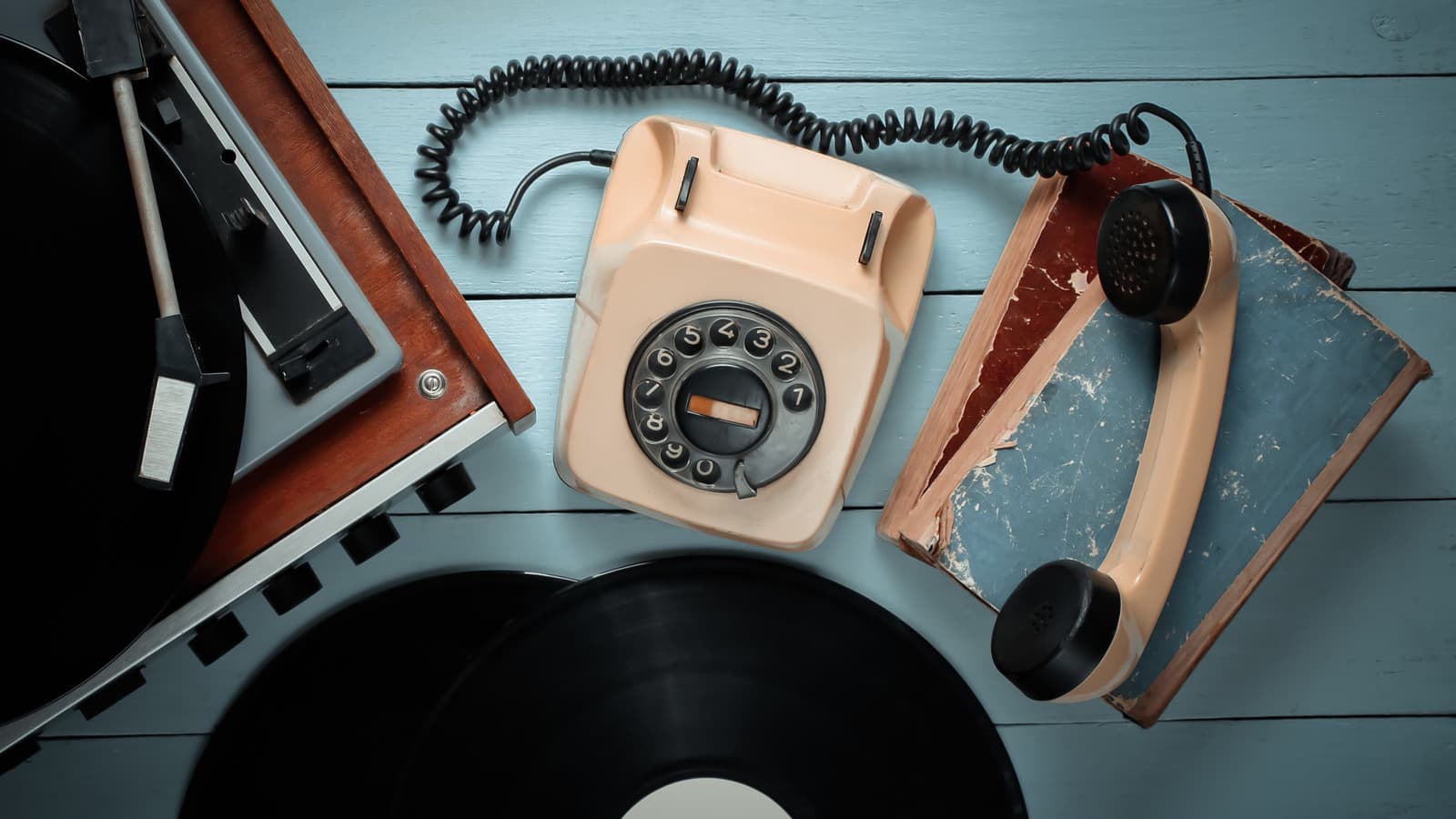
4. Rotary Dial Telephones: The Satisfying Click of Connection
Modern smartphones have made communication instantaneous and effortless, but Boomers will tell you there was something deeply satisfying about the rotary dial telephone. The tactile experience of hooking a finger into one of the numbered holes and spinning the dial around — then waiting for it to return before dialing the next digit — was almost meditative. Every phone call had a sense of deliberate intention behind it.
The rotary phone was also a fixture of social life. Teenagers would stretch the coiled cord as far as it would go to get some privacy while talking to friends. Party lines, where multiple households shared a single phone line, were common in rural areas and added a layer of community — and occasional drama — to everyday communication. These sturdy, often heavy handsets were built to last, and many families kept the same telephone for decades.
5. Slide Projectors: Cinema Nights at Home
Before home video and digital photo albums, the slide projector was how families relived their most treasured memories. Loading a carousel of photographic slides and projecting them onto a white sheet or purpose-built screen transformed an ordinary evening into a small event. Family vacations, birthdays, and holidays all came to life in vivid, larger-than-life color.
The distinctive clicking sound of the carousel advancing to the next slide, the warm glow of the projector bulb, and the slight smell of heated plastic are sensory memories that many Boomers describe with remarkable clarity. Kodak's Carousel projector, introduced in 1961, became one of the most iconic pieces of classic electronics of the entire era and remained popular well into the 1980s.
Why These Classic Electronics Still Matter Today
It would be easy to dismiss these vintage gadgets as mere relics of a less sophisticated age. But doing so would miss the point entirely. Each of these classic electronics represents a chapter in the story of how technology shapes human experience. They remind us that innovation is not just about performance specifications — it is about the moments those devices make possible and the emotions they help us feel.
For Baby Boomers, these gadgets were the building blocks of childhood wonder. They taught a generation to love music, storytelling, connection, and creativity. And in a world that moves faster every year, there is real value in pausing to appreciate the devices that helped shape the people who built the modern world we live in today. Whether you remember these classics firsthand or are discovering them for the first time, their legacy is undeniable.
- Transistor radios gave Boomers their first taste of portable music and the rock-and-roll revolution.
- Black-and-white televisions turned living rooms into community theaters and created shared cultural moments.
- Reel-to-reel tape recorders sparked creativity and gave everyday families access to home recording for the first time.
- Rotary dial telephones made communication a deliberate, tactile, and often communal experience.
- Slide projectors transformed family memories into cinematic events that brought households together.
The next time you see one of these vintage devices at a garage sale, antique market, or museum exhibit, take a moment to appreciate what it represents. These are not just old machines — they are time capsules, each one carrying the laughter, excitement, and wonder of an entire generation's childhood.