
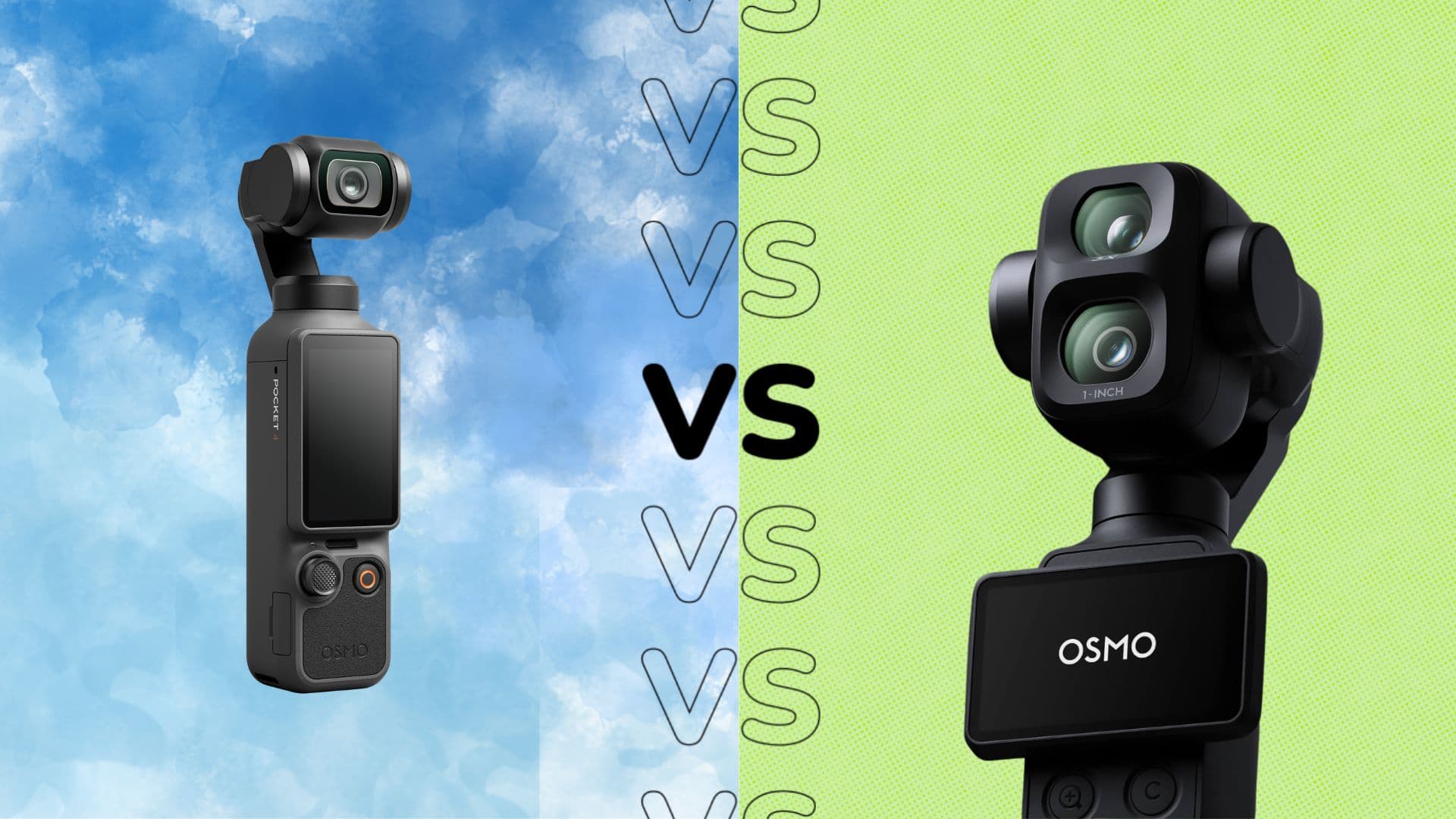
DJI Osmo Pocket 4 vs 4P: A Rapid-Fire Upgrade That Demands Attention
DJI has never been shy about iterating quickly, but even by its own standards, the release of the Osmo Pocket 4P raised a few eyebrows. The Osmo Pocket 4 had only just launched in April 2025 when DJI unveiled its more powerful sibling, the Pocket 4P — a camera the company boldly describes as a "pocket cinema camera" with "unparalleled vision and cinematic capabilities." For anyone who just bought a Pocket 4, or who is on the fence between the two, the question is obvious: what exactly is new, and is the upgrade worth it?
In this detailed comparison, we break down the key differences and similarities between the DJI Osmo Pocket 4 and the Osmo Pocket 4P, so you can make the most informed buying decision possible.
The Core Difference: Sensor Performance and Dynamic Range
The single most significant upgrade from the Pocket 4 to the Pocket 4P lies in the sensor. While both cameras use CMOS sensors, the capabilities diverge meaningfully when you look at the numbers.
The DJI Osmo Pocket 4 features a CMOS sensor with a 14-stop dynamic range. That is already a very competitive figure for a handheld camera of this size, and it delivers excellent results in a wide variety of lighting conditions. However, the Pocket 4P steps this up to a 17-stop dynamic range — a substantial leap that places it in genuinely professional territory.
To put that into context, three extra stops of dynamic range means the Pocket 4P can capture significantly more detail in both the bright highlights and the deep shadows of a scene simultaneously. For filmmakers shooting in challenging, high-contrast environments — think golden-hour outdoor shoots, dimly lit interiors with bright windows, or fast-moving action in mixed lighting — those extra stops can be the difference between a usable shot and one that is blown out or crushed beyond recovery in post-production.
A New Telephoto Lens Enters the Picture
Beyond the sensor, the Pocket 4P introduces something the standard Pocket 4 does not have: a 60mm telephoto lens. This is a genuinely new creative tool rather than just a spec bump, and it opens up a wider range of shooting possibilities directly from the device.
The inclusion of a 60mm telephoto means users can achieve flattering portrait compression, reach subjects from a greater distance without losing image quality, and craft more visually cinematic compositions without relying on digital zoom, which inevitably degrades image quality. Whether you are a content creator shooting interviews, a travel filmmaker capturing street scenes without getting in people's faces, or a vlogger who wants more lens versatility, this is a meaningful addition.
The Pocket 4, by contrast, relies on its primary wide-angle lens, which remains excellent for its intended use cases but does not offer the same compositional flexibility as having a dedicated telephoto option.
What the Two Cameras Share
Despite the upgrades, it is important to recognise that the Pocket 4P and the Pocket 4 share a significant amount of DNA. Both are compact, handheld stabilised cameras designed for run-and-gun shooting, vlogging, travel content, and everyday filmmaking. Both benefit from DJI's well-regarded three-axis mechanical gimbal stabilisation, which remains one of the best in the portable camera market. Both are designed to be lightweight and pocketable, preserving the core appeal that has made the Osmo Pocket line so popular since its inception.
Users of either camera will have access to DJI's suite of intelligent shooting modes, including tracking subjects, time-lapse, and motionlapse functionality. The overall user experience, build quality philosophy, and ecosystem compatibility remain consistent across both models.
Who Should Buy the DJI Osmo Pocket 4?
The standard Osmo Pocket 4 remains a formidable camera in its own right. If you are a casual content creator, a traveller who wants a versatile and compact camera for everyday use, or someone stepping up from an action camera for the first time, the Pocket 4 offers outstanding image quality, excellent stabilisation, and a streamlined user experience at a more accessible price point. Its 14-stop dynamic range will handle the vast majority of shooting scenarios you are likely to encounter, and the results it produces are far beyond what most smartphone cameras can deliver.
- Best for casual vloggers and travel content creators
- Ideal for those moving up from smartphone or action camera footage
- A strong choice when budget is a primary consideration
- Perfectly capable in standard lighting conditions and everyday environments
Who Should Buy the DJI Osmo Pocket 4P?
The Pocket 4P is clearly aimed at a more demanding audience. If you are a professional or semi-professional videographer, a filmmaker who regularly works in difficult lighting, or a creator who needs maximum post-production flexibility, the jump to 17-stop dynamic range and the addition of the 60mm telephoto lens could justify the higher price tag. The "pocket cinema camera" label DJI has applied is not purely marketing — the sensor performance genuinely approaches what you would expect from much larger and more expensive dedicated cinema cameras.
- Best for professional and semi-professional filmmakers
- Ideal for creators who shoot in challenging or high-contrast lighting
- A strong pick for portrait, interview, or documentary-style shooting
- Worth the investment for anyone who relies heavily on colour grading in post
The Verdict: Evolution, Not Revolution
The DJI Osmo Pocket 4P is not a complete reinvention of its predecessor — and it does not need to be. Instead, it represents a focused, deliberate evolution that targets a specific gap in the market: creators who love the pocketable form factor of the Osmo Pocket line but need professional-grade image capture to match their ambitions. The 17-stop dynamic range and the 60mm telephoto lens are not token upgrades; they are substantive improvements that will make a genuine difference in real-world shooting conditions.
The Pocket 4, meanwhile, remains a brilliant camera that is more than capable of producing stunning footage for the majority of users. The choice between the two ultimately comes down to your shooting style, your editing workflow, and how often you find yourself fighting with difficult light or wanting that extra reach from a telephoto perspective.
As DJI continues to refine and expand its Osmo Pocket lineup, both cameras serve as a reminder of just how far compact handheld cameras have come — and how competitive this segment of the market has become. Whether you choose the Pocket 4 or push the budget to the 4P, you are getting one of the best portable cameras available in 2025.