
Do You Actually Own Your Kindle Books?
Here's a question most e-reader owners never think to ask: do you actually own the digital books you've paid for? The uncomfortable answer, for millions of Kindle users, is no. In 2026, digital ownership remains something of an oxymoron. When you purchase a book, a game, a movie, or a TV show from most major digital storefronts, you're not buying the content itself — you're buying a license to access it under terms that can change, expire, or simply disappear without warning.
This is the reality of Digital Rights Management, or DRM. It's the technology layer that controls how, when, and on which devices you can use content you've paid for. And for longtime Kindle users, it's become impossible to ignore. I've been a Kindle owner since the original model landed in my hands a few years after its launch. I later upgraded to the Kindle DX, and then to the Kindle Keyboard — which I specifically bought for its free 3G connectivity. That 3G feature stopped working in 2021. Today, all three of those Kindle models are officially unsupported by Amazon. Three devices, years of purchased books, and a growing sense that I was never really the one in charge of my own library.
That realization pushed me toward something better: a DRM-free e-reader. And after making the switch, I'm not going back.
What Is DRM and Why Should E-Reader Owners Care?
Digital Rights Management is a set of access controls built into digital content and the platforms that distribute it. On a Kindle, this means the books you purchase are tied to your Amazon account and Amazon-approved devices. You can't freely transfer them, lend them indefinitely, or read them on a competing platform without jumping through significant technical hoops — or potentially violating terms of service.
For casual readers, this might not seem like a big deal. But consider a few real-world scenarios that DRM makes genuinely painful.
- Device obsolescence: When Amazon drops support for older Kindle models, those devices lose features or stop receiving updates entirely. If the platform ever shuts down or changes its terms, your entire library could become inaccessible.
- Platform lock-in: Every book you buy on Kindle makes it harder to leave Amazon. Your library doesn't migrate to a Kobo, a PocketBook, or any other device. You're trapped.
- Limited lending and sharing: Unlike a physical book you can pass to a friend, a DRM-locked ebook exists only for you, on approved devices, under Amazon's rules.
- No true offline ownership: Without the ability to freely download and store a DRM-free file, you're renting, not owning — regardless of what your receipt says.
The Case for Going DRM-Free
The alternative is straightforward: buy ebooks from stores that sell DRM-free files, and read them on a device that supports open formats. When a book is DRM-free, you receive a file — typically an EPUB — that you own outright. You can store it on your hard drive, back it up to the cloud, load it onto any compatible e-reader, and keep it forever regardless of what happens to the store where you bought it.
This is how physical book ownership has always worked, and there's no technical reason digital books can't work the same way. A number of excellent DRM-free bookstores exist today, including Smashwords, Humble Bundle's book offerings, and Tor Books for science fiction and fantasy fans. Many independent authors also sell directly through their own websites in DRM-free formats.
Pairing these sources with the right e-reader makes for a genuinely liberating reading experience.
Which DRM-Free E-Readers Are Worth Considering?
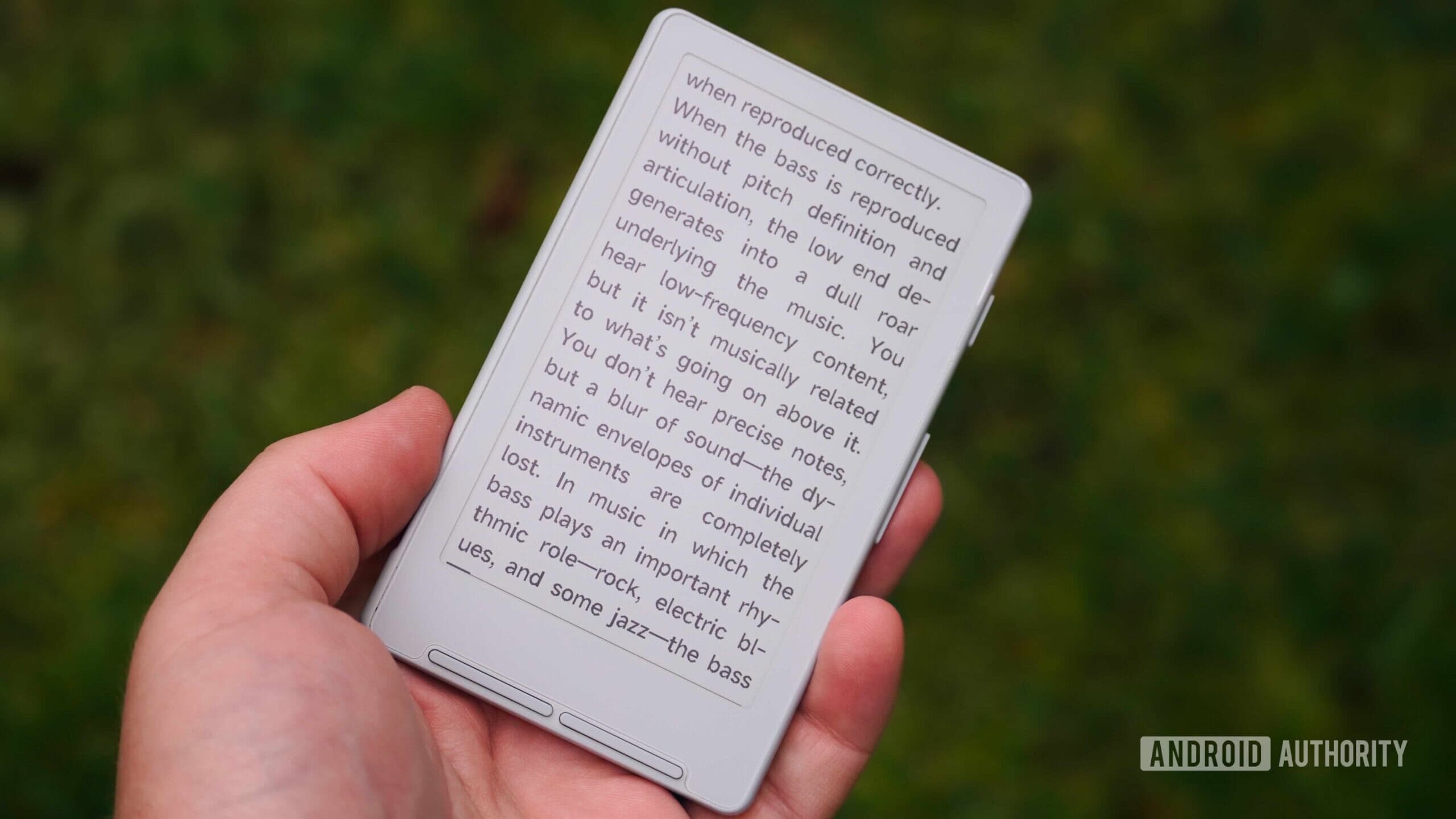
The good news is that excellent hardware exists outside the Kindle ecosystem. Devices from manufacturers like Kobo, PocketBook, and Onyx Boox are all strong contenders for readers ready to make the switch. These devices natively support EPUB files, which is the open standard format used by the vast majority of DRM-free ebook retailers.
Kobo devices, in particular, have built a strong reputation for build quality, a clean reading experience, and a storefront that — while it does sell DRM-protected books — also integrates beautifully with the public domain library service Overdrive and works seamlessly with sideloaded EPUB files. PocketBook takes things even further with robust format support and a strong commitment to open standards. Onyx Boox devices run a full Android operating system, giving power users the flexibility to install virtually any reading app available.
For those willing to embrace a fully open-source software stack, the Kobo devices running KOReader — a powerful third-party reading application — represent arguably the most complete DRM-free reading setup available to everyday consumers today.
Making the Switch: What to Expect
Transitioning away from Kindle does require some adjustment. If you have an existing Kindle library, those books won't move with you automatically. However, tools exist for stripping DRM from books you've legitimately purchased for personal use, though the legality varies by country and you should research the laws in your jurisdiction before proceeding.
Going forward, building a DRM-free library is entirely achievable. Project Gutenberg alone offers over 70,000 free public domain titles in EPUB format. Standard Ebooks provides beautifully formatted, professionally proofread editions of classic literature at no cost. And a growing number of contemporary authors and small publishers are choosing to sell without DRM as a matter of principle.
True Digital Ownership Is Worth Fighting For
The broader principle here extends well beyond e-readers. In an era where subscription services can vanish overnight, where storefronts shut down and take purchased libraries with them, and where hardware manufacturers can remotely restrict features on devices you've already paid for, the question of what you truly own matters enormously.
Choosing a DRM-free e-reader isn't just a technical preference — it's a statement about the kind of digital future readers want to support. Books have always been one of humanity's most enduring technologies. The words in them shouldn't have an expiration date just because they were delivered as pixels instead of ink. If your e-reader can be quietly neutered by a corporate decision made thousands of miles away, you deserve better hardware and a better deal. DRM-free reading offers exactly that.