
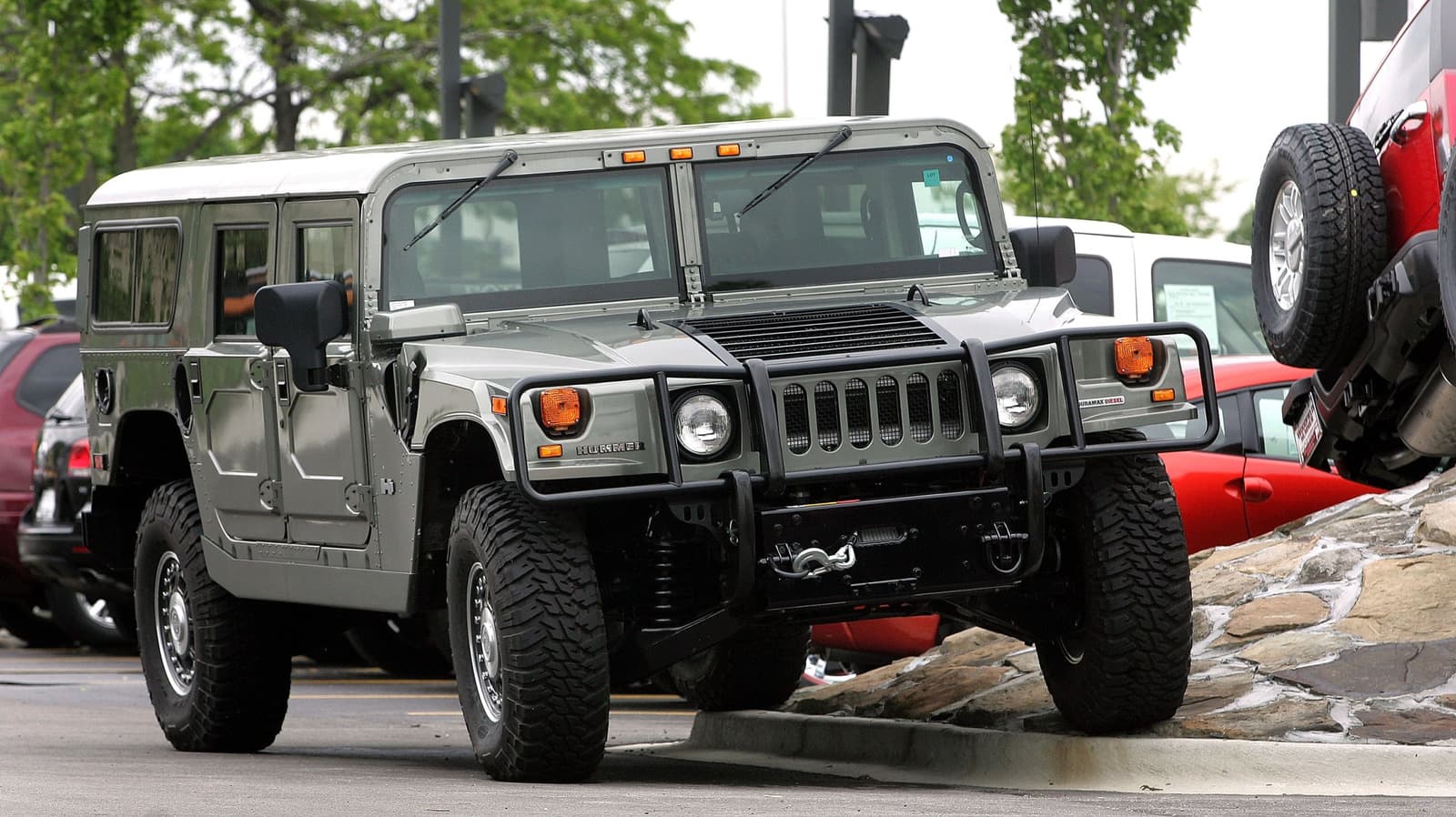
Humvee vs Hummer: What's the Difference?
If you've ever spotted one of those wide, imposing, high-riding vehicles rolling down the road and wondered whether to call it a Humvee or a Hummer, you're not alone. The two names are tossed around interchangeably in everyday conversation, but the truth is they refer to two distinct vehicles with very different stories behind them. One was born on the battlefield, the other in the showroom. Understanding the difference between a Humvee and a Hummer means understanding a fascinating piece of American automotive and military history.
Where It All Began: The Military Origins of the Humvee
The story starts in the early 1980s when the United States military was looking to replace its aging fleet of utility vehicles, most notably the iconic Jeep. The Army issued a contract for a new High Mobility Multipurpose Wheeled Vehicle — a mouthful of a name that gave rise to the official acronym HMMWV, which soldiers quickly shortened to "Humvee." AM General won the contract in 1983 and began producing these vehicles for military use.
The Humvee was designed from the ground up as a fighting machine. It features a wide, low-slung body with a broad track width that gives it exceptional stability on rough terrain, deep water, and steep inclines. Its diesel engine and four-wheel independent suspension allow it to climb steep grades, ford streams, and traverse environments that would stop virtually any standard vehicle dead in its tracks. The Humvee became a true workhorse of the U.S. military, serving in every major conflict from Panama and the Gulf War to Iraq and Afghanistan.
Throughout its military service, the Humvee has been adapted into dozens of variants — including ambulances, troop carriers, weapons platforms, and communications vehicles. It was never designed to be comfortable or luxurious. It was designed to survive.
Enter the Hummer: From Military Icon to Civilian Status Symbol
The transition from military legend to consumer product is where the Hummer brand was born. After the Gulf War in the early 1990s, the Humvee gained enormous public visibility through extensive television coverage. The vehicle's imposing profile captured the imagination of the American public, and demand for a civilian version began to grow. Actor Arnold Schwarzenegger is famously credited with being one of the first civilians to lobby AM General for a street-legal version, and he reportedly took delivery of one of the first civilian HMMWVs in 1992.
This civilian model was marketed under the name Hummer H1. While it shared the same basic military platform as the HMMWV, it was modified for road use with creature comforts like air conditioning, upgraded seating, and improved interior finishes. However, the H1 remained massive, expensive, and impractical for most buyers — it could barely fit in a standard parking space and got notoriously poor fuel economy.
General Motors eventually acquired the Hummer brand from AM General in 1999 and set about expanding it into a full consumer lineup. This led to the introduction of the Hummer H2 in 2002 and the Hummer H3 in 2005. Critically, neither of these models was based on the original military HMMWV platform. The H2 was built on a modified Chevrolet Tahoe/Suburban chassis, and the H3 used a platform shared with the Chevrolet Colorado pickup truck. These were SUVs styled to look aggressive and rugged, but they were fundamentally civilian vehicles through and through.
Key Differences Between the Humvee and the Hummer
Once you understand the history, the differences between the two become much clearer. Here's a breakdown of the most important distinctions:
- Purpose: The Humvee (HMMWV) is a military vehicle designed for combat and operational use in extreme conditions. The Hummer is a consumer brand created to bring that military aesthetic to civilian buyers.
- Manufacturer: Humvees are manufactured by AM General specifically for the U.S. military and allied forces. Hummers were produced under the GM brand for commercial sale, with AM General still assembling the H1.
- Platform: The Hummer H1 shares its basic architecture with the HMMWV, but the H2 and H3 are built on entirely different civilian truck platforms with no direct military lineage.
- Dimensions: The Humvee is extraordinarily wide — about 86 inches across — giving it its distinctive road-dominating stance. The H2 and H3, while large by consumer standards, are narrower and more compatible with normal road use.
- Off-road capability: The military Humvee is purpose-built for extreme terrain and has genuine off-road engineering behind it. The H2 and H3, while capable, are standard SUVs at heart and fall short of true military-grade performance.
- Availability: The Humvee is not sold through regular dealerships. Surplus military Humvees can sometimes be acquired through government auctions, but new units go directly to military clients. Hummers were sold through GM dealerships until the brand was discontinued in 2010.
The Hummer Brand's Discontinuation and Revival
GM shut down the Hummer brand in 2010 amid the company's bankruptcy proceedings and growing public criticism of fuel-hungry SUVs. For nearly a decade, Hummer remained dormant. Then in 2020, GM made a surprising announcement: the Hummer was coming back — this time as a fully electric supertruck badged under the GMC lineup.
The new GMC Hummer EV is a remarkable reinvention of the concept, pairing the brand's rugged, boxy aesthetic with an all-electric powertrain that produces up to 1,000 horsepower. It features technologies like CrabWalk, which allows the vehicle to move diagonally, and an Extract Mode that raises the suspension for extreme off-roading. Whether you call it a comeback or a reimagining, the electric Hummer has reignited interest in the nameplate.
The Humvee, meanwhile, continues to serve in military fleets around the world, though the U.S. Army has been gradually transitioning to a newer platform called the Joint Light Tactical Vehicle (JLTV), also produced by Oshkosh Defense.
Why the Confusion Persists
The reason most people use "Humvee" and "Hummer" as synonyms comes down to visual similarity and cultural shorthand. The H1 closely resembled the military HMMWV, and both vehicles share that unmistakable wide-body, flat-roofed silhouette that makes them stand out on any road. The Gulf War and subsequent media coverage burned the image of the Humvee into popular culture, and when GM's consumer version arrived, the public naturally grouped them together.
But now you know the real story. The Humvee is a military legend — a purpose-built combat vehicle that has served America and its allies for over four decades. The Hummer is its civilian cousin, a brand built on the strength of that image and aimed at consumers who wanted a taste of that rugged identity. They share a family resemblance, but their DNA, their purpose, and their history are quite different. Next time you see one rolling down the street, you'll know exactly what you're looking at.