
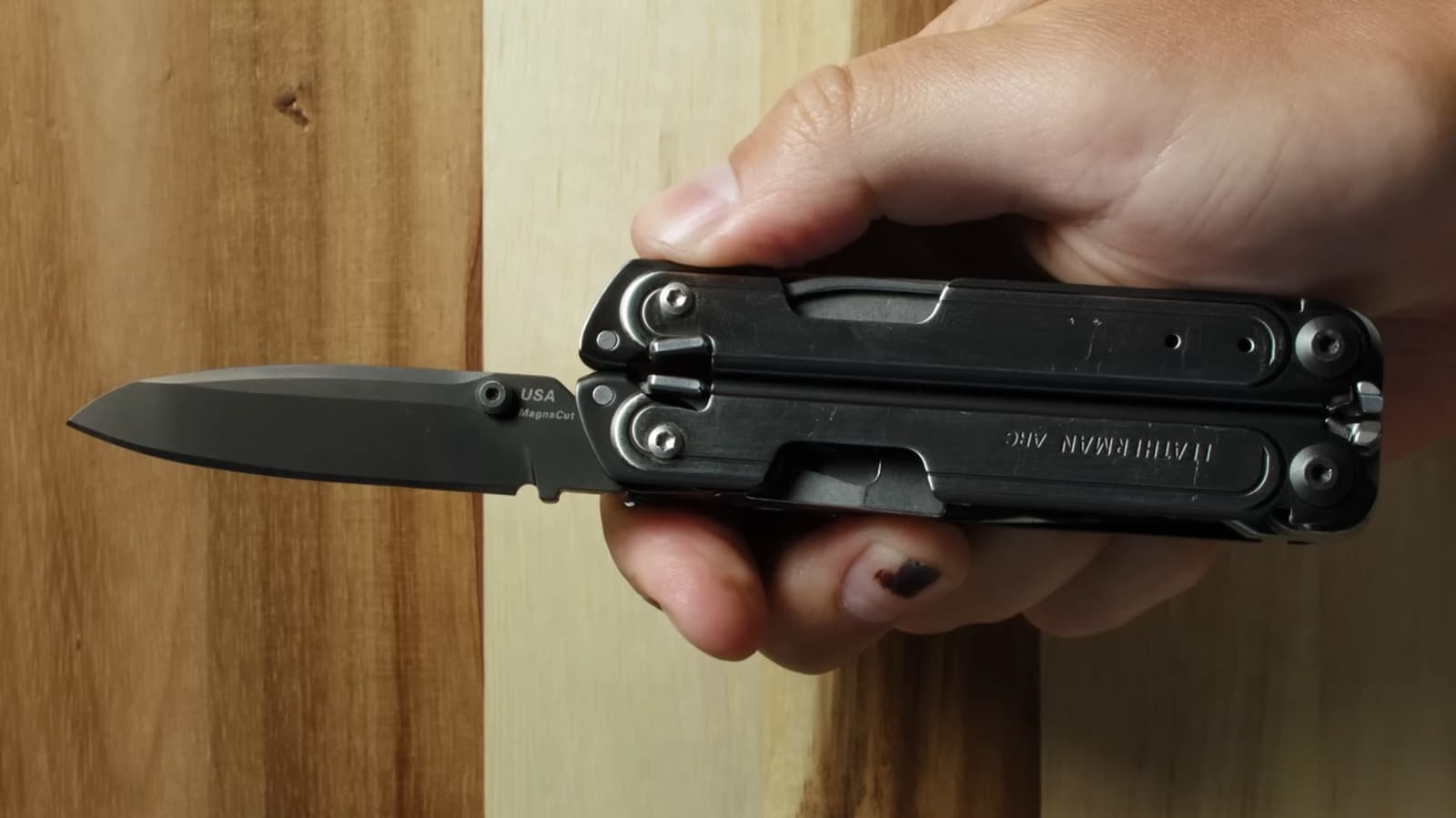
The Secret Behind Leatherman's Best Multitools: A Steel Most People Have Never Heard Of
When most people shop for a multitool, they focus on the number of tools included, the overall build quality, or the brand reputation. Very few buyers stop to ask what kind of steel is actually used in the blades. That oversight can matter more than you'd think — especially if you're investing in a high-end tool you plan to rely on for years. Leatherman, one of the most respected names in the multitool industry, doesn't settle for ordinary steel in its premium lineup. Instead, the company uses a specialized blade steel that most casual buyers have never encountered: 154CM stainless steel.
What Is 154CM Steel?
154CM is a high-carbon, high-chromium stainless steel that was originally developed for industrial and aerospace applications. It belongs to a family of steels engineered to maintain their edge under demanding conditions, resist corrosion, and hold up to repeated use without significant degradation. The name itself — 154CM — comes from its composition: roughly 1.05% carbon and 14% chromium, with additions of molybdenum that give it added toughness and wear resistance.
While it's not exactly a household name outside of knife enthusiast circles, 154CM has earned a loyal following among serious users who care about long-term performance. It sits in a sweet spot between easy-to-sharpen but soft steels and extremely hard steels that can be brittle and difficult to maintain in the field. In short, it's a practical, high-performance choice — and exactly the kind of material you'd want in a tool meant to go the distance.
Why Most Multitools Use Lower-Grade Steel
To appreciate what Leatherman is doing with 154CM, it helps to understand what most budget and mid-range multitools use instead. The majority of multitools on the market rely on 420HC or similar grades of stainless steel. These are decent, serviceable materials — they resist rust well and are easy to sharpen — but they don't hold an edge nearly as long as higher-grade options. For a tool that gets used hard in the field, that difference becomes noticeable quickly.
Some manufacturers also use standard 420 stainless, which is even softer and more prone to rolling or dulling under pressure. These choices are largely driven by cost and manufacturability. Higher-performance steels are more expensive to source, harder to machine, and require more precise heat treatment to reach their full potential. That added complexity gets passed on to the consumer in the form of a higher price tag — which is part of why premium multitools cost significantly more than their budget counterparts.
Which Leatherman Multitools Feature 154CM Steel?
Not every Leatherman product uses 154CM. The company reserves it for its higher-end offerings, where the investment in better materials is justified by the intended use case. Tools in Leatherman's premium tiers — such as the Charge series and the MUT — are among those that incorporate 154CM blades. These are tools designed for professionals, outdoor enthusiasts, military personnel, and anyone who needs a multitool that can perform reliably under real-world stress.
The inclusion of 154CM steel in these models isn't just a marketing talking point. Users who have switched from standard multitools to Leatherman's premium lineup frequently report a noticeable difference in how long the blade stays sharp and how it performs on tougher cutting tasks. That kind of real-world feedback is ultimately the most meaningful endorsement any steel specification can receive.
How 154CM Compares to Other Common Blade Steels
To put 154CM in context, it helps to compare it to some other steels you're likely to encounter in the multitool and knife markets:
- 420HC: Common in budget and mid-range tools, including some Leatherman models. Easy to sharpen and rust-resistant, but loses its edge relatively quickly under heavy use.
- S30V: A premium powdered steel that offers excellent edge retention and toughness. Often considered a step above 154CM, but also harder to sharpen and more expensive.
- 440C: Another high-chromium stainless steel with good corrosion resistance, but generally considered inferior to 154CM in terms of edge retention and toughness.
- D2: A tough, wear-resistant tool steel popular in heavy-use knives, but prone to corrosion compared to true stainless options like 154CM.
154CM sits comfortably among these options as a well-rounded performer. It's tough enough for demanding tasks, holds an edge long enough to be genuinely useful between sharpenings, and resists rust effectively — making it an ideal candidate for a multitool that might see use in wet or harsh environments.
Does the Steel Really Matter on a Multitool?
Some buyers question whether blade steel matters much on a multitool, reasoning that the knife on a multitool rarely gets used as intensively as a dedicated fixed blade or folding knife. That's a fair point for casual users, but it misses the bigger picture. A dull blade on a multitool is a frustrating blade, and the more you have to stop to sharpen it, the less useful the tool becomes. For professionals, survivalists, hunters, campers, and tradespeople who reach for their multitool daily, the quality of the steel directly affects the quality of the experience.
Beyond the cutting blade itself, the steel grade can also influence the overall feel and confidence you have in the tool. A premium steel signals a premium standard of manufacturing throughout — attention to heat treatment, tolerances, and finish that carries over into every component.
Is a Leatherman with 154CM Steel Worth the Price?
Leatherman's premium multitools are undeniably more expensive than entry-level competitors. But when you factor in the use of 154CM steel, the build quality, the warranty, and the longevity of the tool itself, the value proposition becomes much clearer. A multitool that holds its edge longer, performs better under stress, and lasts for decades is ultimately cheaper than cycling through two or three lesser alternatives over the same period.
If you're serious about your gear and want a multitool that genuinely performs at a high level, Leatherman's use of 154CM steel is one of the most compelling reasons to invest in their premium lineup. It's a detail that most buyers overlook — but one that experienced users consistently point to as a key differentiator between a good tool and a truly great one.