
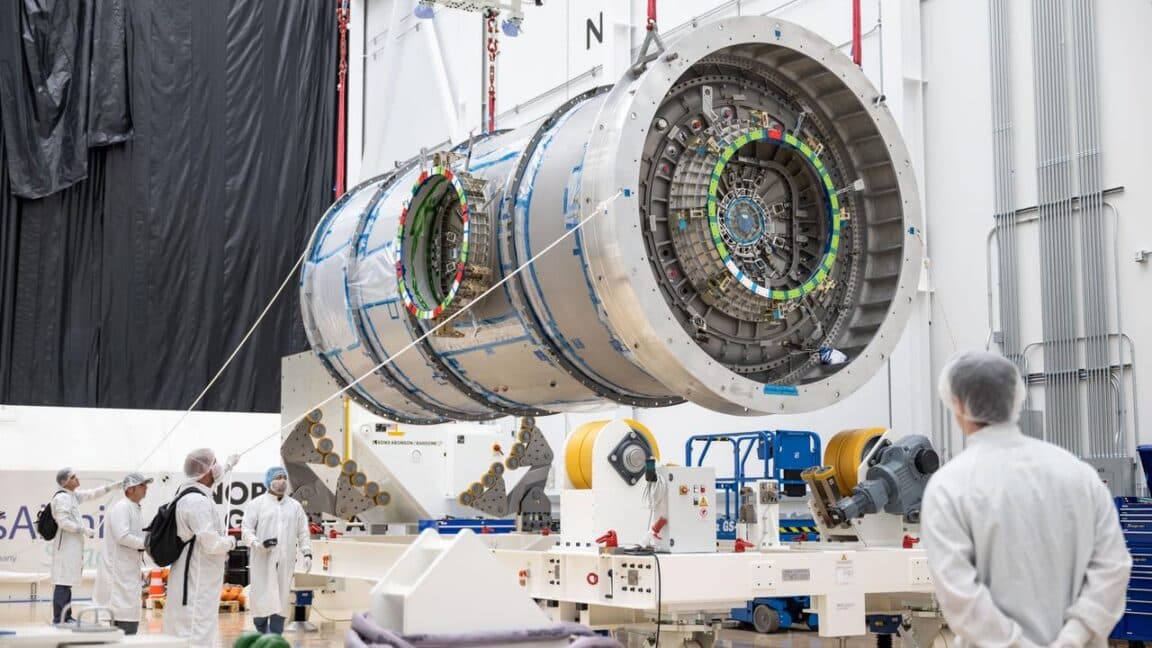
NASA Asks Northrop Grumman to Stop Work on the Lunar HALO Module
In a significant development that signals a sweeping transformation in America's lunar ambitions, NASA has officially directed aerospace giant Northrop Grumman to halt all work on the Habitation and Logistics Outpost — more commonly known as the HALO module. This directive comes just months after the space agency publicly announced a dramatic strategic pivot: stepping back from plans for an orbital lunar space station in favor of establishing a permanent base directly on the Moon's surface.
The decision raises major questions about the future of the Lunar Gateway program, the fate of billions of dollars already invested in deep-space hardware, and what America's long-term presence on and around the Moon will ultimately look like.
What Is the HALO Module and Why Does It Matter?
The Habitation and Logistics Outpost, or HALO, was designed to serve as the primary living and working quarters for astronauts visiting the Lunar Gateway. Measuring 6.1 meters in length, the pressurized module would have been the place where crew members spent the vast majority of their time while aboard the planned orbital outpost. It was, in many ways, the heart of the Gateway concept — a comfortable, functional home base positioned in lunar orbit that could support crewed missions to the Moon's surface and beyond.
NASA awarded contracts totaling approximately $1.1 billion to Northrop Grumman for the design, construction, and integration of HALO with the Power and Propulsion Element (PPE), the other cornerstone component of the Lunar Gateway architecture. Together, these two modules were the furthest along in development, making the decision to stop work on HALO all the more consequential — and costly.
NASA's Strategic Shift: From Orbit to the Surface
The story behind the HALO work stoppage begins with a high-profile announcement NASA made roughly three months ago at its Washington, DC, headquarters. Agency officials declared that NASA was fundamentally redirecting its Moon strategy, moving away from the Lunar Gateway concept — an orbiting waypoint around the Moon — and placing a renewed emphasis on establishing infrastructure directly on the lunar surface.
This kind of bold strategic realignment reflects shifting priorities both within NASA and at the policy level. A Moon-surface base represents a more permanent, tactile presence — one that aligns with broader goals of long-duration habitation, resource extraction, and using the Moon as a proving ground for eventual crewed missions to Mars.
As part of this pivot, NASA announced that work on the entire Lunar Gateway program would be paused. However, not all components are facing the same fate. The Power and Propulsion Element, rather than being scrapped outright, is being repurposed for a new and equally ambitious mission: serving as a core module for a nuclear-electric propulsion demonstration in deep space. This suggests that NASA sees salvageable value in the PPE's advanced technology, even if the Gateway concept itself is being shelved.
The Uncertain Future of HALO
While the PPE has been given a new purpose, the future of the HALO module remains far less clear. NASA said comparatively little about what would happen to the habitation module during its initial announcement, and the directive to Northrop Grumman to stop work has only deepened the uncertainty surrounding this piece of hardware.
With $1.1 billion already committed to the HALO program, the financial implications of halting development are substantial. Terminating or significantly restructuring such a large contract raises complex questions about what costs have already been incurred, what hardware has already been built or procured, and how contract obligations will be renegotiated or unwound. For Northrop Grumman, one of NASA's most established partners in space exploration, this represents a notable setback to a high-profile program.
There is also the broader question of what happens to the engineers, technicians, and supply chain workers who have been building toward HALO's completion. Major contract disruptions of this scale can have significant ripple effects across the aerospace industry.
What a Lunar Surface Base Could Mean for Space Exploration
Despite the disruption, NASA's new direction carries its own sense of ambition and possibility. A permanent or semi-permanent base on the lunar surface would mark a historic milestone — humanity's first sustained foothold on another world. Unlike an orbital station, a surface base could directly support geological research, resource utilization (including the potential extraction of water ice from permanently shadowed craters near the lunar south pole), and the development of technologies needed for long-duration missions.
This approach also has practical advantages for astronaut safety and mission flexibility. Operating from the surface removes the logistical complexity of maintaining a crewed orbital hub and reduces the number of transit steps required to get boots on the ground.
Implications for Commercial and International Partners
The Lunar Gateway was not solely a NASA endeavor. International partners, including the European Space Agency, the Canadian Space Agency, and the Japan Aerospace Exploration Agency, had committed to contributing hardware and resources to the project. NASA's strategic shift will inevitably require difficult diplomatic conversations about how — or whether — those partnerships can be restructured around the new surface-based vision.
Commercial partners involved in logistics, crew transport, and surface systems will also need clarity on how the revised architecture affects their own contracts and development timelines.
Looking Ahead
The halting of HALO module work by Northrop Grumman is more than a contract pause — it is a visible marker of NASA's willingness to make hard choices in pursuit of a revised vision for human lunar exploration. Whether this pivot proves to be a bold and prescient course correction or a costly detour will depend heavily on the clarity and speed with which NASA defines, funds, and executes its new Moon-surface strategy.
For now, the aerospace community, international partners, and space enthusiasts around the world are watching closely to see what America's next chapter on the Moon will truly look like.