
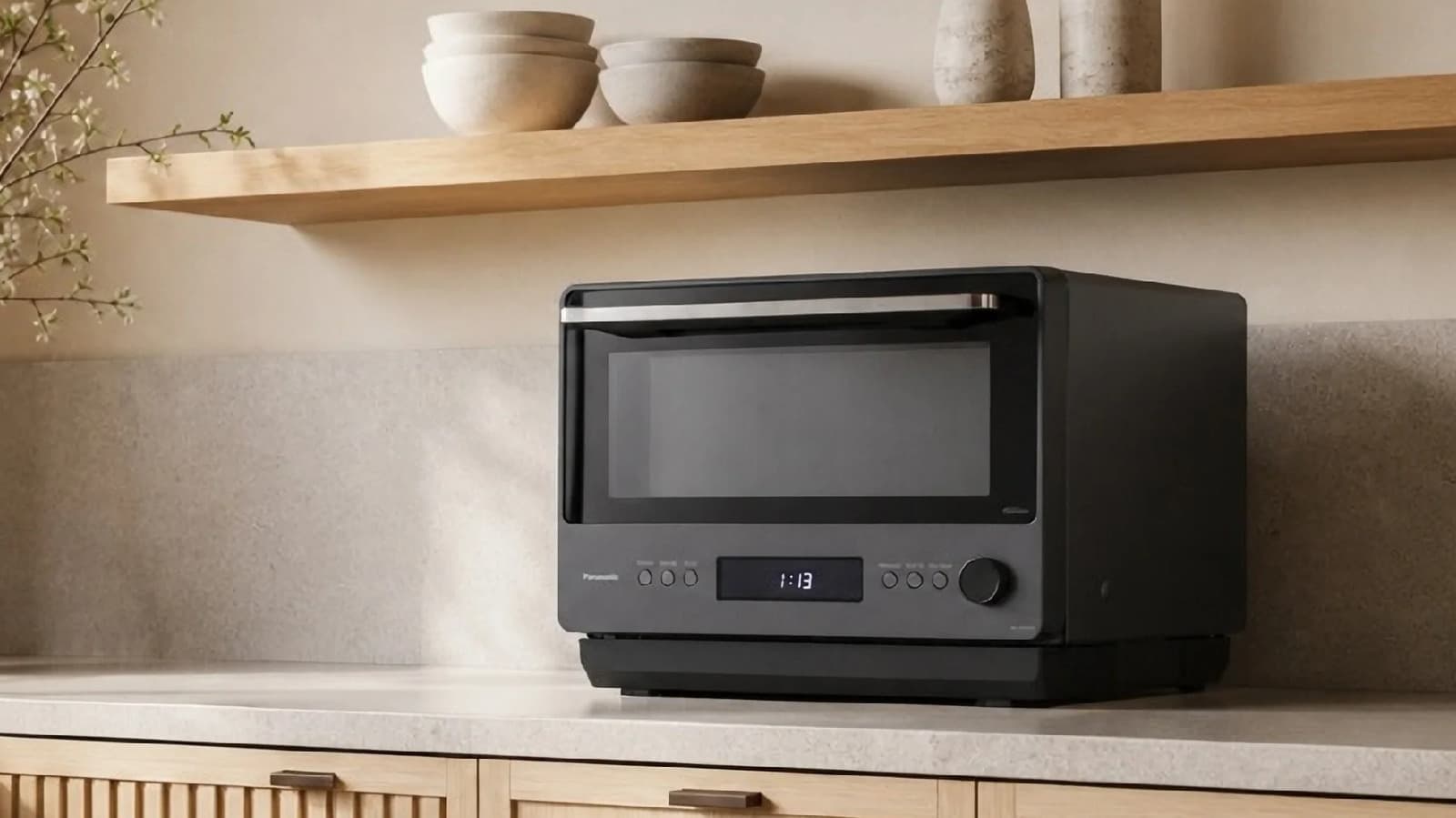
The Most Frustrating Kitchen Problem Finally Has a Fix
You follow the instructions on the box to the letter. You set the microwave timer exactly as directed, wait patiently while the machine hums, and then pull your meal out with the quiet confidence of someone who did everything right — only to find the center stone cold and the edges scorched. It is one of the most universally relatable kitchen frustrations, and for decades, microwave manufacturers have done surprisingly little to address it. That is, until now. Panasonic is stepping up with smart technology designed to solve the biggest problem with microwaves once and for all: uneven heating.
Why Microwaves Have Always Struggled With Even Heating
To understand why Panasonic's solution matters, it helps to understand why microwaves heat unevenly in the first place. Traditional microwave ovens operate at a single, fixed power level, cycling on and off in rapid bursts to simulate lower power settings. When you select 50% power, the magnetron is not actually running at half intensity — it is running at full power for a few seconds and then shutting completely off for a few seconds. This on-off cycling creates hot spots and cold spots throughout the food, leaving some areas overcooked while others remain barely warm.
The rotating turntable was the industry's original workaround, moving food through those uneven energy fields in hopes of averaging out the heat distribution. It helped, but it never fully solved the problem. Anyone who has ever bitten into a frozen lasagna that was boiling on one side and icy on the other can confirm that the turntable only goes so far.
Panasonic's Inverter Technology: The Foundation of Smarter Cooking
Panasonic's answer to this challenge began years ago with the development of its Inverter Technology platform. Unlike conventional magnetron-based systems, Panasonic's inverter-equipped microwaves deliver a continuous, steady stream of energy at precisely the power level you select. There is no aggressive cycling on and off — the microwave genuinely operates at 50% power by delivering 50% of its energy output continuously. This alone makes a significant difference in cooking consistency, particularly for delicate foods like fish, vegetables, and dairy-based dishes that are easily ruined by bursts of high heat.
But inverter technology is only part of the equation. The more exciting development is what Panasonic is layering on top of it: intelligent sensor systems and AI-driven cooking logic that take the guesswork entirely out of the user's hands.
Smart Sensors That Actually Understand Your Food
Panasonic's newer microwave models are equipped with advanced humidity and temperature sensors that monitor the internal environment of the oven in real time throughout the cooking process. As food heats up, it releases steam. The rate and volume of that steam release tells the microwave a great deal about how far along the cooking process is, how dense the food is, and how much more energy it needs to reach an ideal finished state.
Rather than relying on a static timer that was printed on a box under generalized assumptions, Panasonic's sensor-equipped microwaves adjust cooking time and power levels dynamically, responding to what is actually happening inside the oven at any given moment. The result is food that finishes cooking evenly and at the right temperature — without the user needing to stop the microwave halfway through to stir, flip, or guess.
AI Integration and the Future of Automated Cooking
Panasonic is going further still by integrating artificial intelligence into its smart kitchen roadmap. AI-powered cooking modes can recognize categories of food, learn from repeated use patterns, and recommend or automatically apply the most appropriate heating program for a given item. Some models can connect to smartphone apps, giving users control over cooking schedules, power settings, and recipe programs directly from their phones.
This kind of connected functionality also opens the door for over-the-air updates, meaning the microwave's cooking intelligence can improve over time without requiring new hardware. In a category that had gone essentially unchanged for decades, this represents a genuinely meaningful leap forward.
What This Means for Everyday Home Cooks
The practical benefits of Panasonic's smart microwave technology extend well beyond reheating leftovers. Consider some of the real-world advantages:
- More consistent results with frozen meals: Sensor cooking ensures that packaged foods reach a safe and palatable temperature throughout, not just on the surface.
- Better texture preservation: Continuous, controlled power delivery prevents the rubbery textures that aggressive cycling can cause in proteins and baked goods.
- Less food waste: When food comes out correctly the first time, fewer meals are thrown away due to uneven or unsafe heating.
- Greater accessibility: Automated cooking modes reduce the technical burden on users who may not have the time, experience, or ability to monitor cooking manually.
Panasonic's Broader Smart Kitchen Vision
Panasonic's investment in smart microwave technology is part of a wider commitment to reinventing the modern kitchen through connected, intelligent appliances. The company has long been a leader in home electronics innovation, and its approach to microwave cooking reflects a broader philosophy: that home appliances should do more of the thinking so that people can spend less time troubleshooting and more time enjoying their meals.
Competitors are paying attention. The race to build a genuinely smart microwave — one that delivers perfectly heated food with minimal input from the user — is heating up across the industry. But Panasonic's combination of proven inverter technology, real-time sensor feedback, and AI-assisted cooking logic puts it in a strong position at the front of the pack.
The Bottom Line
For anyone who has ever pulled a disappointing meal out of the microwave and muttered in frustration, Panasonic's smart technology offers a genuinely promising solution. By moving beyond the blunt instrument of timed cooking and embracing responsive, sensor-driven intelligence, Panasonic is addressing a problem that has plagued microwave ovens since their very inception. The age of cold middles and scorched edges may finally be coming to an end — and it is about time.