
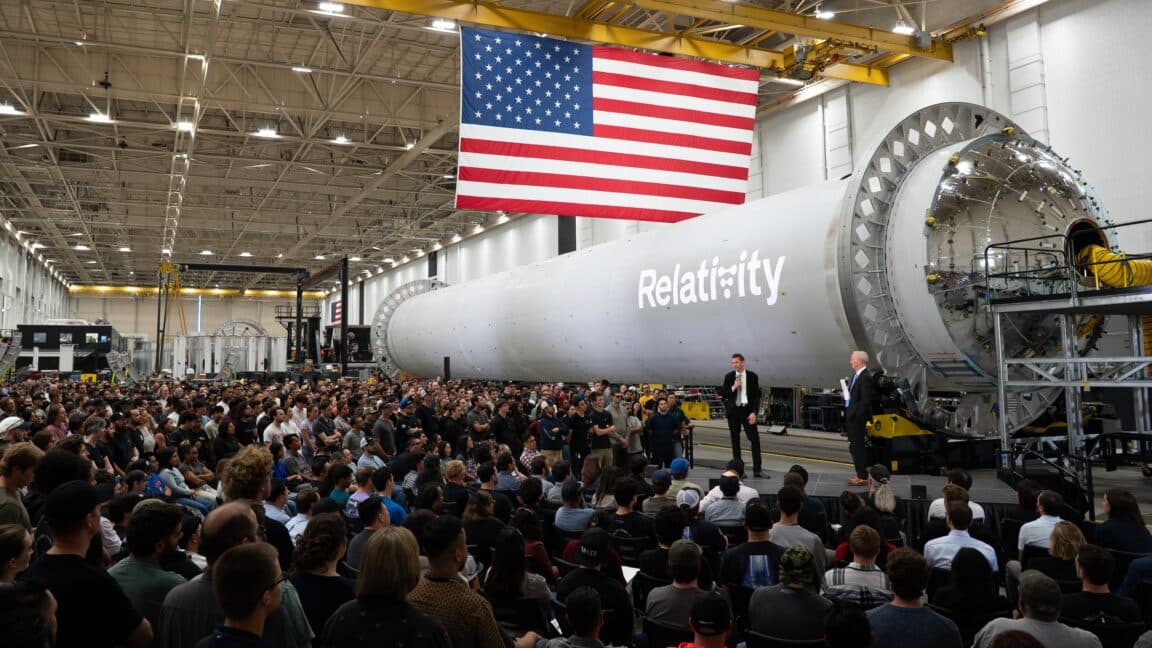
Rocket Report: Blue Origin Begins Launch Pad Rebuild as Relativity Space Sets Its Sights on Mars
Welcome back to another edition of the Rocket Report, your go-to weekly roundup of the most important developments in the commercial and government spaceflight industry. This week's coverage is packed with significant milestones, setbacks, and ambitious new targets from some of the most closely watched rocket companies in the world. From Blue Origin's ongoing infrastructure recovery efforts to Relativity Space's audacious plans for Mars, the space industry continues to push boundaries at a breathtaking pace.
Before we dive into the full breakdown, a brief but important note on Starship: SpaceX's next major test flight is on the horizon, and the details are worth knowing. Here's everything you need to stay current on the state of orbital and suborbital launch vehicles heading into the next chapter of the space race.
Starship Flight 13: What We Know So Far
SpaceX's Starship program remains one of the most-watched development efforts in the history of rocketry, and Flight 13 is already generating significant anticipation. According to Gwynne Shotwell, SpaceX's President and Chief Operating Officer, the next Starship test flight could occur as soon as next month. Shotwell shared this timeline in a recent interview with CNBC, offering one of the clearest public signals yet about the pace of Starship's development cadence.
That said, tempered expectations are warranted. There is still considerable work to be completed before Flight 13 is ready to leave the launch pad, and even Shotwell's optimistic framing acknowledged that the timeline remains fluid. What is more clearly defined is what Flight 13 will actually look like when it does fly.
According to Shotwell's comments, Flight 13 will closely mirror the profile of the previous test flight, which took place last month. SpaceX plans to execute another suborbital flight path, with the ship concluding its journey via a splashdown in the Indian Ocean. This approach reflects a deliberate and methodical development strategy rather than an aggressive push toward orbital operations.
Why SpaceX Is Waiting Until Flight 14 for Orbital Attempt
One of the most consequential details to emerge from Shotwell's CNBC interview is that SpaceX will not attempt an orbital Starship flight until at least Flight 14. The reason centers on a critical failure from the most recent test: the Starship vehicle was unable to complete a key engine restart while in space. This engine restart is essential for any flight profile that requires the ship to achieve or sustain orbital velocity, making it a non-negotiable milestone before an orbital attempt is sanctioned.
The decision to delay orbital ambitions until Flight 14 underscores SpaceX's continued commitment to iterative testing. Rather than rushing to achieve headline-grabbing milestones, the company appears focused on methodically resolving technical issues before escalating mission complexity. For those tracking the long-term trajectory of Starship — which is central to NASA's Artemis lunar landing program and SpaceX's own Mars colonization vision — the progression from Flight 13 to Flight 14 will be a critical stretch of the development road map.
Blue Origin's Launch Pad Rebuild: A Necessary Step Forward
Over at Blue Origin, engineers and construction crews have begun the process of rebuilding the company's launch pad following recent damage. While the specifics of the incident that necessitated the rebuild have been the subject of industry discussion, the commencement of reconstruction work represents a meaningful step toward restoring full operational capability at the facility.
Blue Origin has been working to establish itself as a credible competitor in both the commercial launch and government contract markets. The New Glenn rocket, which successfully completed its inaugural orbital launch earlier this year, marked a turning point for the company after years of development. Maintaining and restoring launch infrastructure is critical for Blue Origin to build on that momentum and meet its growing manifest of planned missions. The pad rebuild, while a setback in terms of timeline, signals the company's intent to press forward with its operational ambitions.
Relativity Space Targets Mars: A Long Game with Big Stakes
Relativity Space, the startup that made headlines with its 3D-printed Terran 1 rocket and the more ambitious Terran R reusable vehicle, has been vocal about targeting missions beyond Earth orbit. The company's Mars aspirations represent one of the most unconventional long-term visions in the commercial launch sector, positioning Relativity not merely as a launch services provider but as a potential infrastructure builder for interplanetary exploration.
While the details of Relativity's Mars roadmap continue to evolve, the company's underlying technology — particularly its Stargate metal 3D printing system — is central to its argument that it can manufacture rockets more efficiently and cost-effectively than traditional methods allow. For Mars missions, where every kilogram of payload and every dollar of manufacturing cost matters enormously, this manufacturing edge could prove to be a genuine differentiator if the technology scales as planned.
Isar Aerospace Faces Continued Spectrum Rocket Delays
European rocket startup Isar Aerospace remains at the top of the continent's emerging commercial launch hierarchy, but its path to reliable flight operations has proven frustratingly slow. The company's Spectrum rocket suffered yet another launch scrub this week, after engineers detected what Isar described as "off nominal behavior in the vehicle's fluid systems" during pre-launch operations. The teams quickly halted the attempt and began analyzing data to isolate the root cause of the anomaly.
The setback is the latest in a series of delays for the Spectrum program. Despite having raised nearly $1 billion in funding to date — a figure that places Isar among the best-capitalized new-space startups in Europe — the company has accumulated only a single flight to its record. That flight, conducted last year, ended in failure less than 30 seconds after liftoff. The gap between financial resources and actual flight experience remains a significant vulnerability for Isar as it competes for customers in an increasingly crowded small-launch market.
Looking Ahead: What's Next in Commercial Spaceflight
The coming weeks promise to be eventful for the global launch industry. With Starship Flight 13 potentially on the near-term horizon, Blue Origin rebuilding toward a return to operations, and Isar Aerospace working to resolve its Spectrum issues, the pace of development across multiple programs is simultaneously rapid and uneven. Relativity Space's Mars ambitions add a longer arc of strategic ambition to a landscape already defined by intense competition and high technical stakes.
- Starship Flight 13 could launch as soon as next month, featuring a suborbital profile with an Indian Ocean splashdown.
- Orbital Starship flight has been pushed to at least Flight 14, pending resolution of an in-space engine restart failure.
- Blue Origin has initiated a rebuild of its launch pad, aiming to restore operational readiness for New Glenn missions.
- Relativity Space continues to develop its Mars-focused mission architecture around its 3D-printing manufacturing capabilities.
- Isar Aerospace's Spectrum rocket suffered another scrub due to fluid system anomalies, extending the company's wait for its second flight attempt.
Stay tuned for continued coverage of these programs and more as the global space industry navigates one of its most dynamic and consequential periods of development. Whether you're tracking the giants like SpaceX and Blue Origin or the rising challengers like Isar Aerospace and Relativity Space, there has never been a more compelling time to follow the rocket business.