
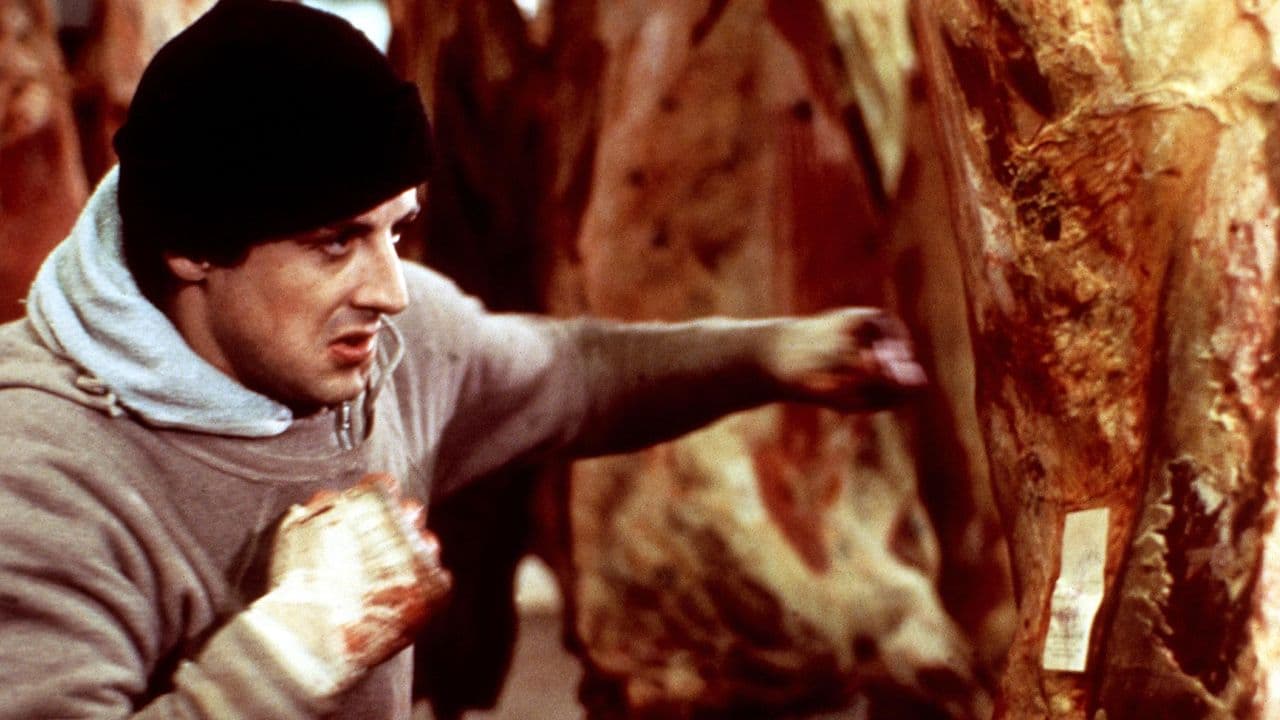
Rocky Is Now Streaming on Netflix — And It Deserves a Fresh Look
Fifty years ago, a low-budget film about a small-time Philadelphia boxer changed cinema forever. Rocky, the 1976 masterpiece written by and starring Sylvester Stallone, is now streaming on Netflix in honor of its landmark 50th anniversary — and if you haven't revisited it since childhood, or if you've only ever caught the sequels, you are in for a genuine revelation. Because the film you think you remember, the triumphant underdog sports movie with the punchy training montages and the fist-pumping finale, is only a fraction of what Rocky actually is.
This is one of those rare cases where a movie's cultural legacy has overshadowed its true nature. The iconography — the steps of the Philadelphia Museum of Art, the raw egg breakfast, Bill Conti's swelling score — has become so embedded in popular consciousness that it feels like we already know the film. We don't. Or at least, most of us have forgotten.
The Movie That Won Best Picture (Not Best Sports Film)
It's worth remembering that Rocky didn't win the Academy Award for Best Picture in 1977 because it was a great boxing movie. It won because it was a great film, full stop. That year it beat out All the President's Men, Network, and Taxi Driver — three films now widely considered among the greatest ever made. That's the company Rocky was keeping. That's the conversation it was winning.
Directed by John G. Avildsen with a kind of gritty, streetwise warmth, the film draws as much from Italian neorealism and the character-driven dramas of the early 1970s as it does from any sports-movie tradition. It is less interested in the mechanics of boxing than in the texture of a life lived on the margins — the cold Philadelphia row houses, the empty fish market where Rocky works as a debt collector, the quiet loneliness of a man who has, by his own admission, become a bum.
At Its Heart, Rocky Is a Love Story
Perhaps the most underappreciated dimension of Rocky is its central romance. The relationship between Rocky Balboa and Adrian Pennino — played with extraordinary, brittle tenderness by Talia Shire — is the emotional spine of the film. Their courtship is awkward, slow, and achingly real. Rocky, a man who talks to his turtles because he's so starved for connection, pursues Adrian with a clumsy sincerity that is more moving than almost any grand romantic gesture Hollywood has produced before or since.
Their first date, which Rocky engineers with characteristic bluntness by taking Adrian to a closed ice rink, is one of the most quietly beautiful scenes in American cinema. When Adrian finally opens up to him, it isn't a movie moment — it's something that feels borrowed from life. The film understands that loneliness and love are two sides of the same need, and it treats that need with uncommon respect.
Sylvester Stallone's Performance Is Better Than You Think
Stallone has spent decades being underestimated as an actor, and that reputation arguably began with the franchise that made him famous. But watch Rocky again without the baggage of five sequels and a spinoff series, and what you'll see is a performance of remarkable subtlety and emotional intelligence. Rocky speaks in half-sentences and trailing thoughts. He deflects with humor and accepts humiliation with a dignity that never tips into self-pity. He is a man who has made peace with being overlooked — until, suddenly, he hasn't.
The famous line — "I just want to go the distance" — lands so hard precisely because Stallone has spent the entire film making us understand what that means to Rocky. It isn't about winning. It's about proving, to himself more than anyone, that he wasn't a mistake.
Why the 50th Anniversary Is the Perfect Time to Watch
There is something especially fitting about encountering Rocky at this moment. We live in an era of maximalist blockbusters, algorithmically engineered emotional beats, and franchise storytelling that rarely trusts an audience to sit with silence or ambiguity. Rocky is almost shockingly restrained by comparison. It moves slowly. It lingers on faces. It allows conversations to breathe.
Netflix's decision to stream the film for its 50th anniversary gives an entirely new generation the chance to meet it on their own terms, without the cultural noise that surrounds the sequels and the Creed films. That's an opportunity worth taking seriously.
What to Watch for on Your (Re)Watch
- The opening scene: Rocky fights in a dingy church basement while a painting of Jesus looks on. The juxtaposition of violence and grace is immediate and deliberate.
- His interactions with Mickey: Burgess Meredith as Rocky's cantankerous trainer delivers one of cinema's great supporting performances, walking a perfect line between cruelty and love.
- The ending: Pay close attention to where Rocky's eyes go when the final bell rings. He isn't looking at the scoreboard. He's looking for Adrian. That tells you everything about what this film is really about.
A Classic That Earns Every Reputation It Has — And Then Some
Fifty years on, Rocky stands not as a relic of its era but as a reminder of what American movies can do when they trust ordinary people to be extraordinary subjects. It is tender, rough-edged, funny, and quietly devastating. It is, above all, a film about the dignity of trying — not winning, not dominating, but simply refusing to quit before the bell.
If you watch it on Netflix this anniversary season expecting the movie you think you know, prepare to be surprised. Rocky has always been this good. We just forgot to look closely enough.