
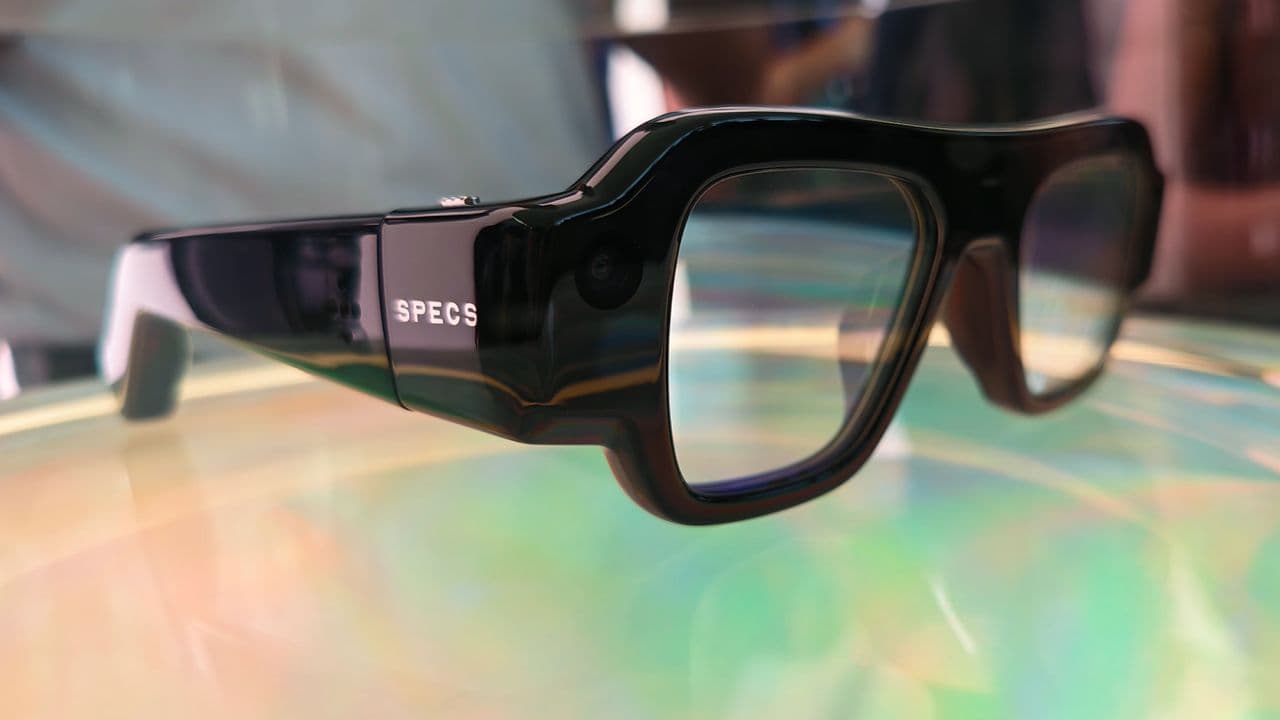
Snap's New Spectacles and the Qualcomm Question Nobody Is Answering
In the fast-moving world of augmented reality wearables, even the smallest technical detail can signal a major strategic shift. That's why eyebrows were raised across the tech industry when Qualcomm publicly claimed that Snap's newest generation of Spectacles — the company's ambitious AR glasses — run on a chip belonging to Qualcomm's so-called "AR family." The catch? Snap itself won't confirm it. This unusual disconnect between a chip supplier and a hardware manufacturer has set off a wave of speculation: What does the chip actually do? Why won't Snap talk about it? And perhaps most importantly — is the hardware good enough to finally make consumer AR glasses a reality?
What Qualcomm Actually Said
Qualcomm has been positioning itself aggressively as the backbone of the augmented reality ecosystem. The company has invested heavily in developing silicon specifically tailored for AR applications — chips that must balance demanding real-time spatial computing tasks, camera processing, low latency rendering, and thermal efficiency, all within the tight constraints of a wearable form factor.
When Qualcomm representatives referenced Snap's new Spectacles as belonging to its "AR family" of devices, it was a calculated statement. Qualcomm is clearly eager to establish its chips as the go-to platform for AR hardware makers, much the same way Snapdragon became synonymous with flagship Android smartphones. By name-dropping Snap — one of the most visible companies in the consumer AR space — Qualcomm gets to bolster its own brand credibility in a nascent but rapidly growing market.
However, Qualcomm stopped short of specifying exactly which chip powers the Spectacles, and Snap has not validated the claim in any official capacity. This ambiguity leaves consumers and investors in an uncomfortable gray zone.
Why Snap Is Staying Quiet
Snap's silence on its chip supplier is not necessarily a red flag — it may actually be a strategic choice rooted in competitive positioning. Many hardware companies deliberately avoid disclosing their silicon partners to prevent competitors from reverse-engineering their supply chain relationships or gaining insight into their product roadmap.
There's also the matter of narrative control. Snap wants the conversation around its Spectacles to center on the user experience, the developer ecosystem, and the possibilities of mixed reality — not on the underlying silicon. Disclosing chip partnerships can sometimes shift media coverage toward benchmarking and spec comparisons rather than the holistic product vision the company is trying to sell.
That said, the silence does leave room for questions. If Qualcomm's AR-family chip truly powers the device, what version is it? How does it compare to what competitors like Meta and Apple are using in their own spatial computing efforts? These are questions that savvy consumers and developers absolutely want answered before committing to a platform.
The Bigger Picture: AR Hardware Is at a Crossroads
To understand why the chip question matters so much, it helps to zoom out and look at where the AR wearable industry stands right now. Augmented reality glasses have been a much-hyped category for over a decade, yet mainstream adoption has remained elusive. The barrier has never really been software ambition — it has consistently been hardware limitation.
Processing power, battery life, heat dissipation, display quality, and form factor are the five pillars any AR glasses maker must simultaneously satisfy. Fail on even one of them and the product becomes a novelty rather than a tool. This is why the chip inside a device like Snap's Spectacles carries so much weight. The right silicon can mean the difference between a pair of glasses that lasts four hours and one that lasts all day. It can determine whether hand-tracking feels natural or laggy. It shapes whether developers can build rich, immersive experiences or are forced to keep things minimal.
Qualcomm's AR Ambitions and Their Industry Implications
Qualcomm's Snapdragon AR series has been steadily maturing. Its chips are already powering enterprise AR headsets from a range of manufacturers, and the company has publicly committed to being the dominant platform for the next generation of spatial computing devices. If Qualcomm has indeed supplied the silicon for Snap's latest Spectacles, it would represent a meaningful consumer-facing win for the chipmaker — the kind of high-profile partnership that signals to the broader market that Qualcomm's AR silicon is ready for mass-market products, not just industrial use cases.
For Snap, aligning with Qualcomm — if that's what has happened — could also provide long-term stability. Qualcomm has deep relationships with manufacturers and a proven track record of iterating quickly on mobile silicon. Snap would be betting not just on today's chip, but on a roadmap of future improvements.
Will It Be Enough to Compete?
The honest answer is: it depends on execution. The AR wearables market is no longer just Snap's playground. Meta's Ray-Ban smart glasses have shown that consumer appetite for stylish, connected eyewear is real and growing. Apple's Vision Pro, while expensive and tethered to a different use case, has raised the bar for what spatial computing can look and feel like. Google is reportedly circling the space again after its earlier stumble with Glass.
In this environment, Snap's Spectacles need more than a capable chip — they need a compelling software story, a thriving developer community, and a price point that doesn't scare off early adopters. The hardware foundation, potentially including Qualcomm's AR silicon, is necessary but not sufficient.
What Consumers and Developers Should Watch For
Official chip confirmation: Whether Snap eventually discloses its silicon partner will reveal a great deal about its confidence in the hardware and its transparency with developers.
Developer adoption rates: The Spectacles platform will live or die by the quality and quantity of experiences built for it. Watch the developer community's response closely.
Performance benchmarks: Once devices are in reviewers' hands, real-world performance data will cut through the marketing noise and reveal whether the AR-family chip delivers on its promise.
Battery and thermal performance: These are historically where AR glasses disappoint. Early hands-on reports will be telling.
The Bottom Line
Qualcomm's claim that Snap's new Spectacles belong to its AR chip family is significant — not because of what it confirms, but because of the conversation it opens. AR wearables are inching closer to a mainstream moment, and the chips powering them are a critical part of that story. Snap's reluctance to engage with the hardware narrative may be a short-term communications strategy, but consumers and developers will eventually demand transparency. In a market where trust, performance, and ecosystem depth determine winners and losers, staying silent on your silicon can only work for so long.