
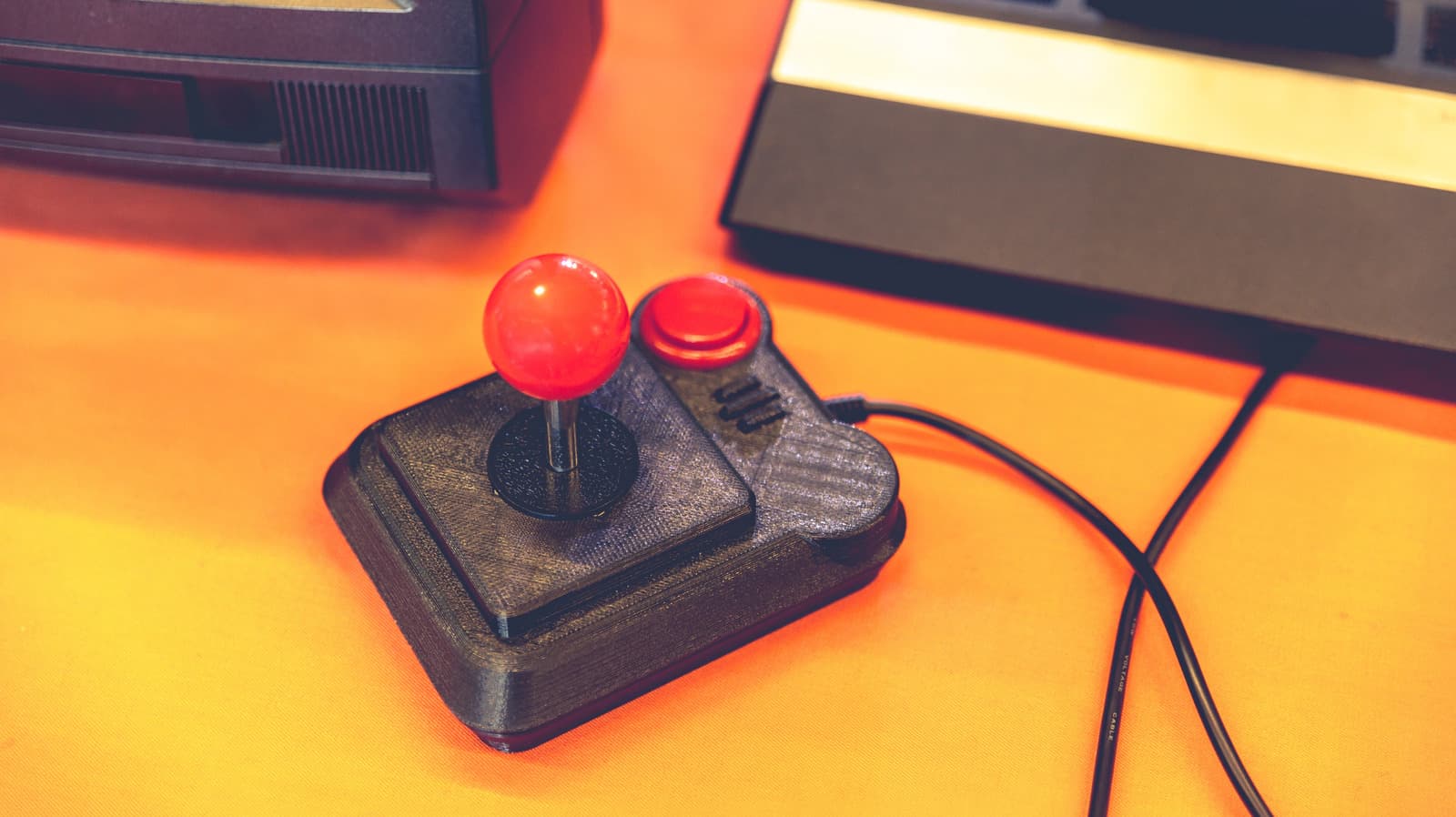
From Pixels to Paradigm Shifts: How Video Games Accidentally Changed the World
When a teenager sits down to play a video game, they are rarely thinking about reshaping civilizations or advancing human science. Yet that is exactly what has happened — repeatedly — throughout the history of gaming. Video games were designed to entertain, but somewhere between the joystick and the screen, they quietly rewrote the rules of medicine, military strategy, economics, and even human psychology. Here are nine remarkable ways video games accidentally changed the world.
1. Video Games Trained Real-World Surgeons
It sounds like the punchline to a joke, but multiple studies have confirmed that surgeons who play video games regularly perform better in the operating room. A landmark study published in the journal Archives of Surgery found that surgeons who played video games for at least three hours per week made 37 percent fewer errors and completed laparoscopic procedures 27 percent faster than their non-gaming peers. The fine motor control, rapid decision-making, and hand-eye coordination demanded by fast-paced games directly translated into surgical precision. Hospitals now look at gaming habits as a genuine predictor of surgical performance.
2. Foldit Players Cracked a Protein-Folding Problem Scientists Couldn't
In 2011, researchers at the University of Washington released a puzzle game called Foldit, which challenged players to manipulate the 3D structures of proteins. Within ten days, the gaming community solved a protein structure related to an AIDS-like virus in monkeys — a problem that had stumped scientists for over a decade. The breakthrough was published in Nature Structural and Molecular Biology, with the online gaming community credited as co-authors. It was one of the first times gamers directly contributed to a peer-reviewed scientific discovery, and it opened the door to crowdsourcing complex scientific problems through game design.
3. The Military Redesigned Its Training Programs Around Gaming
The United States military began using video game-style simulations for combat training in the early 1980s. The game America's Army, released in 2002, was both a public recruitment tool and a legitimate training platform. Beyond simulations, the military noticed that soldiers raised on video games adapted faster to drone operation interfaces, tactical decision software, and digital battlefield mapping. The cognitive skill set developed through gaming — multitasking, spatial awareness, rapid threat identification — became a formal asset in modern warfare doctrine.
4. Tetris Was Used to Treat PTSD and Traumatic Flashbacks
Oxford University researchers discovered something extraordinary: playing Tetris shortly after experiencing a traumatic event could reduce the frequency and intensity of flashbacks. The theory holds that Tetris, as a highly visual and cognitively demanding game, competes with the brain's process of consolidating traumatic visual memories. In clinical trials, trauma patients who played Tetris within six hours of their trauma reported significantly fewer intrusive memories in the following week. This accidental discovery has since sparked a wave of research into using video games as therapeutic tools for PTSD and acute stress disorders.
5. Gaming Economies Became Real-World Economic Laboratories
The virtual economies inside massively multiplayer online games like World of Warcraft and EVE Online grew so complex that real economists began studying them. EVE Online even hired a full-time in-game economist — a PhD holder — to manage its economy. When World of Warcraft experienced a digital plague called the Corrupted Blood Incident in 2005, epidemiologists used the spread patterns to model how real infectious diseases move through populations, particularly among players who fled infected zones, mimicking real-world panic behavior. The event was later cited in academic literature on pandemic preparedness.
6. Video Games Helped Map the Human Brain
Neuroscientists have used video game players as subjects in some of the most detailed brain-mapping studies ever conducted. Games provide repeatable, controllable environments that allow researchers to isolate specific cognitive functions and observe how the brain responds to rewards, failures, and complex spatial navigation. Studies using games have contributed to a deeper understanding of the hippocampus, the dopamine reward system, and neuroplasticity — the brain's ability to rewire itself through repeated experiences.
7. Gaming Helped Develop Modern Internet Infrastructure
The demand generated by online gaming was a massive driver of internet infrastructure improvements throughout the late 1990s and 2000s. The need for low-latency, high-bandwidth connections to support multiplayer games pushed internet service providers and hardware manufacturers to develop faster, more reliable networks. Technologies that today support video streaming, remote work, and cloud computing were accelerated in part by the gaming industry's insatiable appetite for better connectivity.
8. Minecraft Entered the Classroom and Changed Education
Minecraft, a game about placing and breaking blocks, became one of the most widely used educational tools in the world. Educators discovered it could teach architecture, history, coding, mathematics, and collaborative problem-solving in ways traditional curricula struggled to match. The game's Education Edition is now used in over 115 countries, and UNESCO has even used it to help students rebuild digital replicas of cultural heritage sites destroyed by conflict or natural disasters.
9. Video Games Reshaped How We Understand Empathy
Researchers found that narrative-driven games — where players inhabit complex characters facing moral dilemmas — can measurably increase empathy in players. Unlike passive media such as film or television, video games place the player inside the decision-making process. Games like This War of Mine, which simulates civilian survival during wartime, have been formally incorporated into high school curricula in Poland to teach the human costs of conflict. Gaming's interactive nature creates a form of perspective-taking that psychologists now consider a genuine empathy-building mechanism.
The Accidental Revolution
Video games were never meant to solve protein structures, train surgeons, model pandemics, or teach empathy to teenagers. They were built for fun. But that is precisely what makes their real-world impact so remarkable. When millions of people engage deeply and repeatedly with any system — even a virtual one — the effects spill over into reality in ways no designer could have predicted. The next time someone dismisses gaming as a waste of time, remind them: the world has been quietly changing, one playthrough at a time.