
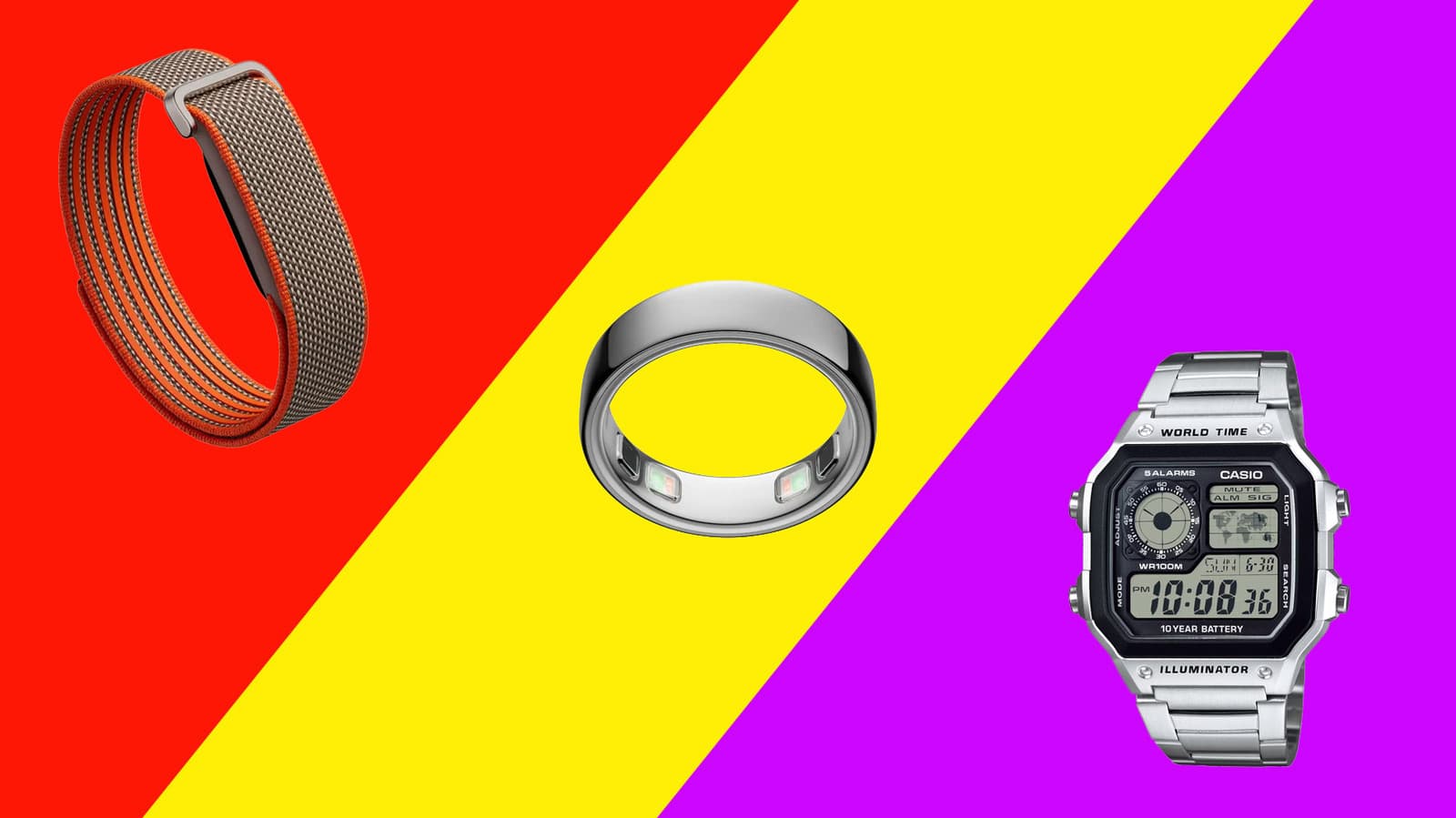
The Smartwatch Backlash Is Real — And It's Growing
For over a decade, smartwatches have been sold to us as the ultimate wrist companion. They track our steps, monitor our heart rate, ping us with notifications, and even let us reply to messages without pulling out our phones. On paper, it sounds like a dream. In practice, for a growing number of people, it feels more like a leash.
The idea that not everyone wants a screen on their wrist might seem counterintuitive in an era obsessed with connectivity. But a quiet and meaningful shift is underway. More consumers are stepping away from their Apple Watches, Galaxy Watches, and Fitbits in favor of something far simpler — a watch that just tells time. And the reasons behind this movement reveal something important about how we're evolving in our relationship with technology.
The Promise vs. The Reality of Smartwatches
When smartwatches first arrived, they promised to declutter our digital lives. Instead of constantly reaching for your phone, you could glance at your wrist and get the same information in seconds. The pitch was convenience and efficiency.
But for many users, smartwatches have done the opposite. Rather than reducing screen time, they've extended it. Rather than cutting distractions, they've added a new source of constant interruption — right on your body. Every buzz, every glow, every notification badge now follows you everywhere with no escape, no drawer to leave your phone in, no moment free from the feed.
Studies on technology and mental health have increasingly pointed to the toll that constant connectivity takes on focus, mood, and sleep. A smartwatch, in this context, isn't a tool for liberation — it's another tether to the always-on digital world.
Why Simpler Watches Are Making a Comeback
The analog watch — or even a basic digital watch without smart features — is experiencing a quiet renaissance. Sales of traditional timepieces have held strong, and watchmakers who focus purely on design, craftsmanship, and timekeeping are finding enthusiastic new audiences among younger consumers who grew up entirely immersed in tech.
Here are some of the key reasons people are making the switch:
- Mental clarity and reduced anxiety: Without notifications buzzing on your wrist every few minutes, many people report feeling calmer and more present throughout the day. A simple watch tells you the time — and nothing else — which turns out to be exactly what a lot of people need.
- Better battery life: Smartwatches typically need to be charged every one to two days. A traditional watch, whether mechanical or battery-powered, can run for months or even years without any charging at all. For travelers and outdoor enthusiasts especially, this is a meaningful practical advantage.
- Aesthetic appeal: Many people find classic watch designs simply more beautiful and versatile than smartwatch faces. A well-crafted analog timepiece pairs naturally with both casual and formal outfits in a way that a tech-heavy smartwatch often doesn't.
- Durability and longevity: A quality mechanical or quartz watch can last decades and even become an heirloom. Most smartwatches, by contrast, are designed with planned obsolescence in mind — newer software eventually stops being supported, and the device becomes outdated within a few years.
- Digital detox without total disconnection: Giving up a smartwatch doesn't mean abandoning technology entirely. It simply means reclaiming one small corner of life that isn't governed by algorithms and notifications.
The Role of Tech Fatigue in This Shift
Tech fatigue is no longer a fringe concept. It's a mainstream reality that affects people across age groups and demographics. The average person now spends well over six hours a day interacting with screens, and many are actively looking for ways to pull back without radically overhauling their entire lifestyle.
Swapping a smartwatch for a simpler timepiece is a low-friction, high-impact change. It doesn't require deleting all your social media accounts or buying a cabin in the woods. It's a single, symbolic decision that can meaningfully change the rhythm of your day. When your wrist stops buzzing, you stop reflexively checking. When you stop reflexively checking, you start being present again — in conversations, in nature, in your own thoughts.
This is part of why the minimalist watch trend resonates so strongly with people who are otherwise very engaged with technology. It's not anti-tech — it's pro-intention.
Who Is Choosing Simpler Watches?
The people stepping away from smartwatches are a diverse group. They include parents who want to model healthier tech habits for their kids, professionals who find wrist notifications undermine their focus during deep work, athletes who prefer the clean simplicity of a sport watch without the software overhead, and style-conscious individuals who want their accessories to reflect a more timeless aesthetic.
Interestingly, some of the biggest advocates for simpler watches are people who work in the tech industry itself. Silicon Valley has long had an undercurrent of intentional tech minimalism — the executives who restrict their children's screen time, the engineers who use dumb phones on weekends. Choosing a non-smart watch fits naturally into this philosophy of building walls between work and the rest of life.
What the Smartwatch Industry Needs to Reckon With
None of this means smartwatches are going away. For people managing chronic health conditions who rely on continuous heart monitoring, for athletes who depend on GPS and biometric tracking, and for those who genuinely find the notification ecosystem useful rather than overwhelming, smartwatches remain powerful tools.
But the industry would be wise to pay attention to the growing chorus of users who feel burned out by their devices. Features like Apple Watch's mindfulness app and focus modes are attempts to acknowledge this tension — but there's something almost paradoxical about a smartwatch telling you to be more present.
The simpler watch movement is, at its core, a statement about values. It says that convenience is not the highest virtue, that not every problem needs a technological solution, and that sometimes the best version of a product is the one that does less. In a world racing toward more features, more data, and more connectivity, choosing a watch that simply tells the time is a quietly radical act — and for many people, it turns out to be exactly the right one.