
Apple eWorld: The Forgotten Online Service That Could Have Changed the Internet
On June 20, 1994, Apple officially launched eWorld, an ambitious online service built exclusively for Mac users. Designed as Apple's direct answer to the rapidly growing popularity of AOL and other online platforms of the era, eWorld represented one of the most fascinating — and ultimately short-lived — chapters in Apple's long history. Three decades later, the story of eWorld offers a compelling glimpse into the early days of consumer internet access, and a reminder that even Apple doesn't always get it right on the first try.
What Was Apple eWorld?
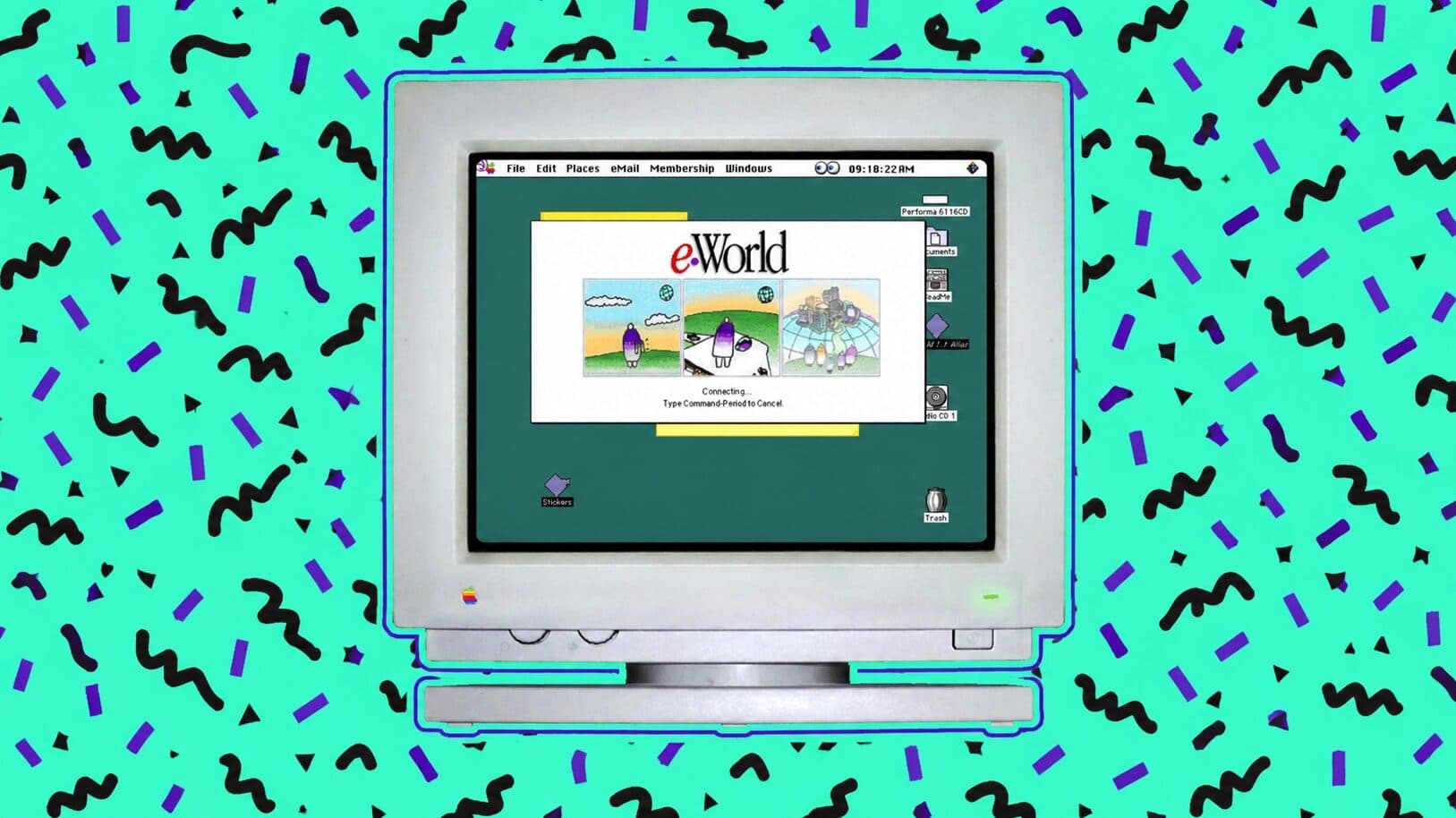
Apple eWorld was a proprietary online service that Apple developed in partnership with America Online. Launched in the summer of 1994, the service was designed to give Macintosh computer owners a curated, visually appealing gateway to the emerging world of online communication, news, entertainment, and commerce. Rather than presenting users with a dull command-line interface or a cluttered menu system, eWorld took a distinctly Apple-like approach: it greeted users with a friendly, illustrated virtual town rendered in a colorful isometric graphic style.
The interface featured cartoon buildings that users could click on to access different parts of the service. There was a post office for email, a newsstand for reading publications, a business park for professional services, a community center for discussion forums, and a help desk for technical support. It was, in many ways, an early vision of what a user-friendly digital world could look like — approachable, organized, and visually delightful in a way that felt unmistakably Apple.
The Vision Behind eWorld
To understand why Apple created eWorld, you have to appreciate the competitive landscape of 1994. Online services like AOL, CompuServe, and Prodigy were fighting for dominance in a market that was exploding in popularity. Personal computers were becoming household staples, and millions of Americans were hearing for the first time about something called "getting online." Apple recognized that its loyal base of Mac users deserved a tailored online experience — one that matched the intuitive, design-forward philosophy of the Macintosh itself.
The partnership with AOL was a strategic move. AOL already had the infrastructure, the subscriber experience, and the technical backbone to power a large-scale online service. Apple brought the design sensibility, the brand trust among Mac users, and a clear vision for how the internet should feel. On paper, it seemed like an ideal collaboration. The resulting product was, by most accounts, genuinely beautiful for its time.
Features and Services Available on eWorld
During its brief lifespan, eWorld offered a surprisingly robust range of features for the mid-1990s. Users could access the following core services:
- Email: Members could send and receive electronic mail through the platform's virtual post office, making it one of the primary draws for early adopters.
- News and Information: The newsstand building provided access to publications, news feeds, and current events — a very early precursor to what we now think of as online news aggregation.
- Discussion Forums: The community center hosted message boards where users could connect with others who shared similar interests, laying the groundwork for the kind of online communities that would later define the social web.
- Software Downloads: Users could download software, updates, and shareware programs, which was a major practical benefit in an era when physical media was still the primary distribution method.
- Apple Support: Dedicated areas offered technical help and product information directly from Apple, making eWorld a useful resource for troubleshooting Mac issues.
- Business Services: The business park section aimed to serve professional users with tools and information relevant to the commercial world.
Why eWorld Failed
Despite its innovative interface and genuine ambition, eWorld never managed to gain the subscriber numbers it needed to survive. By the time Apple pulled the plug in March 1996 — less than two years after launch — the service had attracted only around 150,000 subscribers. Compare that to AOL, which was signing up millions of users during the same period, and the scale of the problem becomes clear.
Several factors contributed to eWorld's downfall. First, it was available only to Mac users, which dramatically limited its potential audience at a time when Windows-based PCs were rapidly gaining market share. Second, the monthly subscription cost was considered steep, particularly when competing services were aggressively pricing their own offerings. Third — and perhaps most critically — the World Wide Web was beginning to explode in popularity by 1995. The open, decentralized nature of the web made proprietary walled-garden services like eWorld feel increasingly unnecessary.
Apple itself was also entering one of the most turbulent periods in its corporate history. The mid-1990s were marked by executive upheaval, declining market share, and strategic uncertainty. Sustaining a resource-intensive online service was simply not a priority the company could afford to maintain.
eWorld's Legacy in Apple History
Though eWorld is largely forgotten today, it deserves recognition as a genuine pioneer. Its town-based graphical interface was years ahead of its time in terms of thinking about how to make digital spaces feel human and navigable. In many ways, eWorld foreshadowed later efforts to build curated, user-friendly digital ecosystems — from the iTunes Store to the App Store and beyond.
Apple's instinct in 1994 was correct: the online world needed to be more intuitive, more welcoming, and more beautifully designed. eWorld just arrived at the wrong moment, before broadband internet, before ubiquitous personal computing, and before Apple had the resources and leadership to see such a vision through to its full potential.
Remembering June 20, 1994
Thirty years after its launch, Apple eWorld stands as a fascinating artifact of technological ambition. It was a product that imagined a better internet before the internet had really arrived, and it paid the price for being ahead of its time. For Apple historians, Mac enthusiasts, and anyone curious about the roads not taken in the evolution of the digital world, eWorld remains one of the most intriguing what-ifs in Silicon Valley history. The little virtual town that Apple built in 1994 may be long gone, but its spirit — the belief that technology should be inviting, beautiful, and human — lives on in everything Apple makes today.