
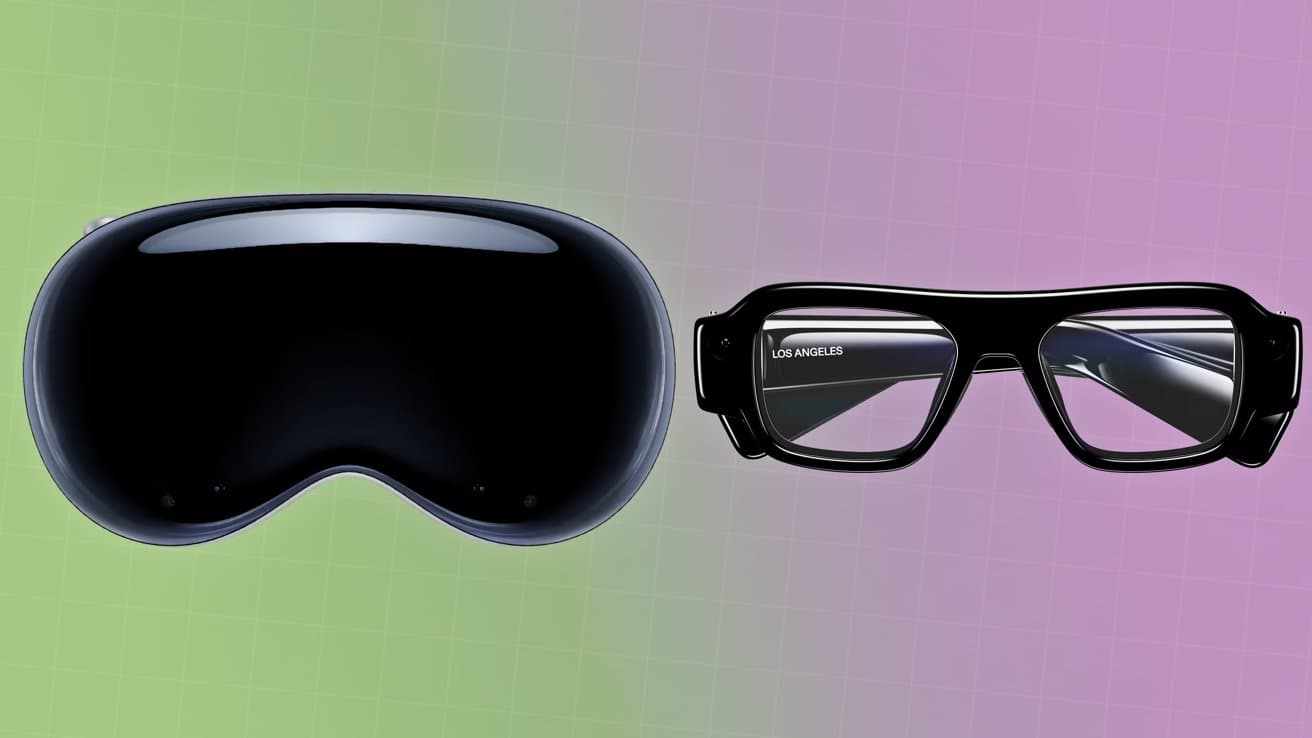
Apple Vision Pro vs Snap Specs: Two Radically Different Visions of the Future
The race to define the future of face-worn computing is heating up, and two products could not be more different in their philosophies. Apple's Vision Pro wants to pull you away from the physical world and into an immersive virtual one, while Snap's newly launched Snap Specs want to keep your feet firmly planted in reality — just with a digital layer draped over it. These two devices represent a genuine fork in the road for spatial computing, and understanding their differences tells us a great deal about where the technology industry thinks we are all headed.
What Are Snap Specs?
Snap Specs made their debut at Augmented World Expo on June 16, 2025, marking a significant leap forward for the social media company best known for disappearing photos and playful camera filters. Unlike Snap's earlier Spectacles, which were essentially a camera you wore on your face, Snap Specs introduce a built-in display — a genuine step into the augmented reality arena. The device looks closer to a pair of conventional eyeglasses than the bulky headsets we have grown accustomed to seeing in tech demonstrations, though the lenses carry a distinctive reflective finish that signals their digital capabilities.
Snap's approach aligns it more closely with Meta's Ray-Ban collaboration, particularly the yet-to-ship Meta Ray-Ban Display, which similarly aims to overlay digital information onto the real world through a lightweight, socially acceptable form factor. The philosophy driving Snap Specs is one of enhancement rather than replacement — the real world stays visible and primary, with digital content sitting on top of it.
What Is Apple Vision Pro?
Apple Vision Pro, by contrast, is a spatial computing headset that creates a fully immersive mixed reality environment. Launched in early 2024, Vision Pro is Apple's most ambitious and expensive consumer product in years, carrying a starting price of $3,499. The device uses a combination of high-resolution micro-OLED displays, advanced eye tracking, hand tracking, and a system of external cameras to blend virtual content with a passthrough view of the real world — or to block reality out entirely when users want a fully virtual experience.
Apple positions Vision Pro not as a gaming gadget or a social novelty but as a productivity and entertainment platform. It runs visionOS, a dedicated operating system that reimagines the Mac and iPad experience in three-dimensional space. Users can spread virtual app windows across their living room, watch movies on a cinema-sized floating screen, or collaborate with colleagues using a spatial version of FaceTime. It is an expensive, powerful, and deliberately premium proposition.
Design Philosophy: Immersion vs Augmentation
The most fundamental difference between these two devices lies in their relationship to reality. Apple Vision Pro, despite its passthrough cameras, is primarily an immersion device. Even when you can see the world around you through its external cameras, you are always viewing a digital reproduction of that world, mediated by the headset's displays. The boundary between the virtual and the physical is one that Apple controls entirely.
Snap Specs, on the other hand, are a transparent augmentation tool. You look through the lenses rather than at a screen, meaning the real world is always genuinely present. Digital content — notifications, navigation prompts, interactive visual effects — is projected as a layer on top of authentic physical reality. For many people, particularly in social settings, this distinction is enormous. Wearing a full headset in public remains awkward and isolating. Smart glasses, at least in theory, let you stay visually connected to the people and places around you.
Form Factor and Wearability
Apple Vision Pro weighs approximately 600 to 650 grams depending on the configuration, and it requires a battery pack connected via a cable for use away from a power outlet. It is unambiguously a device you wear for a session — to watch a film, work at a desk, or experience a specific app — rather than something you might keep on your face all day. Its design is elegant by headset standards, but it is still very much a headset.
Snap Specs are designed for exactly the opposite use case. They are glasses, meant to be worn continuously throughout a day. Their weight and profile are far closer to prescription eyewear, which is a deliberate choice to normalise the experience of wearing smart glasses in public, at work, or with friends. Whether the built-in display technology is mature enough to justify all-day wear remains to be seen, but the intention is clearly toward ambient, persistent use.
Who Are These Devices For?
Apple Vision Pro is aimed squarely at professionals, early adopters, and enthusiasts who want to experience the leading edge of what spatial computing can do and are willing to pay handsomely for the privilege. It is a device that earns its place in focused, deliberate computing sessions. Creatives, developers, and remote workers represent its core audience.
Snap Specs are targeting a much broader — and younger — demographic. Snap's existing user base skews toward Gen Z and millennials who are already fluent in augmented reality through Snapchat's lenses and filters. Bringing that experience into a physical wearable is a natural extension of the brand's identity, aimed at social, casual, and on-the-go use.
The Bigger Picture for Spatial Computing
What the arrival of Snap Specs makes clear is that spatial computing is not a single product category with one dominant form — it is a spectrum. At one end sits the full-immersion headset represented by Apple Vision Pro, offering the deepest and most powerful computing experiences. At the other end are lightweight smart glasses like Snap Specs, designed for lightweight digital augmentation woven seamlessly into everyday life.
- Apple Vision Pro prioritises processing power, display quality, and immersive software experiences at a premium price point.
- Snap Specs prioritise wearability, social acceptability, and continuous augmented reality overlays at a likely more accessible price.
- Both approaches are valid, and both are genuinely necessary for the broader adoption of face-worn computing.
- The competitive landscape now also includes Meta's Ray-Ban Display, which signals that the smart glasses market is becoming crowded fast.
Ultimately, Apple and Snap are not really competing for the same customer in 2025. They are competing to define what face-worn computing means in the decade ahead. Apple is betting that people will want to step into richer, more powerful digital worlds. Snap is betting that people will never want to step out of the real one. The most fascinating outcome — and probably the most likely — is that they are both right, and that the future of spatial computing will be wide enough to hold both visions at once.