
Apple Wallet's New 'Insights' Feature Is Coming in iOS 27 Beta 2
Apple is continuing to expand the capabilities of its Wallet app, and the latest iOS 27 Beta 2 release brings an exciting glimpse of what's ahead. A brand-new feature called Insights has been discovered within the Wallet app, signaling Apple's growing ambition to become a central hub for personal finance management. For anyone who has ever wished their iPhone could offer a fuller picture of their financial life — not just Apple Card transactions — this development is worth paying close attention to.
What Is the Insights Feature in Apple Wallet?
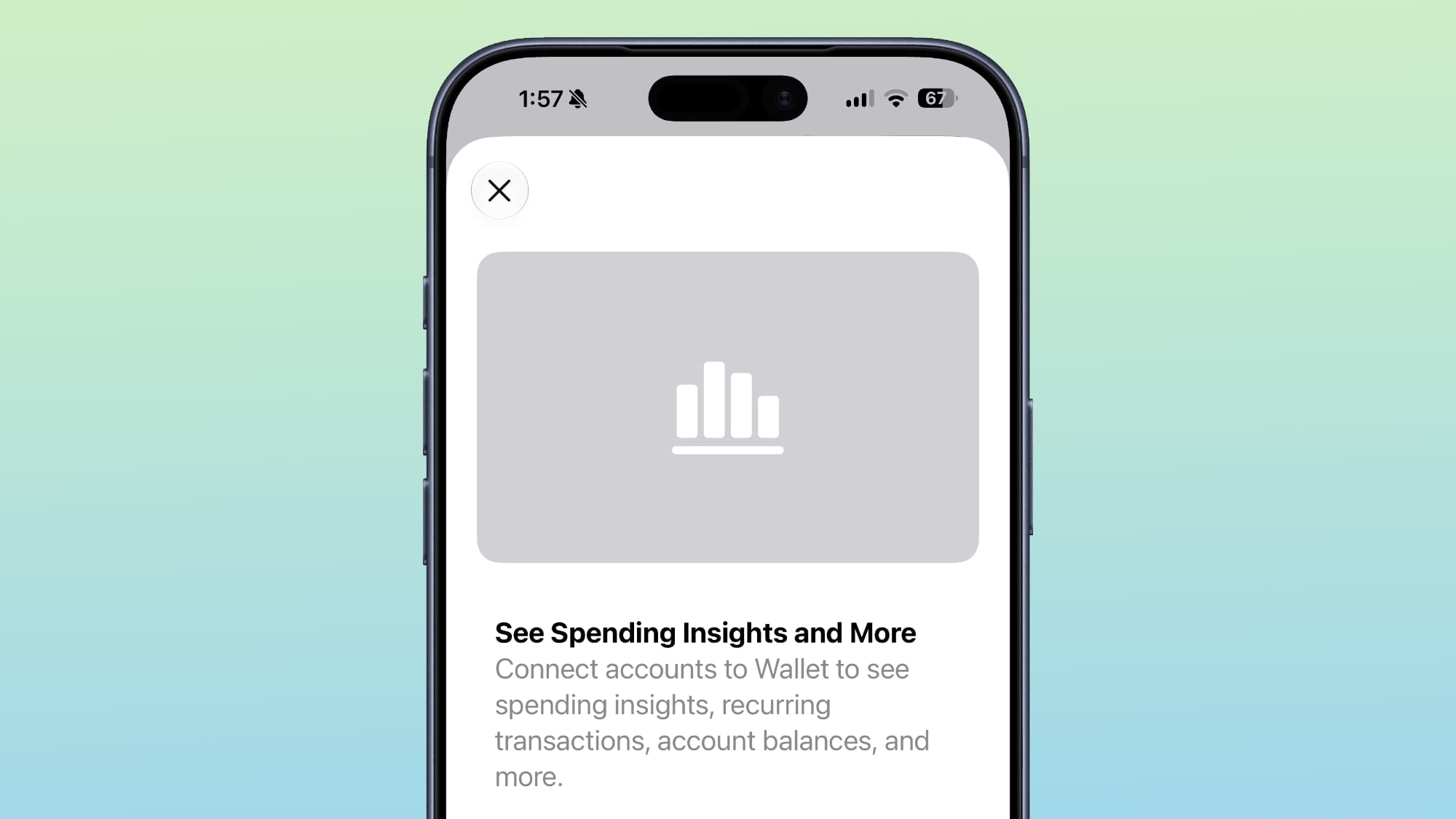
The new Insights feature is accessible directly within the Wallet app by tapping the three-dot menu icon located in the upper right corner of the interface. Once tapped, users are greeted with a splash screen that introduces the feature and outlines its core promise: a unified view of your financial accounts, all from within the familiar Wallet environment.
According to the splash screen, Insights will allow users to connect their financial accounts to Wallet in order to view:
- Spending insights and breakdowns
- Recurring transactions such as subscriptions and bills
- Account balances across connected institutions
- Additional financial data pulled from linked accounts
This positions Wallet as something much closer to a full-featured personal finance app — think Mint or YNAB — rather than simply a digital card holder and Apple Pay launcher.
How Does Apple Handle Your Financial Data?
One of the most important details buried in the fine print of the Insights splash screen relates to how Apple processes the financial information it fetches. The disclosure reads: "Your device is connected to your financial institution by an Apple wholly owned subsidiary, which fetches, categorizes, and standardizes your account information for display on your device. Your account information is not stored."
This is a notably privacy-conscious framing. Apple is making clear that the data is processed and displayed on-device rather than being retained on Apple's servers. For privacy-minded users, this distinction matters enormously. It suggests Apple may be leveraging a subsidiary — potentially related to its existing financial infrastructure — to act as an intermediary that normalizes data from different banks and card issuers without building a permanent database of user transactions.
While the feature is not yet functional in Beta 2 — tapping "Continue" leads to the standard Add to Wallet interface with no new options available — the groundwork is clearly being laid for a significant update before iOS 27 reaches a stable release.
The Connected Cards Legacy: Why Insights Matters
To fully appreciate why Insights is such a meaningful development, it helps to understand the rocky history of Apple's previous attempt at cross-institution Wallet integration: Connected Cards, introduced in iOS 17.1.
Connected Cards was Apple's first serious attempt to bring third-party card data into the Wallet app. The idea was solid — users could see total balances, transaction histories, and even rewards information for supported cards directly within Wallet. However, the feature required card issuers to actively implement support, and adoption was extremely limited.
In the United States, Discover was one of the few major issuers to integrate with Connected Cards. Users with Discover accounts could see their card balance, access Pay with Rewards, and browse their transaction history inside Wallet. However, Discover removed this functionality in early June, leaving U.S. users with almost no domestic issuers supporting the feature. A handful of UK banks have maintained deeper integration, but overall, Connected Cards never reached its potential.
The fundamental problem was dependency. Apple could build the platform, but it couldn't force banks and card issuers to support it. Insights appears designed to solve exactly that problem by working independently of issuer-side implementation — essentially bypassing the need for a bank to specifically build Wallet support.
Insights vs. Connected Cards: A Smarter Approach
The key architectural difference between Insights and Connected Cards seems to be who does the heavy lifting. With Connected Cards, the card issuer had to develop and maintain the integration. With Insights, Apple's own subsidiary handles the data fetching, categorization, and standardization. This means that as long as a user can connect their bank account — likely through a secure credential or open banking framework — Insights should theoretically work with a far broader range of financial institutions from day one.
This is the model that fintech apps like Plaid have used for years to power budgeting and financial management tools. Apple now appears to be building its own version of this infrastructure, tightly integrated into the native iOS experience and governed by Apple's privacy standards.
What This Means for Apple's Financial Ecosystem
Apple has long been building out its financial services portfolio. Apple Card, Apple Cash, Apple Pay Later (before its discontinuation), and Savings accounts have all pointed toward a broader vision of Apple as a financial services platform. Insights fits naturally into this strategy. By giving users a complete picture of their spending across all accounts — not just the Apple Card — Apple makes Wallet indispensable for day-to-day financial awareness.
For users who currently rely on third-party budgeting apps, a well-executed Insights feature could reduce or even eliminate that need entirely. The convenience of having spending data, recurring charges, and account balances surfaced automatically within an app already living on the iPhone's home screen is genuinely compelling.
When Can You Expect Insights to Be Available?
Since the feature is currently non-functional in iOS 27 Beta 2, it is likely still in early development. Apple frequently seeds UI and placeholder features in early betas that become fully operational in later beta cycles or at launch. With iOS 27 expected to reach public release in the fall, there is still meaningful time for Apple to complete and refine the Insights experience before it reaches users' devices.
In the meantime, developers and beta testers can keep an eye on subsequent iOS 27 betas for signs of the feature becoming active. If Insights delivers on its promise — broad account support, on-device privacy, and a clean spending overview — it could represent the most significant Wallet update Apple has shipped in years.