
Why 1080p Gaming Is Still King in 2025
Every year, the PC gaming industry produces flashier hardware, higher resolution displays, and increasingly expensive graphics cards promising next-generation visuals. Yet, when you actually look at how most people game, a very different story emerges. According to the Steam Hardware Survey, more than 50% of all PC gamers are still playing at 1080p Full HD resolution. By comparison, 1440p accounts for roughly 21% of users, and 4K sits at a modest 5%.
These numbers tell us something important: the average gamer is not chasing 4K perfection or even the increasingly popular 1440p sweet spot. They are sitting comfortably at 1920×1080, and they are doing just fine. That reality has enormous implications for how you should think about your next GPU purchase — or whether you need one at all.
The RTX 3060 Is Still One of the Most Popular GPUs on the Planet
The fact that the RTX 3060 continues to top GPU popularity charts on Steam is remarkable when you consider that the card launched back in early 2021. That makes it over five years old at the time of writing, yet it remains the graphics card of choice for millions of PC gamers worldwide. Why? Because for 1080p gaming, it simply works — and it works well.
The RTX 3060 delivers smooth, high-quality performance across the vast majority of modern game titles at 1080p, often hitting well above 60 frames per second on high settings. It supports ray tracing, DLSS 2.0, and handles demanding open-world titles without breaking a sweat in most scenarios. For the resolution that the majority of gamers actually use, it remains a completely capable card in 2025.
The lesson here is not that newer is always better. The lesson is that good enough for your use case is genuinely good enough — and recognizing that can save you hundreds of dollars.
Is the RTX 4060 Actually Worth Upgrading To?
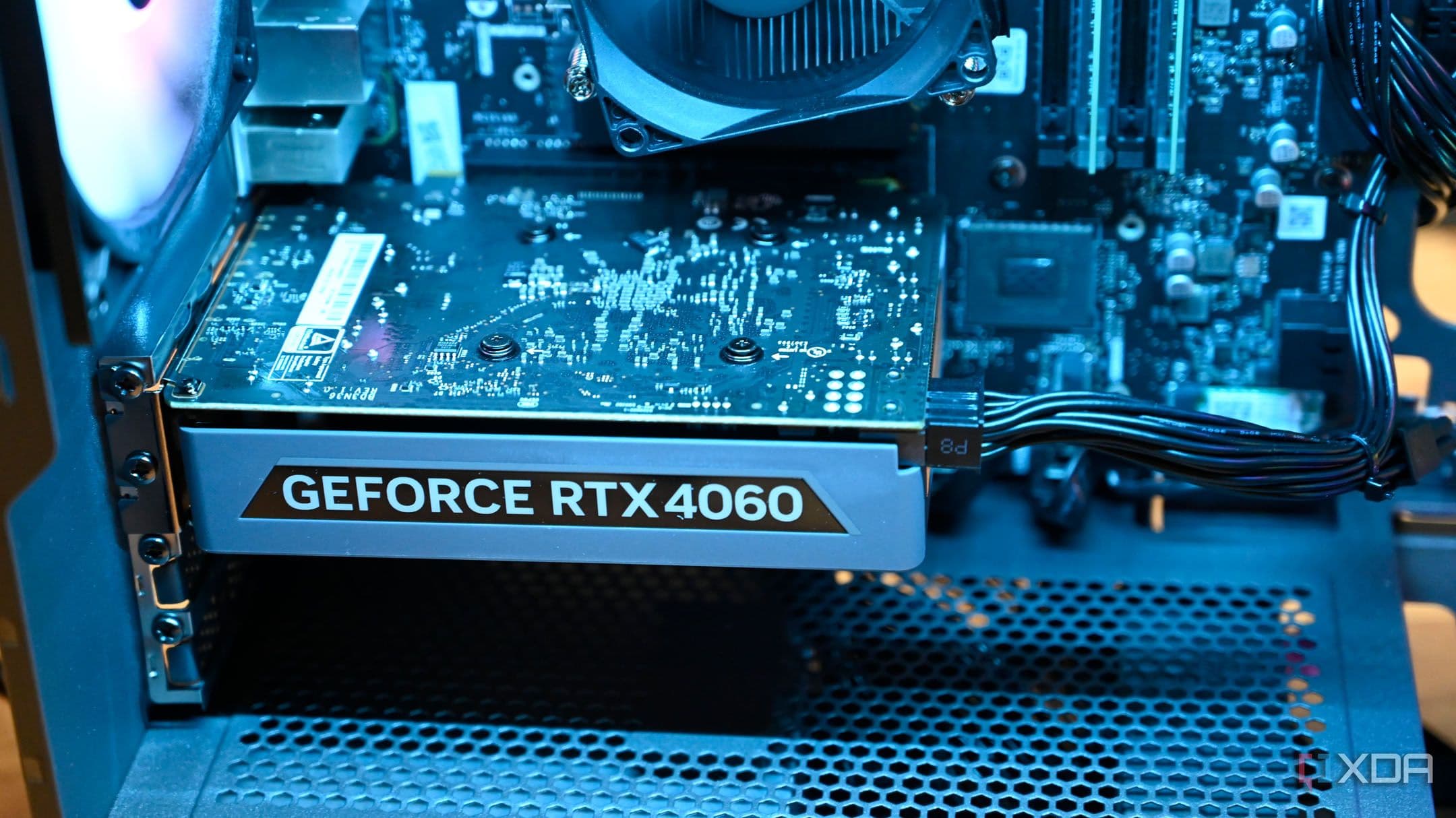
NVIDIA's RTX 4060 has been steadily gaining ground on the Steam Hardware Survey, and it is clearly the successor aimed at the same 1080p audience. But before you rush out to buy one, it is worth asking: what exactly are you getting for your money compared to sticking with an RTX 3060?
The RTX 4060 does bring meaningful improvements in several areas. It features DLSS 3 with Frame Generation support, which can deliver a significant boost in perceived frame rates in supported titles. It is also more power-efficient than its predecessor, drawing considerably less wattage for comparable or slightly better rasterization performance. If you are building a new machine from scratch or your current card has genuinely died, the RTX 4060 is a solid 1080p choice.
However, if you are sitting on a working RTX 3060 and playing primarily at 1080p, the real-world in-game performance difference is often not dramatic enough to justify the upgrade cost. Raw rasterization gains are meaningful but modest, and many of the RTX 4060's best features, like Frame Generation, only shine when you are already running at relatively high base frame rates. For pure 1080p gameplay on high settings, an RTX 3060 owner is unlikely to feel a transformative difference in day-to-day gaming.
When a GPU Upgrade Actually Makes Sense
There are absolutely scenarios where upgrading your graphics card is the right call, even if you are gaming at 1080p. Here are the situations worth considering:
- Your current GPU is three or more generations old. If you are running something like an RTX 2060 or older, or an AMD RX 5700 or below, a modern mid-range card will deliver a genuinely noticeable improvement in both performance and feature support.
- You are planning to move to 1440p or higher. If a new monitor is on the horizon and you are eyeing 1440p gameplay, then investing in something like an RTX 4070 or AMD RX 7800 XT makes much more sense than squeezing another year out of a 1080p-class card.
- You are regularly hitting performance walls in new releases. If your current GPU cannot maintain stable frame rates in the titles you actually want to play, that is a legitimate reason to upgrade rather than simply chasing a spec sheet improvement.
- Your card has hardware limitations. Cards lacking modern features like DirectX 12 Ultimate support, hardware ray tracing, or upscaling technology may increasingly struggle with newer game engines over the next few years.
The Smarter Way to Think About GPU Upgrades
The GPU market has a way of creating artificial urgency. New architectures launch with impressive benchmark numbers, marketing campaigns promise generational leaps, and it is easy to feel like you are falling behind if you are not running the latest hardware. But the Steam Hardware Survey cuts through that noise with cold, hard data: the majority of gamers are not even using GPUs released in the last three years as their primary card.
The smartest approach to GPU upgrades is to focus on your actual gaming experience rather than theoretical performance ceilings. Ask yourself whether your current card is genuinely holding back your enjoyment of the games you play. If the answer is no, then your money is better saved for a future upgrade that will deliver a truly meaningful step forward — whether that means jumping to 1440p with a more capable card, or waiting for a generational leap that justifies the investment.
Final Verdict: Do You Really Need to Upgrade?
If you are a 1080p gamer running an RTX 3060 or a similarly capable mid-range card from the last few years, the honest answer is: probably not. The data backs this up. The majority of PC gamers are in exactly your position and are gaming perfectly happily without chasing the latest GPU release cycle.
Save your budget for a time when an upgrade genuinely changes your experience — a new resolution, a new monitor, or a new GPU generation that represents a real technological leap. Until then, the best upgrade for your 1080p setup just might be no upgrade at all.