
Wind Energy's Hidden Cost: The Threat to Birds
Wind energy has long been celebrated as one of the cleanest and most sustainable power sources available. Across rolling plains, coastal regions, and mountain ridges, wind farms generate electricity without burning fossil fuels, releasing greenhouse gases, or contributing to the air pollution that harms both human health and the broader environment. For anyone concerned about climate change, wind turbines represent a genuine step in the right direction.
But wind energy is not without its drawbacks — and one of the most troubling involves the creatures sharing the skies with those spinning blades. Birds, particularly raptors and other large species that soar on thermal currents, are at serious risk from wind turbine collisions. Studies have estimated that hundreds of thousands of birds are killed by wind turbines every year in the United States alone, with some global estimates reaching into the millions. For species already struggling due to habitat loss, pesticide exposure, and climate disruption, this additional source of mortality is a significant concern for conservationists worldwide.
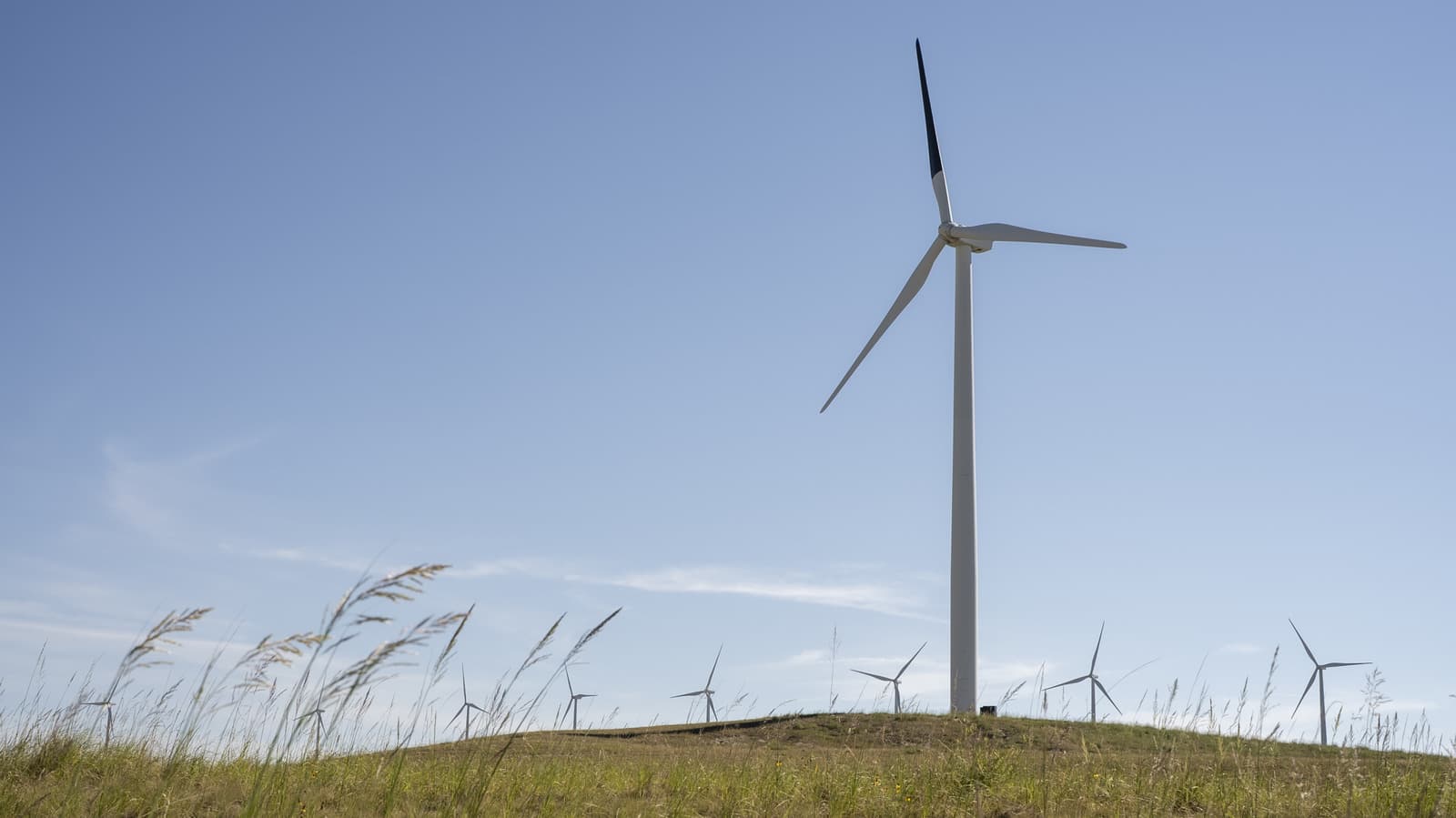
The challenge has always been finding a solution that doesn't compromise the energy-generating capacity of wind farms. Until recently, the options available were either expensive, technically complex, or simply ineffective at scale. That's what makes a surprisingly straightforward innovation so exciting: painting just one blade on a wind turbine black.
The Science Behind the Black Blade Solution
The concept was put to the test in a landmark study conducted at the Smøla wind farm in Norway, one of the most scientifically rigorous examinations of bird-turbine interactions ever undertaken. Researchers from the Norwegian Institute for Nature Research painted a single blade on select turbines entirely black, while leaving the remaining three blades in their standard white or light grey color. The results were striking.
Over the course of the study period, turbines with one black blade saw bird fatalities drop by approximately 70 percent compared to turbines with all-white blades. That number is not a rounding error — it represents a dramatic, near-transformative reduction in one of wind energy's most persistent environmental problems, achieved without any changes to turbine mechanics, energy output, or operational costs beyond the price of a can of paint.
So why does it work? The leading theory centers on a phenomenon called motion smear. When all four blades of a turbine are the same light color, they can blend together visually as they spin, creating an almost transparent or imperceptible disk effect. Birds — even those with exceptional vision — may fail to register the blades as solid, fast-moving objects in time to change course. By contrast, a single dark blade creates a stark visual asymmetry as the turbine rotates. The alternating pattern of light and dark interrupts the optical illusion, making the spinning rotor far more visible and allowing birds to perceive and react to the hazard before it's too late.
Why This Matters for the Future of Wind Energy
Wind power capacity is expanding rapidly across the globe. Countries are building larger wind farms with taller turbines in order to capture more energy and meet ambitious climate targets. As this infrastructure grows, so too does the potential impact on bird populations — unless effective mitigation strategies are adopted at scale. The single black blade approach is particularly compelling because of how accessible it is.
- It requires no new technology or engineering changes to existing turbines.
- It can be applied retroactively to turbines already in operation.
- The cost is minimal compared to other bird deterrent systems, such as radar-activated shutdown systems or acoustic deterrents.
- It does not appear to affect the energy output of the turbine in any measurable way.
- It is passive and requires no ongoing maintenance or monitoring to function.
For wind farm operators already navigating strict wildlife regulations and environmental impact assessments, this solution offers a practical, cost-effective way to demonstrate environmental responsibility without sacrificing profitability or performance.
Challenges and Considerations Going Forward
Despite the promising results, the rollout of black-blade turbines has not yet become standard practice across the industry. Part of the hesitation stems from a need for broader replication of the original Norwegian findings across different geographic regions, wind farm configurations, and bird species. What works on a Norwegian coast may need to be validated in the grasslands of the American Midwest, the deserts of Southern Europe, or the offshore installations dotting the North Sea.
There is also the matter of aesthetics and public perception. Wind farms are increasingly subject to visual impact assessments, and some stakeholders worry that turbines with mismatched blade colors could face additional scrutiny or opposition from local communities. These concerns are not insurmountable, but they do require thoughtful communication and, where possible, community engagement.
Researchers are also exploring whether different color combinations, patterns, or placement of the contrasting blade could yield even better results, potentially pushing collision reductions even higher than the already impressive 70 percent figure observed in Norway.
A Small Change With a Massive Impact
In a world where environmental solutions are often accompanied by enormous price tags and years of regulatory approval processes, the black wind turbine blade stands out as a rare example of elegant simplicity. It doesn't require a breakthrough material, a new piece of hardware, or a government subsidy program. It requires paint.
As wind energy continues its crucial role in the global transition away from fossil fuels, finding ways to minimize its impact on wildlife is not just an ethical obligation — it is essential to maintaining public and regulatory support for the industry's long-term growth. The single black blade may be one of the most cost-effective conservation tools to emerge in years, proving once again that sometimes the most powerful solutions are the ones hiding in plain sight.
For bird lovers, environmental advocates, and energy professionals alike, this is one innovation worth watching — and worth painting.