
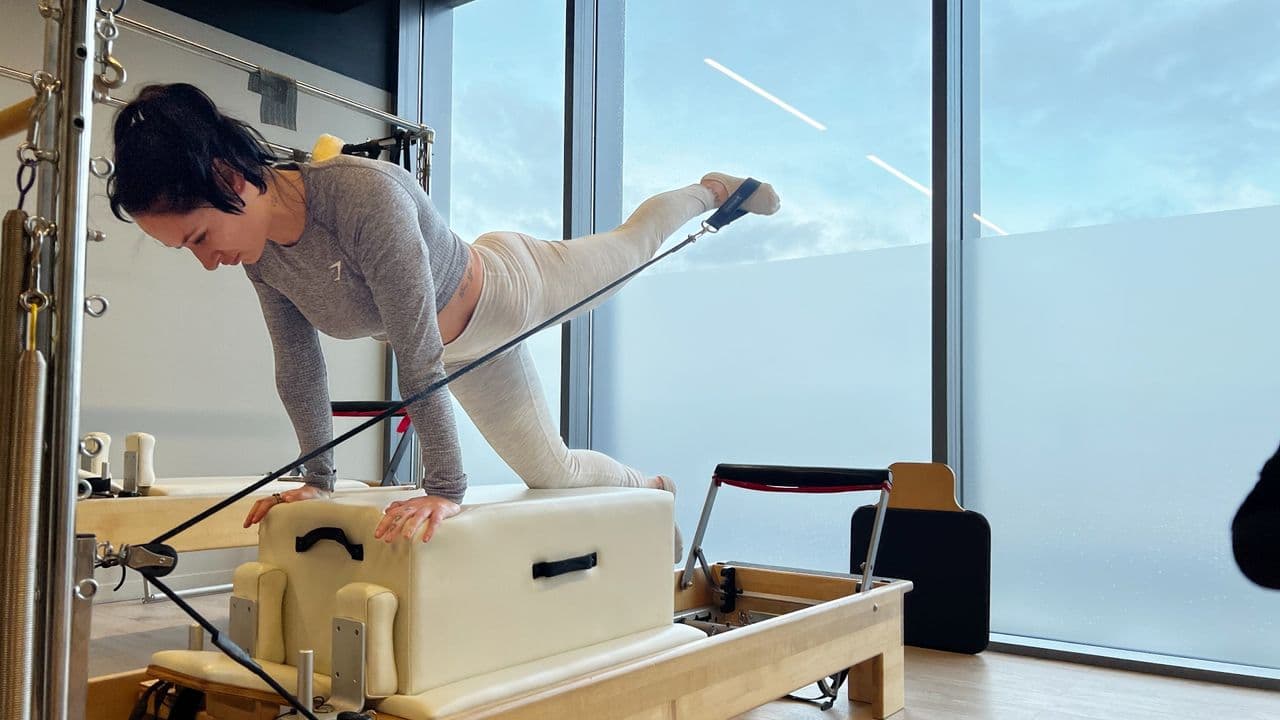
Why Pilates Is the Ultimate Full-Body Movement Practice
If you've been searching for a workout that does more than just build muscle or burn calories, Pilates might be exactly what your body has been asking for. Unlike high-intensity training that pushes your limits through force, Pilates works with your body — layering mobility, stability, and strength in a way that feels almost fluid. That's where the concept of "liquid mobility" comes in. It refers to movement that flows freely through every joint, without tension, restriction, or stiffness holding you back.
Whether you're a complete beginner or someone returning to exercise after a break, this 5-move Pilates routine is designed to work every major muscle group while teaching your body how to move with intention, control, and ease. You don't need any equipment, a gym membership, or even a lot of space — just a mat and a willingness to slow down and connect with how your body actually feels.
What Is "Liquid Mobility" and Why Does It Matter?
Liquid mobility is a term used to describe the kind of movement quality that makes an athlete, dancer, or everyday person look effortlessly graceful. It's not just about flexibility — it's the combination of joint range of motion, neuromuscular control, and coordinated strength that allows the body to transition from one position to another smoothly and without compensation.
When your mobility is limited, your body compensates. Tight hips lead to lower back pain. Stiff thoracic spines reduce shoulder function. Poor ankle mobility throws off your knees. Over time, these compensations stack up and create patterns that can lead to chronic discomfort or injury. Pilates addresses these issues at the root by training the body as an interconnected system rather than a collection of isolated parts.
By integrating breathwork, spinal articulation, and deliberate muscular engagement, even five Pilates movements practiced consistently can produce remarkable improvements in how your whole body feels and functions day to day.
The 5-Move Pilates Routine for Your Whole Body
Perform each of the following exercises in sequence, focusing on controlled breathing and precise movement rather than speed or repetitions. Aim for 8 to 10 repetitions of each move, or hold positions where indicated. Rest briefly between exercises as needed, especially if you are new to Pilates.
1. Pelvic Curl (Spinal Articulation)
Lie on your back with your knees bent, feet flat on the mat hip-width apart, and arms resting by your sides. Inhale to prepare. On your exhale, press your lower back gently into the mat, then slowly peel your spine upward one vertebra at a time — from tailbone to mid-back — until your hips are lifted into a bridge position. Hold briefly at the top, then slowly roll back down with equal control. This move warms up the spine, activates the glutes and hamstrings, and begins to develop that essential quality of spinal articulation that underpins almost every other Pilates movement.
2. The Hundred (Core Activation and Breath Control)
From your back, draw your knees into a tabletop position or extend your legs to a 45-degree angle if you feel ready. Curl your head and shoulders off the mat, reaching your arms long by your sides. Begin pumping your arms in small, controlled pulses — five pumps on the inhale, five pumps on the exhale. Work toward completing 100 pumps in total. The Hundred is one of the most iconic Pilates exercises for a reason: it fires up the deep core, trains breath coordination, and builds endurance in the stabilizing muscles of the trunk.
3. Single Leg Stretch (Core and Hip Flexor Mobility)
Remaining on your back with your head and shoulders curled off the mat, draw your right knee into your chest while extending your left leg at a low diagonal. Place your right hand on your right ankle and your left hand on your right knee. Inhale, then exhale as you switch legs in a smooth, alternating motion. Keep your lower back imprinted into the mat throughout. This exercise challenges core stability while simultaneously mobilizing the hip flexors — a key area of tightness for anyone who spends significant time sitting.
4. Swan Prep (Thoracic Extension and Spinal Mobility)
Roll onto your stomach with your hands placed beneath your shoulders and your elbows close to your ribs. Inhale to lengthen, then exhale as you press gently into your hands and lift your chest off the mat, drawing your shoulder blades down and together. Hold for a breath at the top, then lower back down with control. Swan Prep opens the front of the body, counteracts the forward-rounded posture that so many people carry, and builds strength through the entire posterior chain — from the upper back down through the glutes.
5. Side-Lying Leg Series (Hip Stability and Lateral Strength)
Lie on your side in a straight line, with your bottom arm extended beneath your head and your top hand resting on the mat in front of you for light support. Keeping your hips stacked, lift your top leg to hip height and perform slow, controlled forward and backward sweeps. Follow this with small upward pulses, then circles in both directions. Repeat on the other side. The side-lying leg series targets the hip abductors and external rotators — muscles that are critical for knee health, pelvic stability, and balanced movement throughout daily life.
How Often Should You Practice This Routine?
Pilates rewards consistency far more than intensity. Practicing this five-move routine three to four times per week can produce noticeable improvements in posture, joint mobility, and core strength within just a few weeks. If you're using it as a standalone workout, allow yourself 20 to 30 minutes to move through the sequence mindfully. If you prefer to pair it with another form of exercise — such as running, strength training, or yoga — it works beautifully as a warm-up or a recovery session.
Tips for Getting the Most Out of Your Pilates Practice
Breathe intentionally. In Pilates, breath is not an afterthought — it is the engine of the movement. Exhaling during the effort phase of each exercise helps activate the deep core and keeps tension out of the neck and shoulders.
Prioritize quality over quantity. Five perfect repetitions will always outperform twenty sloppy ones. Move slowly enough that you can feel which muscles are working and correct any compensations as they arise.
Stay consistent. The neuromuscular changes that Pilates creates — better motor control, improved joint awareness, more efficient movement patterns — take time and repetition to solidify. Show up regularly, even for short sessions.
Listen to your body. Pilates should never feel sharp or painful. Mild muscular fatigue and the challenge of stabilizing unfamiliar positions are normal. Discomfort in the joints is not. Modify as needed and progress gradually.
Final Thoughts: Move Better, Feel Better
Building liquid mobility, stability, and strength isn't about training harder — it's about training smarter. This 5-move Pilates routine gives your body exactly what it needs to function well: a supple, articulating spine, a strong and responsive core, mobile hips, and the muscular coordination to tie it all together. Make it a regular part of your movement practice, and you'll likely notice the benefits not just during your workouts, but in the way you carry yourself through everything else your day demands.