
Can Your Smartwatch Detect Sleep Apnea? Here's What the Technology Can — and Can't — Do
Millions of people worldwide live with sleep apnea without ever knowing it. The condition, characterized by repeated interruptions in breathing during sleep, is notoriously difficult to self-diagnose. So it's no surprise that many people are turning to their smartwatches for answers. But can your wearable device actually detect sleep apnea? The short answer is no — but the longer answer is a lot more interesting, and potentially very useful for your health.
What Is Sleep Apnea and Why Is It So Often Missed?
Sleep apnea is a common but serious sleep disorder in which your breathing repeatedly stops and starts throughout the night. The most prevalent form, obstructive sleep apnea (OSA), occurs when the muscles in the throat relax too much and block the airway. Central sleep apnea, a less common form, happens when the brain fails to send proper signals to the muscles that control breathing.
Because episodes occur during sleep, most people have no direct awareness of them. Common symptoms — loud snoring, waking with a dry mouth, morning headaches, excessive daytime sleepiness, and difficulty concentrating — are easy to dismiss or attribute to other causes. According to the American Academy of Sleep Medicine, an estimated 80 percent of moderate and severe cases of obstructive sleep apnea go undiagnosed. That's a significant public health problem, since untreated sleep apnea is linked to hypertension, heart disease, type 2 diabetes, and stroke.
This diagnostic gap is exactly where smartwatches have tried to step in.
What Smartwatches Can Actually Track
Modern smartwatches are equipped with an impressive array of sensors, and many of them gather data that is directly relevant to sleep apnea risk. Here's a breakdown of the key metrics wearables can monitor:
Blood Oxygen Saturation (SpO2)
One of the clearest physiological signs of sleep apnea is a drop in blood oxygen levels when breathing is interrupted. Many smartwatches — including the Apple Watch Series 6 and later, the Fitbit Sense, Samsung Galaxy Watch models, and Garmin devices — include optical pulse oximeters that can measure blood oxygen saturation (SpO2) throughout the night. A healthy individual should maintain SpO2 levels above 95 percent during sleep. Repeated dips below that threshold can be a meaningful warning sign worth discussing with a doctor.
Heart Rate Variability (HRV)
Heart rate variability, which measures the variation in time between heartbeats, is closely linked to autonomic nervous system function. Sleep apnea disrupts normal HRV patterns by triggering stress responses during breathing interruptions. Smartwatches that track HRV can detect irregular patterns during sleep that may correlate with disordered breathing events, even if they cannot identify the root cause directly.
Sleep Stage Monitoring
Many wearables now attempt to identify sleep stages — light, deep, and REM sleep — using a combination of movement data (accelerometry) and heart rate signals. People with sleep apnea often spend less time in restorative deep and REM sleep because their sleep is fragmented by repeated arousals. If your smartwatch consistently shows poor sleep architecture, that's another data point worth exploring with a healthcare provider.
Breathing Rate and Snoring Detection
Some devices, and many companion apps, offer breathing rate monitoring or use the microphone in a paired smartphone to detect snoring patterns. While these features are imperfect, unusual breathing rates and frequent snoring events can add context to the broader picture your wearable is painting.
Which Smartwatches Have FDA-Cleared Sleep Apnea Features?
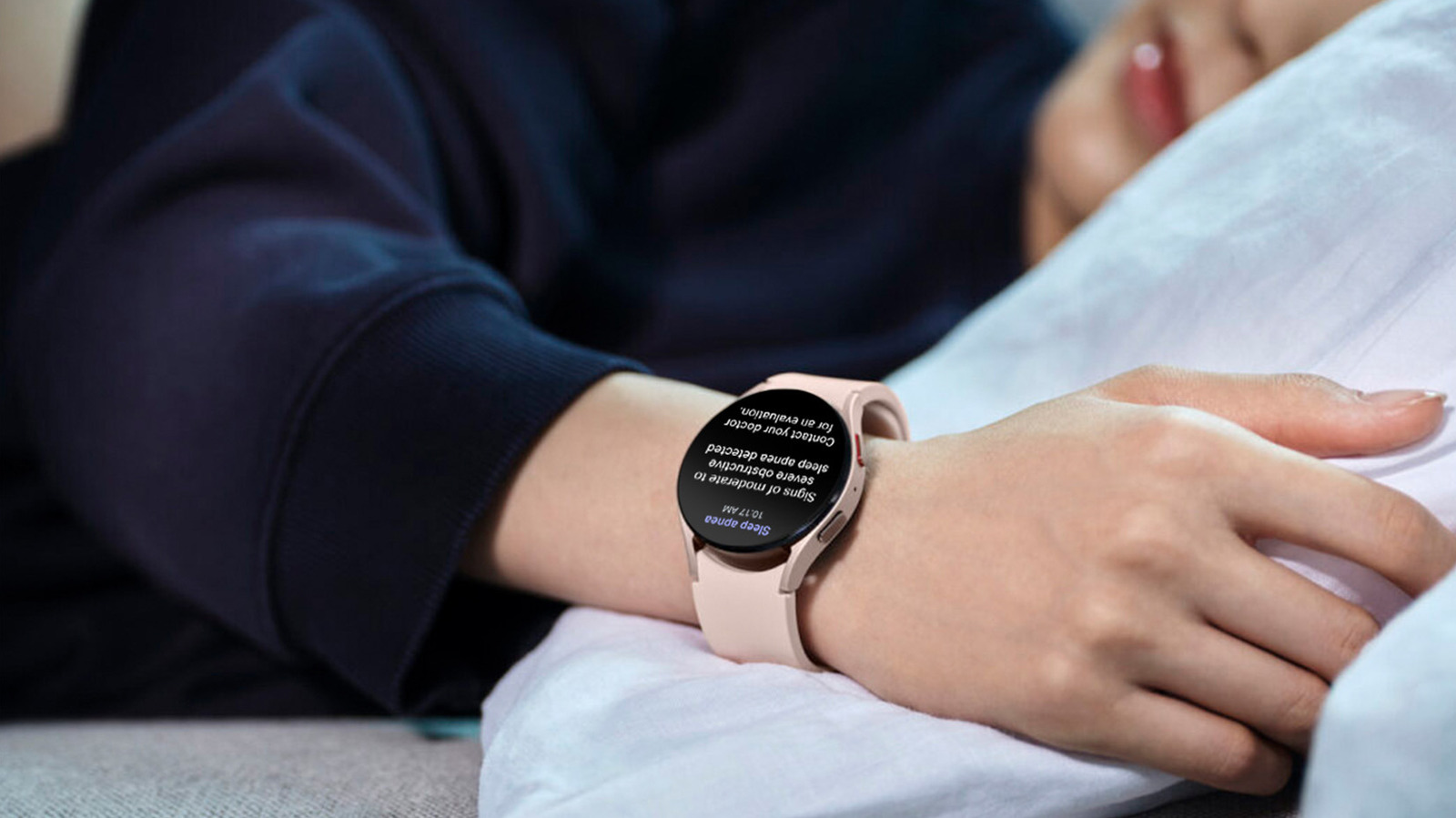
It's worth noting that regulatory approval matters here. In 2024, the Apple Watch received FDA clearance for a sleep apnea notification feature available on the Apple Watch Series 9, Series 10, and Apple Watch Ultra 2. This feature uses an algorithm that analyzes wrist movement data — specifically the micro-movements caused by disrupted breathing — to identify patterns consistent with moderate to severe sleep apnea. Apple is clear that this is not a diagnosis, but a notification designed to prompt users to seek professional evaluation.
Samsung has also moved in this direction. The Galaxy Watch 7 and Galaxy Watch Ultra received FDA authorization for a sleep apnea detection feature that uses PPG (photoplethysmography) sensor data. Again, this is framed as a screening tool, not a clinical diagnosis.
These developments represent a meaningful step forward. They signal growing confidence from regulators that consumer wearables can play a legitimate — if limited — role in sleep health awareness.
What a Smartwatch Cannot Do
Despite these advances, there are firm limits to what a smartwatch can tell you. A true diagnosis of sleep apnea requires a sleep study, either conducted in a sleep lab (polysomnography) or through an at-home sleep apnea test (HSAT). These studies measure a comprehensive set of signals including brain activity (EEG), eye movements, muscle activity, airflow at the nose and mouth, chest and abdominal respiratory effort, and blood oxygen levels — all simultaneously and with medical-grade precision.
A smartwatch, no matter how sophisticated, cannot replicate that level of clinical detail. It cannot tell you how many apnea events per hour you're experiencing (your AHI, or apnea-hypopnea index), which is the core metric used to diagnose and classify the severity of sleep apnea. It also cannot distinguish between obstructive and central sleep apnea, which require different treatment approaches.
How to Use Your Smartwatch Data Wisely
The most productive way to think about your smartwatch's sleep data is as a personal health signal — not a verdict. If your device is consistently flagging low SpO2 readings, poor sleep quality, or irregularities in your heart rate during sleep, take that information seriously. Print it out, screenshot it, or export it, and bring it to your doctor.
- Don't self-diagnose based on wearable data alone, but don't dismiss it either.
- Look for consistent patterns over multiple nights rather than reacting to a single anomalous reading.
- Pair your device's sleep data with your own symptom awareness — daytime fatigue, morning headaches, mood changes.
- Ask your doctor whether an at-home sleep test or a referral to a sleep specialist is appropriate given your data and symptoms.
- Remember that false negatives are possible — a smartwatch showing "normal" sleep data does not rule out sleep apnea.
The Bottom Line
Smartwatches are becoming increasingly capable sleep health companions, but they are not diagnostic tools. No wearable on the market today can definitively tell you whether you have sleep apnea — and claiming otherwise would be both medically misleading and potentially dangerous, since it might discourage people from seeking a proper evaluation.
What today's best smartwatches can do is serve as an early warning system. By tracking blood oxygen levels, heart rate variability, sleep stages, and breathing patterns, they can surface data that might otherwise go completely unnoticed. In a condition that affects tens of millions of people who don't know they have it, that kind of awareness could genuinely save lives — as long as it leads people toward medical care rather than away from it.
If your smartwatch is raising red flags about your sleep, treat that as a starting point, not an endpoint. Talk to a doctor. A proper sleep study remains the only way to know for sure.