
The World's Oil Dependency Problem Is Getting Worse
For decades, the global economy has been shackled to the volatility of fossil fuels. From skyrocketing fuel prices at the pump to geopolitical tensions driven by oil-rich nations, the consequences of our dependence on non-sustainable energy sources ripple through every sector of modern life — and few industries feel the pressure more acutely than aviation. Commercial airlines consume billions of gallons of jet fuel every year, contributing significantly to both carbon emissions and operational costs that ultimately land on the consumer's ticket price. As the oil crisis continues to loom over global markets, the search for a viable alternative has never been more urgent. Now, China may have made a breakthrough that the entire world should be paying attention to.
China Enters the Hydrogen Aviation Race
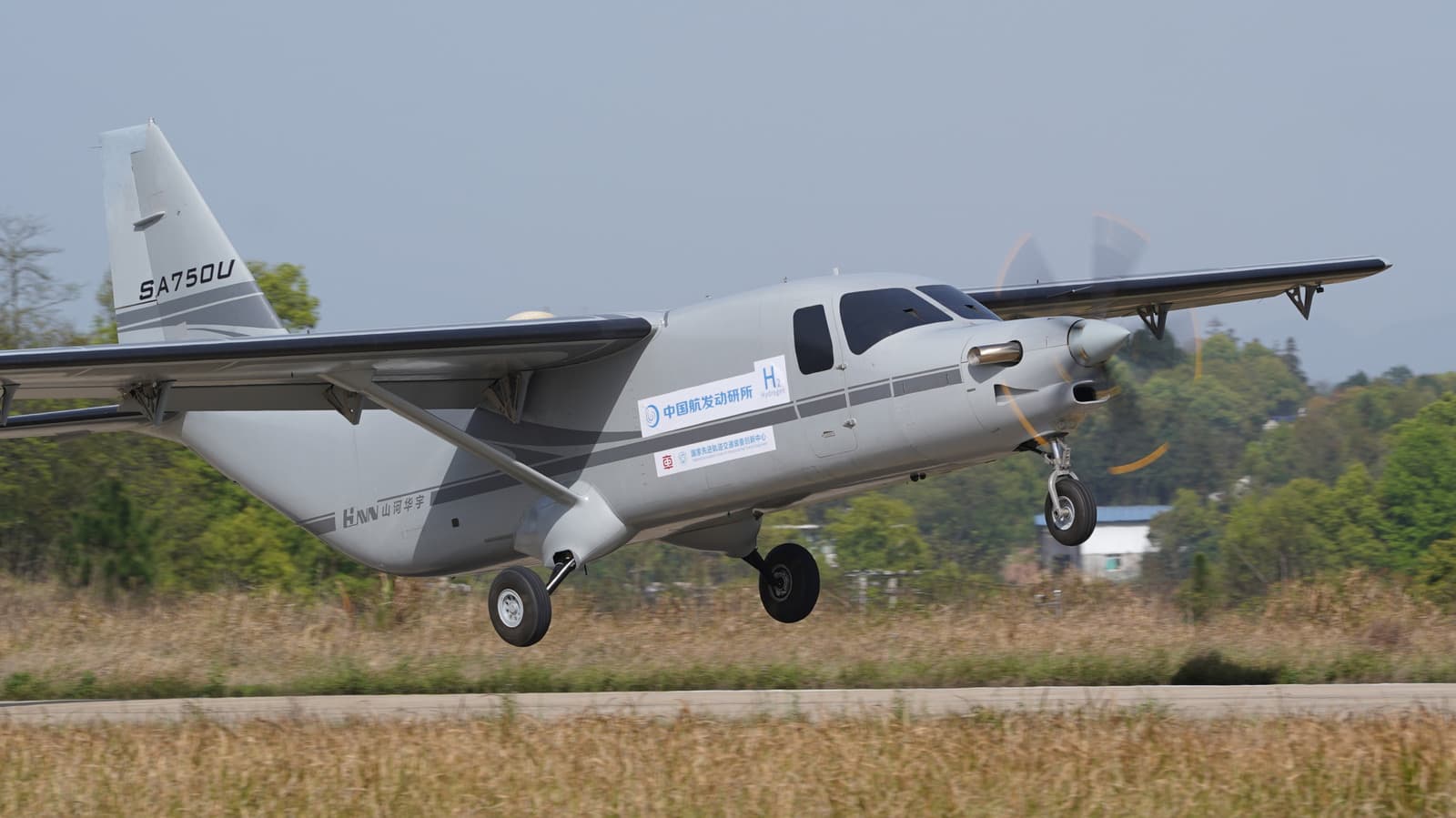
China has unveiled a hydrogen-powered aircraft that is being hailed as a potential game-changer for the aviation industry. While several countries and private companies have been experimenting with electric and hybrid propulsion systems, hydrogen-powered flight represents a fundamentally different — and arguably more promising — technological path. Unlike battery-electric aircraft, which struggle with weight limitations and energy density constraints, hydrogen fuel offers a much higher energy-to-weight ratio, making it far more suitable for powering larger commercial planes over longer distances.
China's entry into this space signals the country's serious ambitions not just in aviation, but in clean energy technology as a whole. With substantial state backing and a rapidly maturing aerospace industry, China is positioning itself as a front-runner in what many experts believe will be the next great revolution in transportation.
How Does a Hydrogen-Powered Plane Actually Work?
Understanding why hydrogen-powered aviation is such a compelling proposition requires a basic grasp of the technology involved. Hydrogen aircraft can be powered in one of two main ways: through hydrogen combustion engines, which burn hydrogen similarly to how traditional jet engines burn kerosene, or through hydrogen fuel cells, which convert hydrogen into electricity to drive electric motors. Both approaches produce little to no harmful emissions — the primary byproduct of hydrogen combustion and fuel cell reactions is water vapor.
This stands in stark contrast to conventional jet fuel, which releases carbon dioxide, nitrogen oxides, and particulate matter into the atmosphere. Aviation currently accounts for approximately 2.5% of global CO₂ emissions, a figure that is expected to grow as air travel demand increases in developing regions. Hydrogen-powered planes offer a pathway to dramatically reduce that footprint without sacrificing the speed and range that make air travel indispensable.
Key Advantages of Hydrogen Aviation
- Zero or near-zero carbon emissions: Hydrogen combustion produces water vapor rather than carbon dioxide, making it one of the cleanest fuel sources available for high-energy applications like flight.
- Higher energy density than batteries: Hydrogen contains roughly three times the energy per kilogram compared to conventional jet fuel, and far more than lithium-ion batteries, making it a practical choice for long-haul routes.
- Reduced dependence on oil markets: Hydrogen can be produced domestically using renewable energy sources such as solar and wind power, insulating airlines and governments from the price swings of global crude oil markets.
- Scalability: Unlike electric aviation, which faces hard physical limits in battery technology, hydrogen systems can potentially be scaled up to power aircraft of all sizes.
The Broader Context: Why the Oil Crisis Makes This So Important
The timing of China's hydrogen aviation announcement is no coincidence. The global oil crisis has been intensifying, driven by a combination of supply chain disruptions, production cuts by major oil-exporting nations, the aftermath of geopolitical conflicts, and surging post-pandemic demand. Non-sustainable energy sources are not just environmentally problematic — they are economically destabilizing. Airlines have been among the hardest hit, with fuel representing anywhere from 20% to 30% of their total operating costs in normal times, a figure that balloons during price spikes.
For countries that import the vast majority of their oil — and there are many — the vulnerability is even more acute. A credible hydrogen aviation industry would allow nations to produce their own fuel domestically, transforming energy security in a profound way. The geopolitical implications alone are staggering: a world less dependent on oil is a world less prone to the conflicts and economic coercion that oil dependency enables.
Challenges Still Ahead for Hydrogen Flight
Despite the excitement, it would be premature to declare hydrogen aviation a solved problem. Significant engineering and infrastructure challenges remain. Liquid hydrogen must be stored at extremely low temperatures, requiring specialized cryogenic fuel tanks that add weight and complexity to aircraft design. Airports would need entirely new fueling infrastructure, representing a massive capital investment. And while green hydrogen — produced using renewable energy — is the goal, the majority of hydrogen currently produced worldwide still comes from natural gas, meaning the full environmental benefit depends heavily on how the hydrogen itself is generated.
There are also certification and regulatory hurdles. Aviation authorities around the world have rigorous safety standards, and any new propulsion system must clear years of testing before commercial deployment becomes possible. China's hydrogen plane, impressive as it is, represents an early step in what will likely be a multi-decade transition.
What This Means for the Future of Aviation
China's hydrogen-powered aircraft is more than a technological curiosity — it is a signal that the era of fossil fuel-dependent aviation is beginning to fade. Major aerospace players including Airbus have already announced ambitious hydrogen aircraft programs targeting commercial service by 2035. The competitive pressure from China is likely to accelerate investment and innovation across the entire industry.
For travelers, airlines, governments, and the planet, the promise of hydrogen-powered flight is nothing short of transformative. It offers a future where the skies are cleaner, ticket prices are less vulnerable to oil market chaos, and energy security is no longer held hostage by geopolitics. Whether China's specific design becomes the blueprint or simply one of many stepping stones, its arrival confirms that the hydrogen aviation revolution is no longer a question of if — but when.