
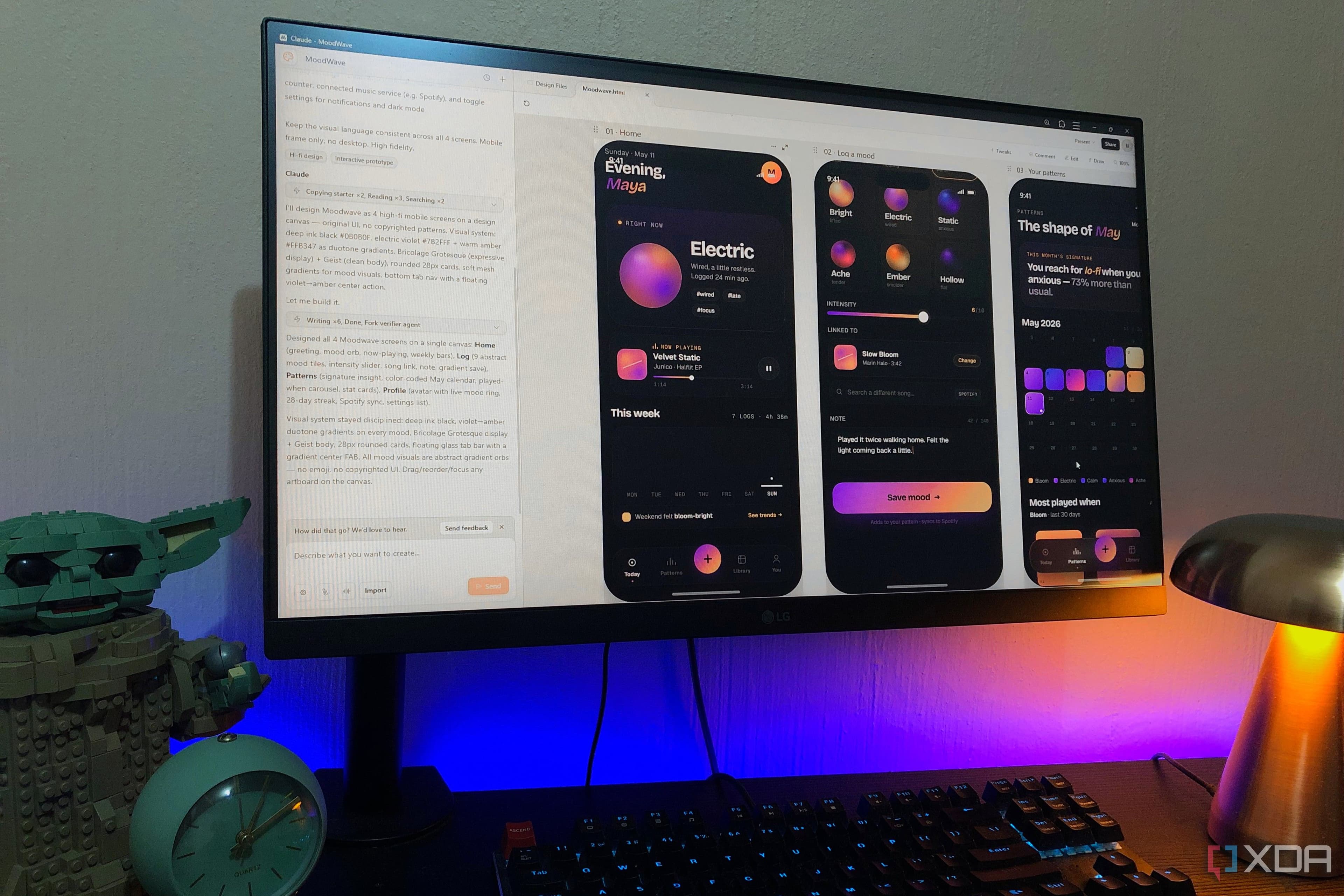
When AI Becomes More Than a Productivity Tool
Most conversations about artificial intelligence in the workplace circle back to the same promise: save time, automate tasks, get more done in fewer hours. That framing is not wrong — AI genuinely does accelerate workflows and reduce friction across dozens of everyday tasks. But it is incomplete. For a growing number of creators, writers, designers, and strategists, the most transformative thing about working with Claude is not the hours it saves. It is the way it fundamentally changes how creative thinking happens in the first place.
This is the story of what happens when you stop treating Claude like a faster search engine and start treating it like a genuine creative collaborator. The results, as many users are discovering, go far deeper than efficiency gains. They touch the quality of ideas, the clarity of thinking, and the confidence with which decisions are made.
The Productivity Expectation Most People Start With
There is nothing wrong with wanting to work faster. When most people first pick up an AI assistant, they approach it with a task-completion mindset. They want summaries written, emails drafted, outlines generated, and research condensed. Claude does all of these things exceptionally well, and that initial layer of utility is genuinely valuable. Repetitive, low-creativity tasks get handled quickly, freeing up mental bandwidth for higher-order work.
But here is where many users hit an invisible ceiling. They get faster at executing the same ideas they always had. The outputs improve in polish, but the underlying thinking does not necessarily deepen. The creative process stays roughly the same — it just moves at a higher pace. For some workflows, that is perfectly sufficient. For creative professionals, however, something important remains missing.
Reframing Claude as a Space for Exploration
The shift happens when you stop issuing commands and start having conversations. Claude is not simply a text generator waiting for instructions — it is a thinking environment. When you bring a half-formed idea, a creative problem with no obvious solution, or a strategic decision that feels overwhelming, Claude can engage with genuine nuance. It asks clarifying questions, offers multiple framings of the same problem, challenges assumptions gently, and helps surface considerations you might not have consciously identified.
This conversational quality transforms the experience from transactional to collaborative. Instead of arriving with a finished brief and asking for execution, you can arrive with a vague creative instinct and use the dialogue to sharpen it into something real. The creative process moves upstream. Rather than polishing ideas faster, you develop better ideas from the beginning — and that distinction matters enormously in the long run.
How Claude Supports the Creative Decision-Making Process
One of the most underappreciated aspects of creative work is decision-making under uncertainty. Creators constantly face forks in the road: which direction to take a project, which angle serves the audience best, which tone balances accessibility with depth. These are not questions with clean algorithmic answers. They require judgment, and judgment benefits from dialogue.
Claude functions remarkably well as a sounding board precisely because it can hold multiple perspectives simultaneously. You can present two creative directions and ask it to steelman each one. You can share a draft and ask what assumptions it might be making that the audience won't share. You can describe a creative block and use the conversation itself as a way of talking through the resistance. In each case, Claude is not making the decision for you — it is creating the conditions in which you can make a better decision yourself.
- Idea stress-testing: Claude can poke holes in a concept before you invest heavily in it, saving significant time and creative energy downstream.
- Perspective-shifting: When you are too close to a project, Claude can reframe it from the audience's point of view, an editor's perspective, or even through a completely different genre or medium.
- Articulation support: Sometimes you know what you want to say but cannot find the precise language. Working through it conversationally with Claude often unlocks the phrasing naturally.
- Creative momentum: Blank-page paralysis dissolves quickly when you have a responsive, non-judgmental thinking partner ready to engage with even the messiest preliminary ideas.
The Intangible Value: Reflection Built Into the Workflow
Perhaps the most surprising benefit reported by creators who have integrated Claude deeply into their process is the quality of reflection it enables. When you write to Claude about a project — explaining its goals, its challenges, its intended audience — you are forced to articulate things that often remain vague and implicit in solo work. That act of articulation is itself a form of creative clarification. You discover what you actually think by trying to explain it clearly to someone else, even when that someone else is an AI.
This mirrors well-established creative practices like journaling, peer review, or working with a mentor. The difference is that Claude is available at any point in the process, without scheduling friction, and without the social dynamics that sometimes make it difficult to share unfinished thinking with another human. The result is a creative workflow that has reflection built in rather than bolted on as an afterthought.
A New Model for Human-AI Creative Collaboration
What emerges from this approach is a genuinely new model for how humans and AI can work together on creative projects. The old model imagined AI as a tool that amplifies human output — you provide the thinking, AI provides the speed. The new model is more interesting: AI as a partner that amplifies human thinking itself, making the upstream creative and strategic process richer before a single final output is produced.
Claude sits comfortably in this second model. It does not replace creative judgment, authorial voice, or human taste. What it does is create a more fertile environment in which those distinctly human qualities can develop more fully. For any creator willing to move past the productivity framing and engage with Claude as a genuine collaborative presence, the rewards go well beyond saved hours. They show up in the quality, originality, and confidence of the work itself.
If you have only been using Claude to get things done faster, it may be time to try using it to think better. The difference between those two approaches is, ultimately, the difference between a good tool and a transformative one.