
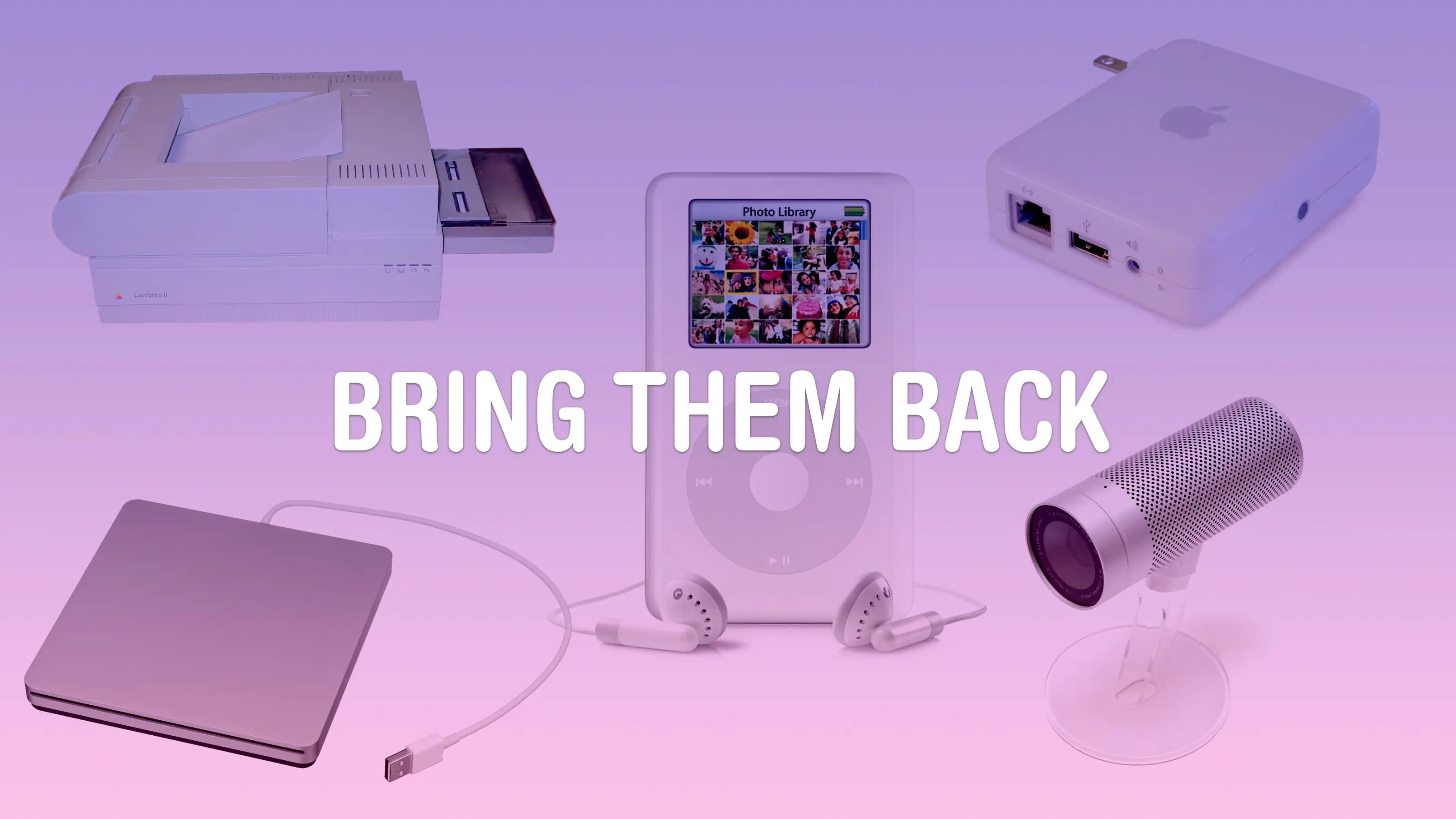
10 Discontinued Apple Products That Deserve a Modern Comeback
Apple has a long and storied history of creating products that feel impossibly ahead of their time — and then quietly discontinuing them. Sometimes these decisions make sense. Markets shift, technology evolves, and even the most beloved hardware eventually gets retired. But not every discontinuation has felt clean or final. Some Apple products left a loyal fanbase without a worthy replacement, and years later, those gaps are still being felt.
With Apple now deeper than ever into custom silicon, spatial computing, and AI-driven software, the timing has never been better to revisit some of these forgotten classics. Here are ten discontinued Apple products that deserve a modern revival — and why bringing them back could make more sense now than it ever did before.
1. The iPod Touch
When Apple discontinued the iPod Touch in 2022, it closed the final chapter of the iPod era. But the device had a devoted following that went far beyond music lovers — it was a budget-friendly iPhone alternative, a gaming device for kids, and a development tool for app creators. A modern iPod Touch powered by the latest A-series chip, running a streamlined version of iOS, and priced around $199 could fill a genuine gap for families and younger users who don't need cellular connectivity.
2. The AirPort Router
Apple's AirPort lineup — including the AirPort Extreme and AirPort Time Capsule — was discontinued in 2018, leaving a void in the home networking space that Apple has never refilled. For users who want seamless integration with macOS and iPhone, a modern AirPort router running Apple silicon would be a compelling product. Imagine a mesh networking system that ties directly into HomeKit, prioritizes Apple devices automatically, and integrates with iCloud for secure, encrypted backups. It practically writes itself.
3. The Mac Mini Server
The Mac Mini Server was a genuinely powerful little machine aimed at small businesses and developers who needed local hosting without the cost or complexity of a full rack server. Apple has leaned hard into iCloud and cloud services since then, but there's still a strong market for on-premises solutions — especially as privacy concerns grow. A modern Mac mini Server built on Apple silicon could be a transformative product for developers, creatives, and small teams.
4. The 17-Inch MacBook Pro
Not everyone wants a compact laptop. Video editors, musicians, architects, and engineers have long mourned the loss of the 17-inch MacBook Pro, which was discontinued back in 2012. The current 16-inch model is excellent, but a true 17-inch screen with ProMotion, mini-LED or OLED display technology, and the M-series chip inside would be a powerhouse for professionals who work at a desk but need portability on the road.
5. The iPod Nano
The iPod Nano was a triumph of miniaturization and design. A modernized Nano — perhaps reimagined as a clip-on wearable with Apple Watch-like health sensors, offline Apple Music playback, and a tiny color display — could slot in perfectly between the Apple Watch and AirPods. Runners, gym-goers, and commuters would have real reason to love it again.
6. The Standalone Apple Display
Yes, the Pro Display XDR exists, but at $4,999 it's out of reach for most users. Apple used to make the Cinema Display — a premium but reasonably priced monitor aimed at everyday Mac users. A modern version built around mini-LED or OLED technology, with a Thunderbolt hub, a built-in camera, and tight integration with macOS, priced around $999 to $1,499, would sell in enormous numbers.
7. The Apple HiFi Speaker
Apple's original HiFi speaker, released in 2006, was a high-quality dock for the iPod. It was short-lived. Today, a reimagined Apple HiFi — think HomePod Pro with audiophile-grade sound, a larger driver array, lossless Apple Music streaming, and Spatial Audio — would be a serious competitor in the premium speaker market. It would also give Sonos real pause.
8. The Xserve
- Discontinued in 2011, the Xserve was Apple's rack-mounted server solution aimed at enterprise customers and research institutions.
- A return of the Xserve built on Apple silicon — with the energy efficiency and raw performance of the M-series chips — would be a major statement in the enterprise computing world.
- Data centers and universities that were forced to switch to Linux or Windows servers would have a compelling reason to return to Apple's ecosystem.
9. The iPhone Mini
The iPhone mini line was cancelled after just three generations, reportedly due to poor sales. But a vocal community of users genuinely preferred the compact form factor. A refreshed iPhone mini — perhaps called the iPhone Air Mini — with Apple Intelligence features, the latest camera system in a smaller body, and a price point under $699, could tap into a real and underserved audience that wants power in a pocketable package.
10. The Newton MessagePad
This one is admittedly a stretch — but hear it out. The Newton MessagePad was a pioneering personal digital assistant that Apple killed in 1998. In retrospect, it was simply ahead of its time. Today, with Apple Intelligence, on-device machine learning, and the kind of handwriting recognition that the Newton could only dream of, a modern spiritual successor — perhaps a standalone tablet optimized entirely for stylus input, note-taking, and AI-assisted organization — could be genuinely revolutionary. The iPad does many of these things, but a purpose-built "Newton Pro" would be something entirely different.
Why Now Is the Right Time for Apple to Look Back
Apple is at an inflection point. With Apple Intelligence rolling out across its product lineup, the company has the software sophistication to reinvent products that previously failed due to technical limitations. More importantly, consumer demand for privacy-first, ecosystem-integrated hardware has never been higher. These ten discontinued Apple products were not failures of concept — many were simply victims of timing. The technology has finally caught up, and the appetite is clearly there. Whether Apple is listening is another question entirely.