
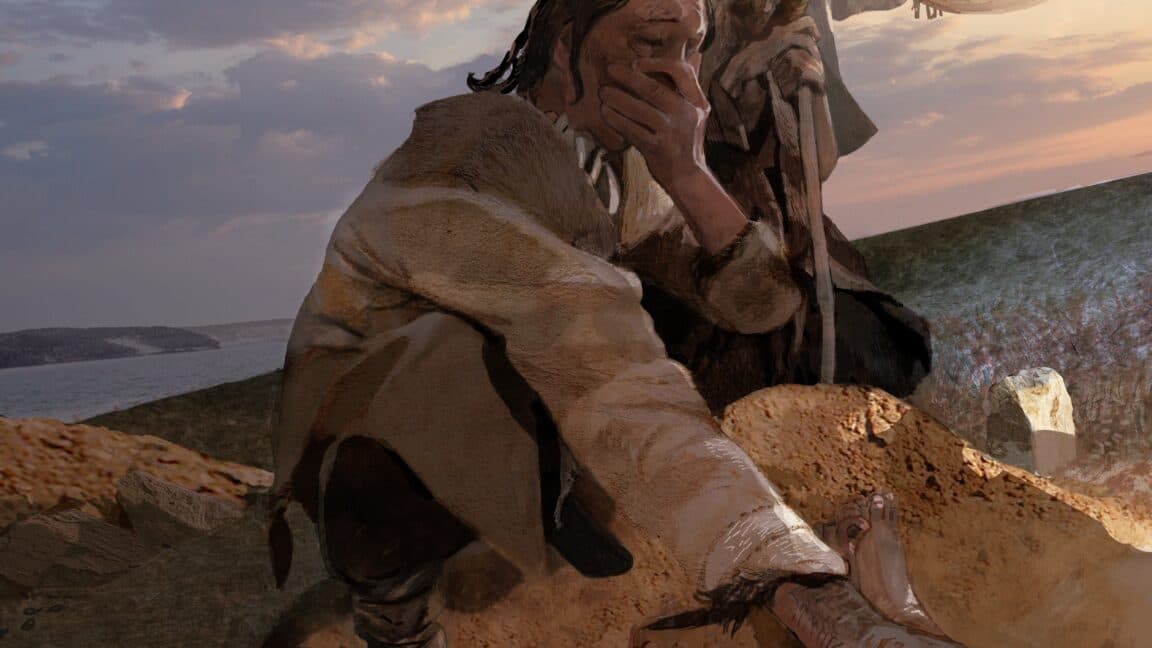
Ancient Plague Rewrites History: Siberian Hunter-Gatherers Struck 5,500 Years Ago
When most people think of the plague, their minds jump to the Black Death — the catastrophic fourteenth-century pandemic that wiped out a third of Europe's population. But a stunning new discovery is pushing the origins of this dreaded disease much further back in time than anyone previously thought. Researchers have identified what is now the earliest known plague outbreak in human history, and it didn't strike farmers living in cramped medieval towns. It struck nomadic hunter-gatherers roaming the forests and grasslands around Lake Baikal in southeastern Siberia more than five millennia ago.
Ancient DNA Trapped in Teeth Tells the Story
The evidence for this ancient catastrophe comes from one of nature's most remarkable biological archives: human teeth. Teeth are extraordinarily good at preserving ancient DNA because the dense mineral structure of dental tissue seals genetic material away from the environment for thousands of years. Researchers from the University of Oxford, led by ancient DNA specialist Ruairidh Macleod, extracted and sequenced bacterial DNA from the teeth of plague victims buried at four separate cemeteries in the Lake Baikal region of Russia.
What they found was unmistakable — genetic traces of Yersinia pestis, the bacterium responsible for plague. This particular strain is now the oldest Y. pestis genome ever successfully sequenced, making this discovery a landmark moment in the study of infectious disease history. The fact that the same pathogen appeared across multiple burial sites in the region strongly suggests a widespread outbreak rather than isolated incidents, pointing to a genuine epidemic event that devastated local communities.
Overturning Two Long-Held Scientific Assumptions
This discovery doesn't just add a footnote to medical history — it fundamentally challenges two core assumptions that scientists have held for years about how and when plague first began threatening human populations.
Assumption One: Early Strains Were Not Lethal Enough
The prevailing view among disease researchers had long been that the earliest evolutionary forms of Yersinia pestis lacked the specific genetic traits needed to cause truly deadly infections. It was thought that the bacterium needed to evolve over a long period before it could become the mass killer that history would come to fear. This new evidence from Siberia suggests otherwise. These ancient hunter-gatherers appear to have died in large numbers from a strain that existed well before the evolutionary timeline scientists had mapped out, indicating that Y. pestis was capable of lethal outbreaks much earlier than previously believed.
Assumption Two: Plague Required Dense Farming Communities to Spread
The second overturned assumption is perhaps even more significant. Scientists had largely agreed that plague became a serious human threat only after the rise of agriculture, when people began living in densely packed settlements alongside rats, livestock, and other domestic animals. These conditions were thought to be the necessary prerequisites — the ideal breeding ground — for plague to jump from animal reservoirs to human populations and then spread rapidly between people.
The Siberian hunter-gatherers buried near Lake Baikal were not farmers. They did not live in permanent, densely settled communities. They were mobile peoples who lived off the land, which means the story of how plague first found its way into human populations is far more complex — and far older — than the agricultural model suggested.
Lake Baikal: A Window Into Prehistoric Human Life
The Lake Baikal region of southeastern Siberia is no stranger to remarkable archaeological discoveries. The area has yielded some of the richest records of prehistoric human activity in all of northern Asia, with ancient cemeteries that have preserved skeletal remains across thousands of years. The four burial sites studied in this research represent communities that lived during a period long before the Bronze Age civilizations of the Near East or the great agricultural societies of ancient China and Mesopotamia.
The fact that these communities left behind organized cemeteries at all speaks to a level of social complexity and group cohesion that sometimes goes underappreciated in discussions of hunter-gatherer life. When plague tore through these groups, the scale of death was significant enough to be visible in the archaeological record five and a half millennia later — a haunting testament to the devastation the outbreak must have caused.
What This Means for Our Understanding of Pandemic History
The implications of this research ripple outward in several important directions. First, it means scientists need to revise their models of how Yersinia pestis evolved and how early strains interacted with human immune systems. If hunter-gatherers with no prior agricultural exposure could be killed in outbreak-scale numbers 5,500 years ago, then the pathogen's evolutionary trajectory toward lethality happened earlier and through different ecological pathways than assumed.
Second, this finding raises fresh questions about how plague may have contributed to population shifts and cultural disruptions in prehistoric Eurasia. Genetic and archaeological research in recent years has shown that human populations across Europe and Asia underwent dramatic demographic changes during the Neolithic and early Bronze Age periods. Plague outbreaks of this nature could have played a significant — and previously invisible — role in those shifts, decimating communities and opening territories to new migrations.
Third, the research highlights just how powerful ancient DNA analysis has become as a scientific tool. What once required the written records of chroniclers and historians to document can now be reconstructed from microscopic traces locked inside a molar for five millennia.
The Plague: History's Most Feared Disease
Plague holds a singular place in the human imagination precisely because of its historical power to reshape civilizations. The Justinianic Plague of the sixth century CE weakened the Byzantine Empire. The Black Death of the fourteenth century killed tens of millions across Eurasia and fundamentally altered European society, economics, and culture. A third major pandemic emerged in the nineteenth century and spread globally through shipping routes. Each of these events left permanent marks on human history.
But all of those catastrophes now have a predecessor — an ancient, largely forgotten outbreak on the shores of a vast Siberian lake, where hunter-gatherers who left no written records nonetheless left something equally permanent behind: the DNA of the bacterium that killed them, waiting inside their teeth for modern science to find.
Looking Ahead: More Discoveries to Come
Macleod and his colleagues have opened a door that researchers will almost certainly rush through in the years ahead. Ancient DNA technology continues to improve in sensitivity and accuracy, meaning that even older or more degraded samples may yet yield usable genetic information. Future excavations across Siberia, Central Asia, and other regions with rich prehistoric burial traditions could push the known history of plague — and other infectious diseases — even further back in time.
For now, however, the hunter-gatherers of Lake Baikal hold a remarkable distinction. They are the earliest documented victims of a disease that would go on to haunt humanity for thousands of years. Their story, recovered from the molecular evidence locked in ancient teeth, is a sobering reminder that infectious disease has been shaping human destinies far longer than our written histories have recorded.