
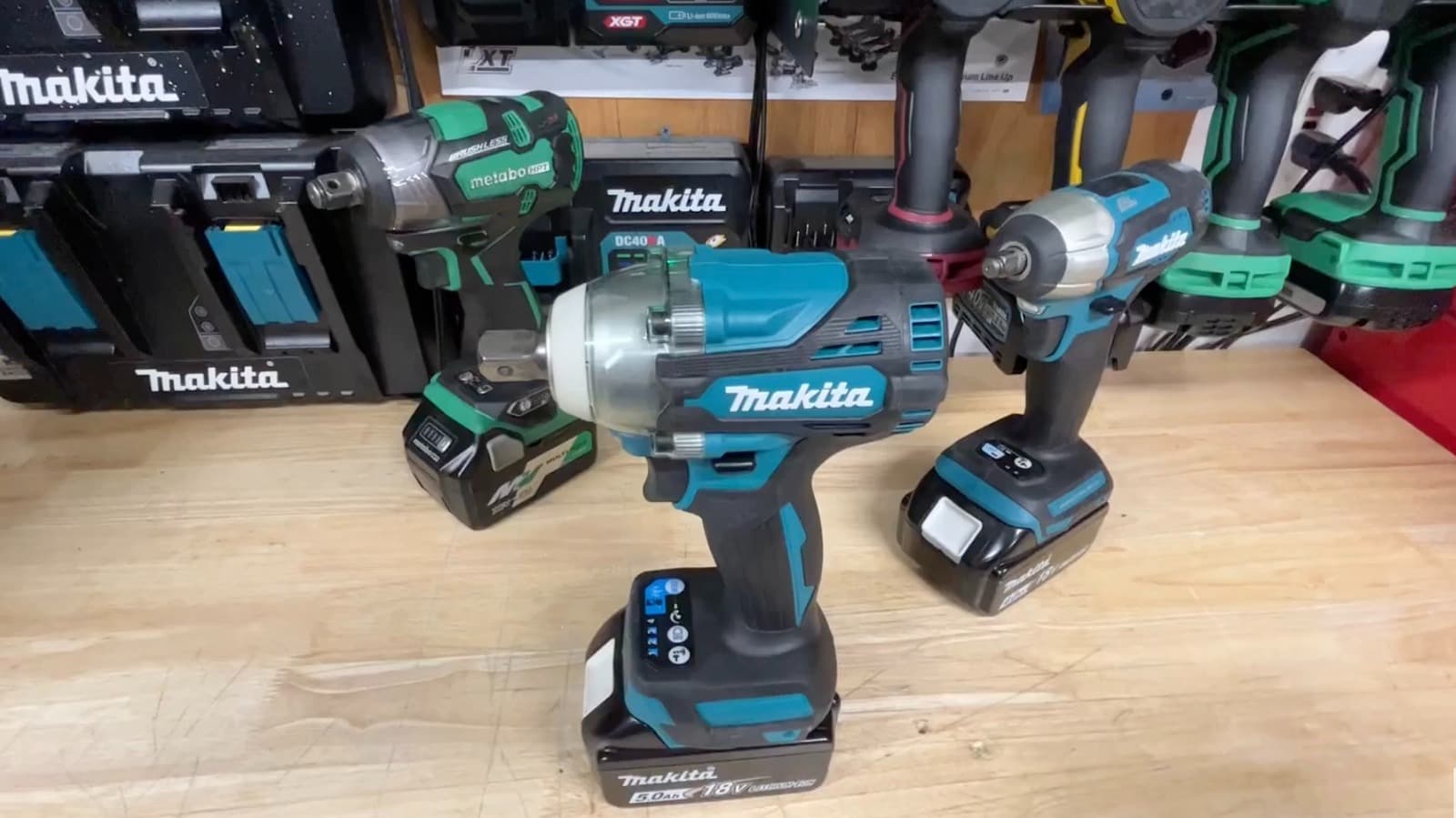
Understanding Impact Wrench Sizes: A Complete Guide
Whether you're a seasoned mechanic, a weekend DIY enthusiast, or someone just stepping into the world of power tools, one of the first questions you'll face is: which impact wrench size do I actually need? Impact wrenches come in several standard drive sizes — most commonly 1/4-inch, 3/8-inch, 1/2-inch, 3/4-inch, and 1-inch — and each one serves a distinctly different purpose. Choosing the wrong size doesn't just make your job harder; it can damage fasteners, strip bolts, or simply leave you without enough power to get the job done. This guide breaks down the differences so you can make a confident, informed decision.
What Does "Drive Size" Actually Mean?
Before diving into comparisons, it's worth clarifying what "size" refers to when talking about impact wrenches. The size designation — such as 1/2-inch or 3/4-inch — refers to the square drive at the tip of the tool, which is the part that accepts sockets. This is not the overall size of the tool itself, though larger drive sizes do tend to correspond to larger, heavier tools. The drive size directly determines which sockets you can use and, by extension, which fasteners you can work with efficiently.
Torque output is closely tied to drive size. Larger drive sizes are engineered to produce and withstand significantly higher levels of torque, measured in foot-pounds (ft-lbs) or Newton-meters (Nm). Understanding this relationship is essential to picking the right tool for your specific application.
1/4-Inch Impact Wrenches: Light Duty and Precise
At the smaller end of the spectrum, 1/4-inch impact wrenches are compact, lightweight, and designed for precision work. These tools typically deliver somewhere between 40 and 100 ft-lbs of torque, which is more than enough for small fasteners, electronic assemblies, and interior automotive trim work. Their slim profile allows access to tight spaces where larger tools simply cannot fit.
If you regularly work on small appliances, HVAC systems, or need a tool for assembly line-style tasks involving smaller screws and bolts, the 1/4-inch impact wrench is an excellent choice. Its reduced torque also makes it less likely to accidentally overtighten or damage delicate components, giving you a degree of control that larger models can't match.
3/8-Inch Impact Wrenches: The Versatile Middle Ground
The 3/8-inch impact wrench occupies a sweet spot between lightweight convenience and meaningful power. With torque outputs typically ranging from 100 to 300 ft-lbs, these tools handle a broad range of tasks including general automotive repair, brake work, suspension components, and light machinery maintenance. They're popular among professional mechanics and serious hobbyists alike precisely because of their versatility.
Because they're smaller and lighter than a 1/2-inch model, 3/8-inch wrenches offer better maneuverability in confined engine bays. They're also more comfortable during extended use sessions, reducing hand and arm fatigue. If you need one tool that can genuinely handle most everyday jobs without being overkill, this size is hard to beat.
1/2-Inch Impact Wrenches: The Industry Standard
Ask any professional mechanic or auto shop technician which impact wrench size they rely on most, and the answer will almost universally be the 1/2-inch. These tools produce torque in the range of 300 to over 1,000 ft-lbs, depending on the model, making them powerful enough to tackle lug nuts, heavy suspension work, driveshaft bolts, and much more.
The 1/2-inch drive has become the de facto standard in automotive repair for good reason. It strikes an effective balance between raw power and practical usability. High-quality 1/2-inch impact wrenches — whether corded electric, cordless battery-powered, or pneumatic air-driven — are reliable workhorses that hold up under daily professional use. For most people shopping for a single, all-purpose impact wrench, a 1/2-inch model is the smartest investment.
3/4-Inch and 1-Inch Impact Wrenches: Heavy-Duty Powerhouses
When torque requirements move into truly demanding territory, you step up to 3/4-inch and 1-inch impact wrenches. These tools are built for industrial, construction, and heavy equipment applications. A 3/4-inch model can deliver anywhere from 900 to 1,500 ft-lbs of torque, while a 1-inch unit can push well beyond 2,000 ft-lbs.
These are the tools used to remove and install large structural bolts, truck and bus lug nuts, mining and agriculture equipment hardware, and heavy-duty pipeline fittings. They are not practical for everyday automotive use — they're simply too powerful, too large, and too heavy. Attempting to use a 1-inch impact wrench on standard passenger vehicle lug nuts, for example, would risk damaging the wheel hub or stripping the studs entirely.
In professional industrial settings, however, these large-format tools are indispensable, and using a smaller wrench in their place would be ineffective and potentially dangerous.
Key Factors to Consider When Choosing an Impact Wrench Size
- Torque requirements: Always match the tool's torque range to the fastener specifications you'll be working with most often. Over-torquing is just as problematic as under-torquing.
- Workspace constraints: Tight engine bays or confined installation areas favor smaller, more nimble tools regardless of torque needs.
- Socket compatibility: Your existing socket set's drive size should ideally match your wrench, or you'll need adapters that can reduce efficiency and reliability.
- Power source: Pneumatic (air-powered) impact wrenches often deliver more torque per size than cordless battery-powered models, though cordless options offer unmatched portability.
- Frequency of use: Professionals who use their tools daily should prioritize durability and ergonomics alongside raw power. Heavier tools cause cumulative fatigue over long shifts.
Which Impact Wrench Size Is Right for You?
The honest answer depends entirely on the work you're doing. Casual home mechanics handling tire rotations and basic repairs will find a quality 1/2-inch model more than sufficient. Hobbyists who enjoy more detailed engine or component work might prefer the greater dexterity of a 3/8-inch wrench. Professionals in construction or heavy equipment maintenance need the brute force of 3/4-inch or 1-inch tools.
Rather than trying to find one tool that does everything, many experienced tradespeople keep a 3/8-inch and a 1/2-inch wrench on hand simultaneously, switching between them based on the task. This approach maximizes both precision and power without compromise. Whatever your specific needs, understanding the differences between impact wrench sizes is the essential first step toward building a smarter, more effective toolkit.