
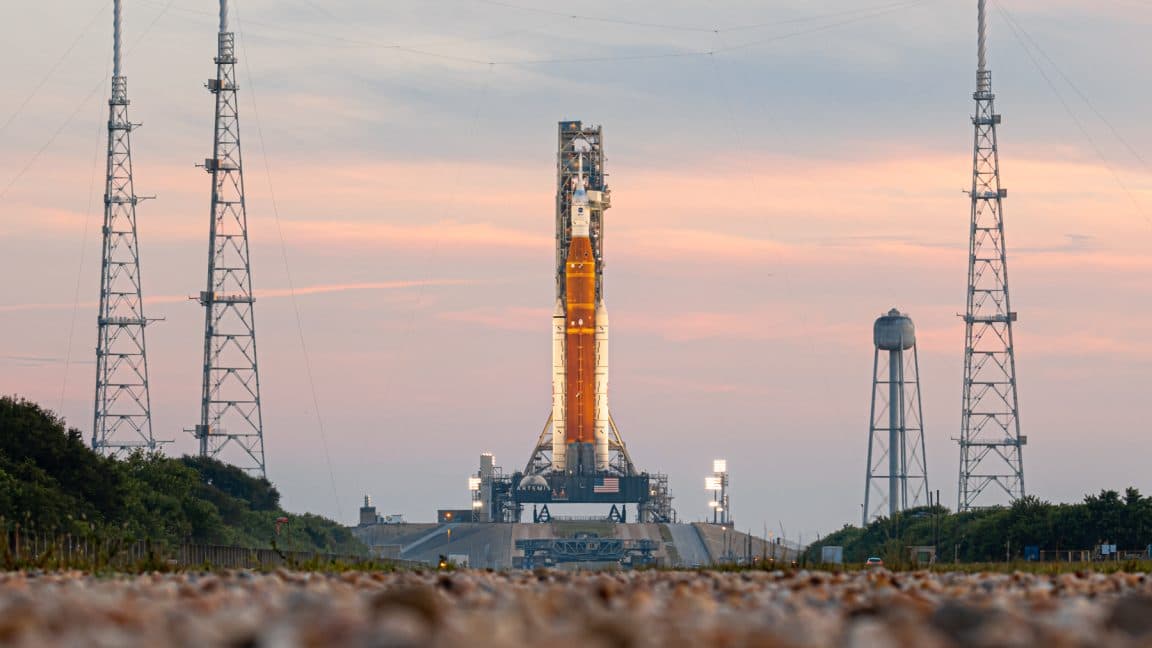
Kennedy Space Center's Aging Infrastructure Faces a Defining Challenge
For decades, Kennedy Space Center (KSC) in Florida has served as the crown jewel of American spaceflight. It is the site where astronauts departed for the Moon, where the Space Shuttle soared hundreds of times, and where a new generation of commercial rockets now thunder skyward. Yet beneath the spectacle of modern launches lies a sobering reality: the infrastructure supporting those missions is old, overstretched, and increasingly unprepared for the demands of today's super heavy-lift rockets.
A newly published report from the NASA Office of Inspector General (OIG) makes the problem impossible to ignore. According to the report, NASA's launch infrastructure at Kennedy Space Center is not only dated but is actively struggling to keep pace with the rapidly growing needs of both the agency itself and its commercial partners — most notably SpaceX and Blue Origin.
What the NASA Inspector General Report Actually Says
The OIG report pulls no punches in its assessment of the current state of NASA's ground infrastructure. It states plainly that "NASA's launch infrastructure is vital to providing the agency, other government agencies, and commercial partners access to space for their most complex and expensive missions." At the same time, the report warns that this same infrastructure "is dated and often does not provide the capacity to meet the growing demands of the agency and its partners."
The report covers two primary NASA launch facilities: Kennedy Space Center in Florida and Wallops Flight Facility in Virginia. While both sites are discussed, the most critical findings center on KSC, which is at the forefront of America's commercial and government spaceflight ambitions. It is here that the pressure is most acute, and where the gap between current capabilities and future requirements is widening at an alarming pace.
SpaceX Starship and Blue Origin New Glenn Are Raising the Stakes
The emergence of a new class of super heavy-lift launch vehicles is at the heart of the infrastructure strain. SpaceX's Starship and Blue Origin's New Glenn represent a generational leap in rocket size, power, and launch frequency — and both vehicles are expected to operate out of or in close coordination with facilities at or near Kennedy Space Center.
SpaceX's Starship system, which combines the Super Heavy booster with the Starship upper stage, is the largest and most powerful rocket ever developed. It produces thrust that dwarfs any previous American launch vehicle. Blue Origin's New Glenn, meanwhile, is a formidable orbital-class rocket in its own right, designed for both commercial and government payloads. As these vehicles ramp up their launch cadences, the demands placed on shared infrastructure — ranging from processing facilities to launch pads to safety and logistics corridors — grow exponentially.
The OIG report identifies these two programs specifically as sources of increased stress on NASA's existing systems. The concern is not merely about launch pads themselves, but about the entire ecosystem of ground support: fueling systems, roadways, communications infrastructure, personnel facilities, and safety perimeters that allow a modern rocket launch to happen safely and efficiently.
Why Aging Infrastructure Is a National Security and Economic Concern
It would be easy to view this as a bureaucratic problem confined to one federal agency, but the implications extend far beyond NASA's internal operations. Kennedy Space Center is not just a government launch site — it is a cornerstone of the broader American space economy, a hub for national security payloads, and an anchor for thousands of high-skilled jobs across Florida's Space Coast.
When NASA's infrastructure falls behind, the ripple effects are felt across the entire space industry. Commercial companies that rely on KSC facilities for processing, testing, or coordination face delays and bottlenecks. Government agencies that depend on NASA-managed ranges for launch approvals and safety oversight encounter longer timelines. And the United States risks ceding its launch infrastructure advantage to other nations that are actively investing in modernizing their own spaceports.
The stakes are particularly high given the current competitive landscape in space. China has aggressively expanded its launch infrastructure and cadence over the past decade. Europe, India, Japan, and emerging spacefaring nations are also investing heavily in their ground systems. America's advantage in this arena has long rested on the combination of private sector innovation and world-class government infrastructure — and that second pillar is now showing significant cracks.
The Path Forward: Modernization, Investment, and Coordination
The OIG report is, at its core, a call to action. Identifying a problem is the first step; solving it requires sustained commitment from Congress, NASA leadership, and commercial partners alike. Several areas have been highlighted as priorities for modernization and investment.
- Launch pad upgrades: Existing pads must be assessed for compatibility with super heavy-lift vehicle requirements, including enhanced flame trenches, water deluge systems, and structural reinforcements capable of withstanding next-generation engine loads.
- Processing and logistics facilities: The Vehicle Assembly Building and associated processing infrastructure were designed for a different era of spaceflight. Upgrades are needed to accommodate larger vehicle stacks and faster turnaround timelines.
- Road and transportation corridors: Moving enormous rocket segments across KSC requires roadways and crawler systems that can handle unprecedented weight and dimensional loads.
- Safety and range modernization: Range safety systems, communications networks, and emergency response capabilities must all be brought up to standards that reflect the new realities of higher-frequency, higher-energy launches.
Coordination between NASA and its commercial partners will be equally essential. SpaceX and Blue Origin are not passive tenants at Kennedy Space Center — they are active stakeholders with significant investments in the area and strong incentives to see the broader infrastructure succeed. Establishing clear frameworks for cost-sharing, scheduling, and joint facility development could accelerate modernization efforts and distribute the financial burden more equitably.
A Pivotal Moment for American Spaceflight
Kennedy Space Center has witnessed some of the greatest achievements in human history. It has endured tragedy, celebrated triumph, and reinvented itself through every era of space exploration. The challenges outlined in the OIG report are serious, but they are not insurmountable. What they demand is urgency — the kind of focused, well-funded commitment that has defined American spaceflight at its best.
The era of super heavy rockets is not coming. It is already here. The question now is whether the infrastructure that supports those rockets will be ready to match the ambition of the missions they carry. For the sake of American leadership in space, the answer needs to be yes — and it needs to be delivered soon.