
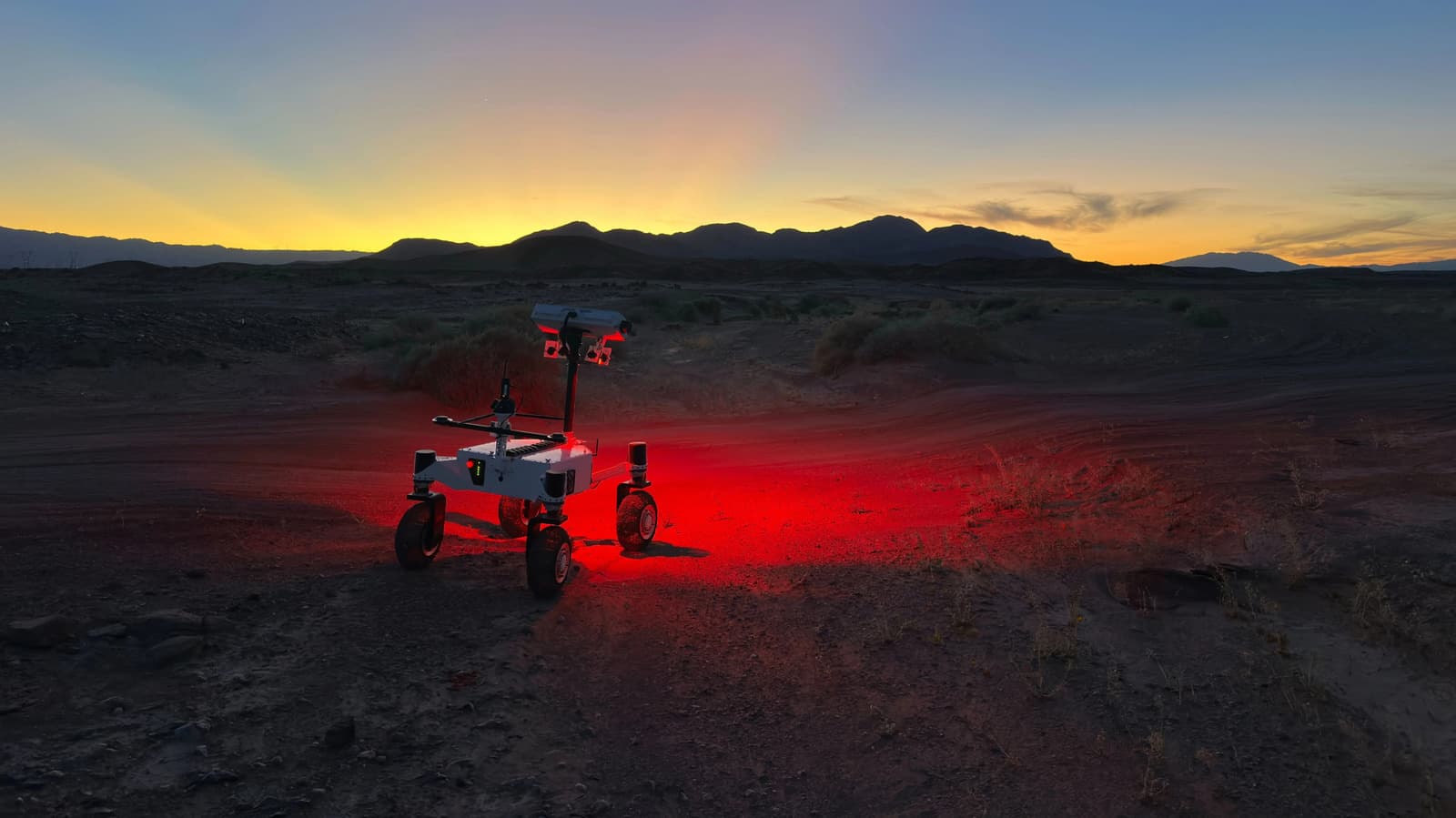
NASA's Ernest Rover Is Rewriting the Rules of Planetary Exploration
When most people picture a Mars rover, they imagine a slow, methodical machine cautiously picking its way across a rust-colored landscape, pausing every few meters to take photographs and analyze rocks. That image may soon be a relic of the past. NASA is actively testing a next-generation prototype rover called Ernest, and the footage the agency has shared is nothing short of remarkable. Ernest moves faster than its predecessors and — in a capability that sets it apart from anything currently rolling across another planet — can actually lift its wheels to climb over obstacles that would stop a conventional rover dead in its tracks.
This is not a minor engineering tweak. It is a fundamental rethinking of how we build machines meant to survive and thrive in environments millions of miles from Earth. Here is everything you need to know about Ernest and why it matters for the future of space exploration.
What Is the Ernest Prototype Rover?
Ernest is a research and development prototype being tested by NASA engineers as part of the agency's ongoing effort to push the boundaries of rover mobility. Unlike the current generation of planetary rovers — including the Perseverance rover currently operating on Mars — Ernest is designed with a new locomotion system that allows it to move at significantly higher speeds across relatively flat terrain while also gaining the ability to physically raise individual wheels to step over rocks, ledges, and other surface hazards.
NASA shared video footage of Ernest being put through its paces in a controlled testing environment, showcasing both its increased ground speed and the striking wheel-lifting maneuver. Watching the rover hoist a wheel like a mechanical leg and plant it on top of an obstacle before pulling itself up and over is genuinely unlike anything seen in operational rover design to date.
Why Speed Matters for Rovers
Speed might not seem like the most obvious priority for a robot operating on another planet, but it is actually a critical factor in mission success. Current Mars rovers like Perseverance cover an average of only a few hundred meters per day under autonomous navigation, largely because their cautious movement systems prioritize safety over efficiency. This dramatically limits how much ground scientists can cover during a mission's operational window.
A faster rover opens up several compelling possibilities:
- Scientists could survey much larger geographic areas within the same mission timeline, increasing the chances of discovering scientifically significant features like ancient riverbeds, mineral deposits, or signs of past microbial life.
- A rover that can reposition quickly is better equipped to respond to time-sensitive opportunities, such as reaching a site before a dust storm obscures visibility or before seasonal changes alter surface conditions.
- Faster movement could also improve a rover's ability to keep up with landing zones or sample caches in coordinated multi-vehicle mission architectures, which are increasingly part of NASA's long-term planning for Mars sample return.
In short, speed is not about showboating. It is about science yield, and Ernest's improved pace could meaningfully expand what future missions are able to accomplish.
The Wheel-Lifting Capability: A Game-Changer for Rough Terrain
As impressive as Ernest's speed improvements are, the wheel-lifting feature is arguably the more transformative innovation. Conventional rover wheel systems are optimized to roll over obstacles up to a certain height, but anything taller than that threshold requires the rover to navigate around it — or risk getting stuck. NASA's Opportunity rover famously became mired in soft Martian soil in 2018, a reminder of just how unforgiving planetary surfaces can be.
Ernest's wheel-lifting system changes the mobility calculus entirely. By giving each wheel a degree of vertical articulation beyond what standard rocker-bogie suspension systems provide, the rover can essentially step over obstacles rather than trying to push through or around them. This dramatically expands the range of terrain the rover can safely access.
How the Wheel-Lifting System Works
While NASA has not released full technical specifications for Ernest's drivetrain, the footage suggests the rover uses actuated leg-like struts at each wheel station, allowing individual wheels to be raised and repositioned independently. This gives Ernest a hybrid characteristic somewhere between a wheeled robot and a walking robot — combining the speed and energy efficiency of wheels on open terrain with the obstacle-handling flexibility of legged locomotion when the going gets tough.
This kind of hybrid mobility approach has been theorized and prototyped in robotics research for years, but Ernest represents one of the most advanced real-world demonstrations of the concept at a scale applicable to planetary science missions.
What This Means for Future NASA Missions
Ernest is a prototype, which means it is years away from flying to another world — if it ever does in its current form. But the technologies being validated through Ernest's test program are laying essential groundwork for the next generation of planetary rovers that could venture to Mars, the Moon, or even the rugged, icy terrain of ocean-harboring moons like Europa or Enceladus.
NASA's Jet Propulsion Laboratory and other research centers routinely develop prototype rovers that never fly as-is but whose innovations end up incorporated into actual mission hardware. Ernest's speed and mobility advances are precisely the kind of building blocks that inform future mission designs.
A New Era of Planetary Mobility
The history of planetary rovers is a story of incremental but meaningful progress — from the simple Sojourner rover of the 1990s to the sophisticated, nuclear-powered Perseverance of today. Ernest feels like the beginning of the next chapter in that story. Faster, more agile, and capable of navigating terrain that would defeat its predecessors, it represents the kind of bold engineering ambition that has always defined the best of NASA's exploratory spirit.
As the agency continues testing and refining Ernest, the planetary science community will be watching closely. Every test drive, every wheel lift, every obstacle conquered brings us one step closer to rovers that can truly go wherever the science leads — no matter how rough the road ahead might be.