
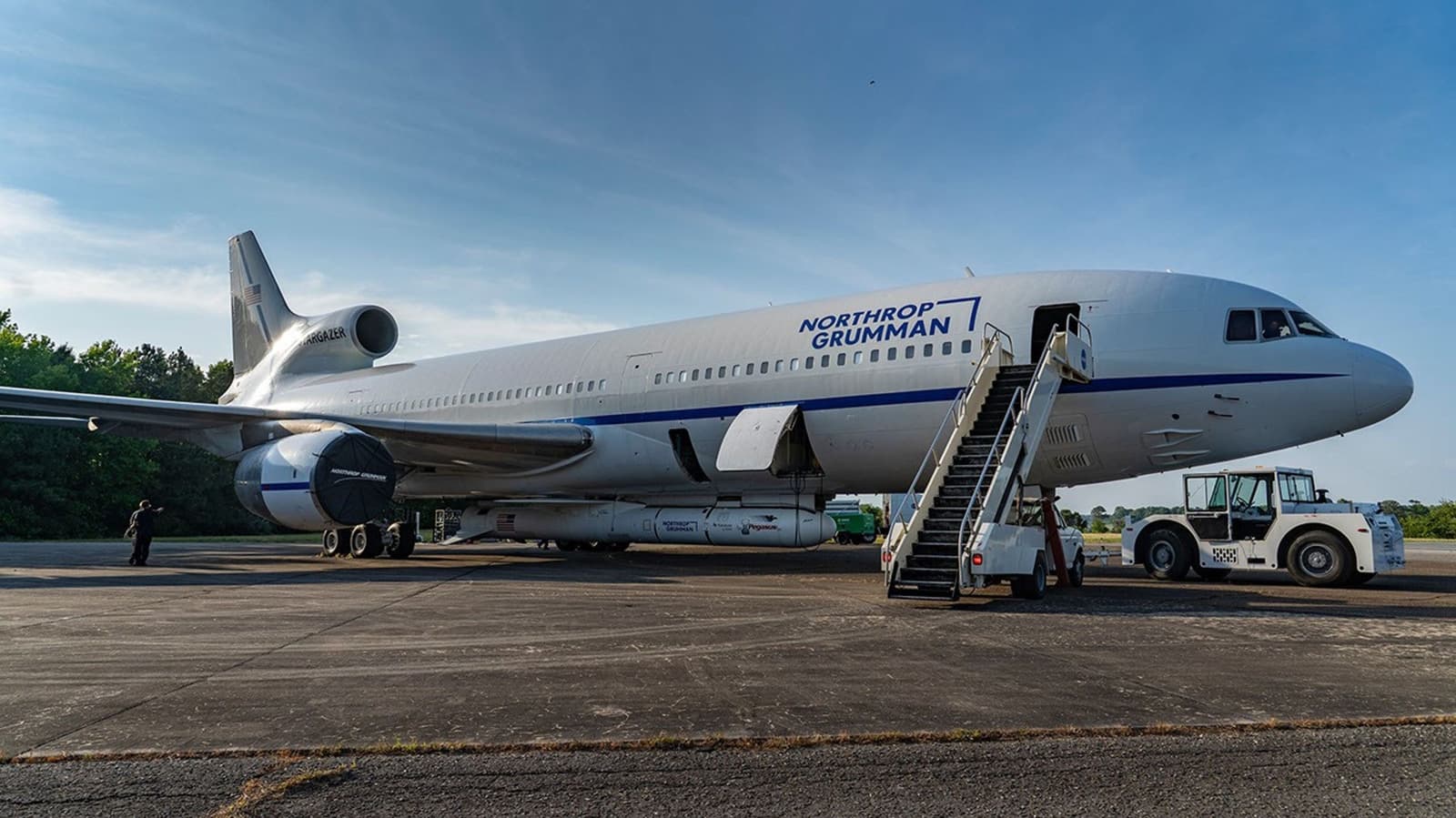
NASA's Swift Boost Mission Is Ready to Launch — And It Could Change Space History
Space telescopes are among humanity's most prized scientific instruments, offering a window into the universe that ground-based observatories simply cannot match. But like all machines, they age. Orbits decay. Fuel runs dry. And eventually, gravity wins. That is exactly the fate threatening one of NASA's most beloved and productive space telescopes — the Neil Gehrels Swift Observatory. In a bold and unprecedented move, NASA has announced that its Swift Boost mission is ready to launch later this month, with a singular goal: to rescue a falling telescope before it tumbles uncontrollably back into Earth's atmosphere.
What Is the Neil Gehrels Swift Observatory?
Launched in November 2004, the Neil Gehrels Swift Observatory — commonly known simply as Swift — has spent over two decades scanning the sky for gamma-ray bursts, the most powerful explosions in the known universe. These intense flashes of energy, believed to be caused by the collapse of massive stars or the collision of neutron stars, are fleeting and unpredictable. Swift was specifically designed to detect, locate, and study them in near real time, alerting astronomers around the world within seconds of a detection.
Over its lifetime, Swift has detected more than 1,600 gamma-ray bursts and contributed to thousands of scientific publications. It has helped map the distribution of black holes, studied supernovae, tracked comets, and even observed the first-ever confirmed detection of gravitational wave sources in electromagnetic light. By any measure, it is one of the most scientifically productive observatories ever launched.
But Swift is now in trouble. With no onboard propulsion system designed for orbital maintenance, the spacecraft has been slowly losing altitude due to atmospheric drag. Without intervention, it is expected to reenter Earth's atmosphere in an uncontrolled descent — a fate that would end its scientific mission and potentially pose risks depending on where debris might fall.
What Is the Swift Boost Mission?
The Swift Boost mission is NASA's answer to this growing crisis. It is a dedicated mission designed to do something remarkably simple in concept but extraordinarily complex in execution: fly up to the Swift Observatory, dock with it, and boost it into a higher, more stable orbit — giving the telescope potentially years of additional scientific life.
The mission represents a significant milestone in the broader field of in-space servicing, assembly, and manufacturing, often referred to as ISAM. While astronauts have famously serviced the Hubble Space Telescope on multiple crewed missions, Swift Boost would accomplish a similar feat robotically, without any humans aboard the servicing vehicle. If successful, it would demonstrate that aging satellites and telescopes can be rescued and extended without the cost and risk of crewed spaceflight.
The launch is scheduled for later this month, and NASA has confirmed the mission hardware is ready. The spacecraft will travel to Swift's current orbital altitude and perform a carefully coordinated rendezvous and docking maneuver before delivering the orbital boost needed to push the telescope into a safer trajectory.
Why Saving Swift Matters So Much
The scientific case for saving Swift is compelling. The observatory continues to operate its three instruments — the Burst Alert Telescope, the X-ray Telescope, and the Ultraviolet/Optical Telescope — with remarkable effectiveness. Its ability to rapidly slew to a target within seconds of a gamma-ray burst detection remains unmatched by any other operational spacecraft. Losing Swift would leave a significant gap in humanity's ability to respond to the universe's most energetic events.
Beyond science, the Swift Boost mission carries enormous implications for how we think about spacecraft longevity and sustainability in orbit. The space environment around Earth is becoming increasingly congested, and the ability to service, refuel, or reposition satellites has become a strategic priority for both NASA and the broader commercial space industry.
- Extended scientific return: A successful boost could add several years of operational life to Swift, enabling continued gamma-ray burst research, gravitational wave follow-up, and multi-messenger astronomy.
- Demonstration of robotic servicing: Swift Boost could validate key technologies that make future robotic servicing missions feasible, reducing the cost of extending spacecraft life across the industry.
- Debris risk reduction: Controlling the orbital fate of a large spacecraft like Swift reduces the risk of uncontrolled reentry over populated areas.
- Precedent for sustainability: Successfully rescuing Swift sends a clear message — spacecraft do not have to be disposable, and with the right tools, their missions can be extended far beyond original design lifetimes.
The Broader Context: In-Space Servicing as the Future of Spaceflight
The Swift Boost mission does not exist in isolation. It is part of a growing movement within NASA and the commercial space sector toward treating spacecraft as long-term assets capable of being maintained and upgraded, much like how aircraft are serviced and kept in operation for decades. Several companies, including Northrop Grumman with its Mission Extension Vehicle program, have already demonstrated that life extension missions are commercially viable for communications satellites in geostationary orbit. Swift Boost pushes that frontier further — into the realm of scientific spacecraft in low Earth orbit.
NASA's commitment to in-space servicing also aligns with broader sustainability goals in spaceflight. As launch cadences increase and the number of objects in orbit grows, managing the orbital environment responsibly becomes ever more critical. Missions like Swift Boost are proof of concept that the space industry is beginning to take that responsibility seriously.
What Happens Next
With the Swift Boost mission now cleared for launch, the coming weeks will be closely watched by the planetary science and astronomy communities alike. A successful docking and reboost would be celebrated not just as a victory for Swift's science team, but as a landmark achievement in the history of spacecraft servicing. Astronomers who rely on Swift's rapid-response capabilities for follow-up observations of transient events will breathe a collective sigh of relief. And engineers working on the next generation of servicing missions will have a powerful new data set to build from.
Whether Swift goes on to observe gamma-ray bursts for another five years or another decade may depend on the precision and success of this month's launch. One thing is certain: NASA is not ready to let this telescope go quietly into the night — or into the atmosphere. The Swift Boost mission is a reminder that in space exploration, persistence, ingenuity, and a willingness to attempt the difficult can extend the reach of human knowledge further than any original mission plan ever imagined.