
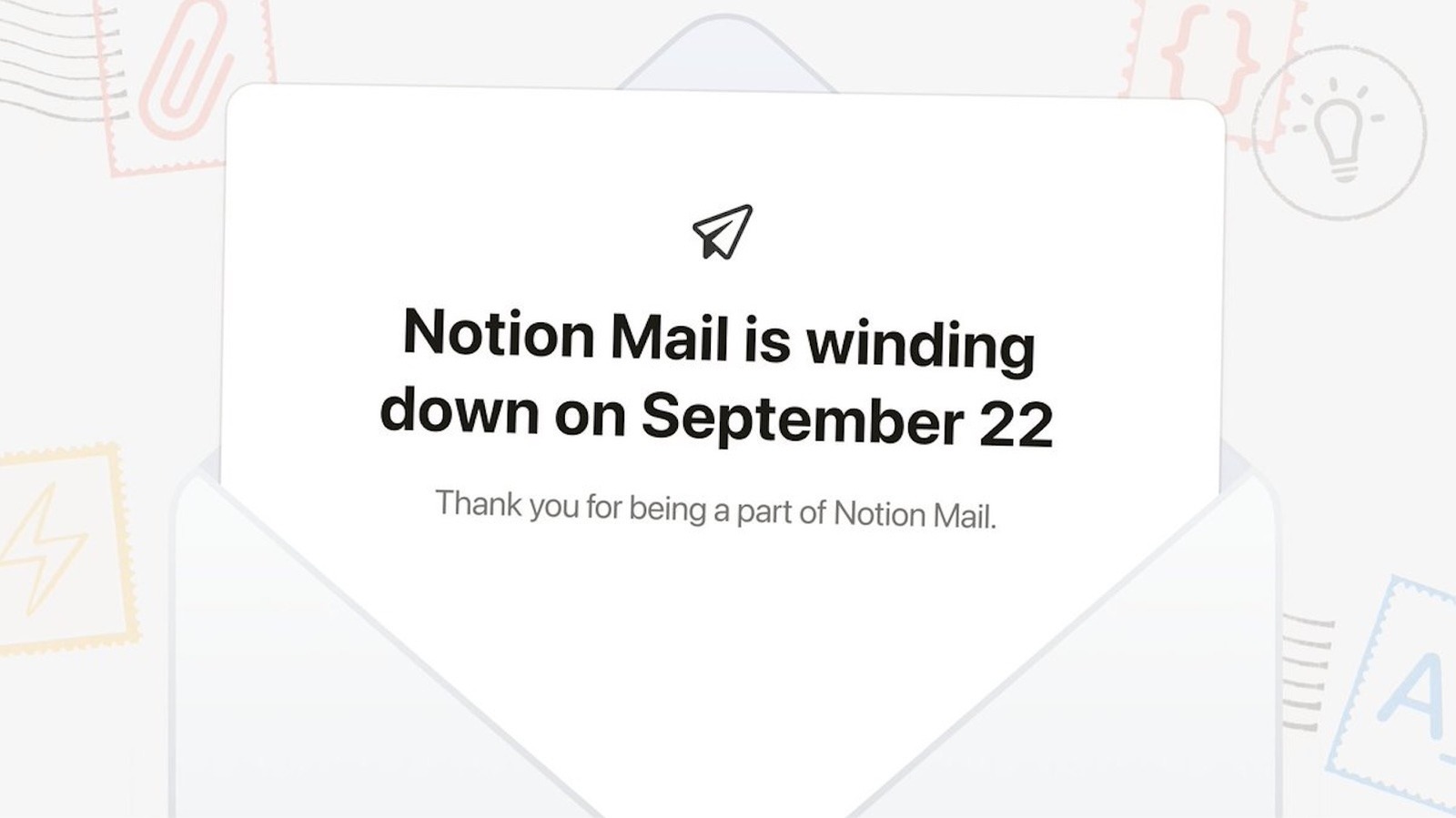
Notion Mail Is Shutting Down: What You Need to Know
It's the end of the road for Notion Mail. The ambitious email client built by the popular productivity platform Notion is officially shutting down, leaving users who had embraced it as part of their daily workflow searching for alternatives. While the announcement was brief, the implications are significant for the growing community of professionals who rely on Notion's ecosystem to manage their work and communication in one unified space.
In this article, we break down what Notion Mail was, why its closure matters, what likely went wrong, and what you should do if you were one of its users.
What Was Notion Mail?
Notion Mail was an email client developed and released by Notion, the all-in-one workspace platform beloved by teams, freelancers, students, and creators worldwide. Launched with considerable fanfare, Notion Mail promised to bring the same clean, flexible, and highly organized approach that Notion users love in their workspace directly into their inbox.
At its core, Notion Mail was designed to integrate tightly with Gmail accounts, allowing users to sort, label, and manage emails with the same kind of structured thinking that Notion encourages across projects and documents. The pitch was compelling: rather than bouncing between your email client and your Notion workspace, you could handle communication and task management in a more unified, cohesive environment.
The product attracted early adopters who were frustrated with traditional email clients like Gmail's default interface or even dedicated tools like Superhuman and HEY. Notion Mail felt like a natural extension of a platform that millions already trusted.
Why Is Notion Mail Shutting Down?
While Notion has not released an exhaustive post-mortem, the shutdown reflects a challenge that many ambitious productivity startups face: building a great standalone product is hard, but building one that meaningfully integrates with an existing platform — and competes in the notoriously difficult email client market — is even harder.
Email is one of the most competitive and entrenched categories in software. Users are creatures of habit, and persuading someone to change how they manage their inbox requires a product that doesn't just match existing tools but dramatically outperforms them. Despite Notion's strong brand and loyal user base, Notion Mail appears to have struggled to achieve the level of adoption and retention necessary to justify continued development and infrastructure investment.
There's also the question of strategic focus. Notion has been expanding rapidly as a platform, adding AI features, databases, wikis, and collaborative tools. Resources are finite, and maintaining a full-featured email product — with all of the security, reliability, and deliverability demands that entails — may have stretched the team thin. Shutting down Notion Mail may ultimately be a decision to double down on what Notion does best rather than continue competing in a space where the product hadn't yet broken through.
What This Means for Current Notion Mail Users
If you were using Notion Mail as your primary or secondary email client, the shutdown means you'll need to transition your workflow to another solution. Here are a few things to keep in mind as you plan your next steps:
- Back up your data: Before any shutdown deadline, make sure to export or otherwise save any important email threads, labels, or configurations you had set up in Notion Mail. Data loss is a real risk when a product winds down, so act sooner rather than later.
- Check your Gmail settings: Since Notion Mail connected to Gmail accounts, your underlying email data should remain safe and accessible directly through Gmail. Log into your Google account to verify everything is intact.
- Explore alternative email clients: A number of strong email clients have carved out loyal followings, and you may find one that suits your productivity style just as well or better than Notion Mail did.
The Best Notion Mail Alternatives to Consider
The good news is that the email client market, while competitive, is rich with excellent options. Whether you're looking for something AI-powered, minimalist, or deeply integrative, there's likely a tool that fits your needs.
Superhuman
Superhuman is one of the most acclaimed email clients for power users. Built around speed and keyboard shortcuts, it offers a premium experience for professionals who want to reach Inbox Zero with maximum efficiency. It's not cheap, but for heavy email users, many find the investment worthwhile.
HEY by Basecamp
HEY takes a radically different approach to email, rethinking everything from how messages arrive to how you file and respond to them. If you were attracted to Notion Mail because of its fresh take on email organization, HEY may appeal to you for similar reasons.
Mimestream
For Mac users who want a native Gmail experience that goes beyond the browser, Mimestream offers a sleek, fast, and well-designed client that feels right at home on macOS and iOS.
Spark by Readdle
Spark is a popular choice for teams and individuals alike. It combines smart inbox features, collaborative email drafting, and integrations with tools like Notion itself, making it a natural candidate for users migrating away from Notion Mail.
A Lesson in Product Focus
The shutdown of Notion Mail is a reminder that even beloved brands can't win every market they enter. Email is a deceptively difficult space — technically demanding, deeply habitual, and dominated by giants like Google and Microsoft. Notion's strength has always been in flexible, structured workspace management, and it's possible the company will emerge from this experience with sharper product focus and stronger momentum in the areas where it truly excels.
For now, Notion Mail users can take comfort in the fact that their underlying email data is safe, that good alternatives exist, and that Notion as a platform continues to evolve. The mail experiment may be over, but Notion's story is far from finished.