
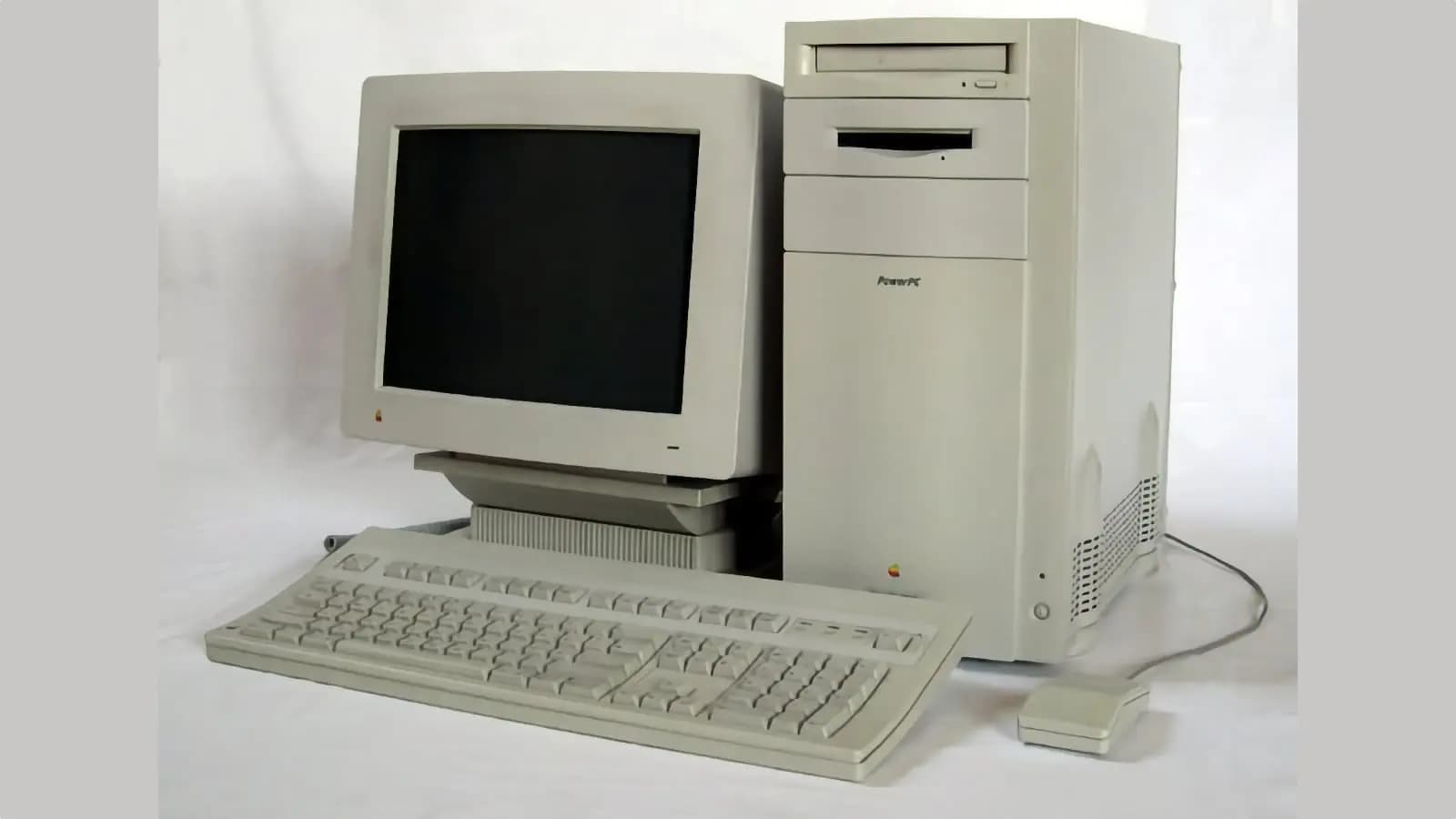
Today in Apple History: The Power Macintosh 9500 Arrives on June 19, 1995
Every now and then, a product comes along that genuinely shifts the trajectory of a company's lineup. For Apple in the mid-1990s, that product was the Power Macintosh 9500. Released on June 19, 1995, this high-end desktop machine represented a bold step forward in both raw performance and hardware expandability. It was not simply a faster Mac — it was a statement about where Apple believed professional computing was headed. Decades later, the Power Mac 9500 remains a fascinating chapter in Apple history, one that speaks to both the company's ambitions and the competitive pressures it faced.
What Was the Power Macintosh 9500?
The Power Macintosh 9500 was Apple's flagship desktop computer at the time of its release. Positioned at the very top of the Power Mac lineup, it was designed specifically for power users — creative professionals, engineers, and developers who needed maximum performance from their machines. Unlike many consumer-focused Macs of the era, the 9500 was built with expandability at its core, featuring a chassis and architecture that allowed users to significantly customize and upgrade the machine over time.
The headline feature of the 9500 was its processor. Apple equipped the machine with a second-generation PowerPC chip, a significant upgrade over the first-generation PowerPC processors that had launched Apple's transition away from Motorola 68000-series CPUs just a year earlier in 1994. This newer PowerPC silicon delivered a meaningful leap in clock speeds and overall throughput, making the 9500 the fastest Mac money could buy at launch.
The PowerPC Architecture: Apple's Big Bet
To understand why the Power Macintosh 9500 mattered, it helps to understand the context of Apple's processor transition in the mid-1990s. In 1994, Apple, IBM, and Motorola formed the AIM alliance and introduced the PowerPC architecture as a direct challenge to Intel's growing dominance in the PC market. The first wave of Power Macs had proven the concept, but the second generation — exemplified by the chip inside the 9500 — was where the platform truly began to flex its muscles.
The PowerPC processors used in the 9500 offered impressive floating-point performance, which made a tangible difference in computationally intensive tasks like 3D rendering, video editing, scientific calculations, and high-resolution image processing. For professional users in industries like graphic design, video production, and publishing — the very markets Apple was courting — this was not a trivial improvement. It translated directly into faster workflows and reduced render times.
Expandability: A Machine Built to Grow
Beyond raw speed, one of the most talked-about aspects of the Power Macintosh 9500 was its extraordinary expandability. Apple engineers designed the tower with a generous number of PCI expansion slots, giving users the ability to add third-party graphics cards, networking hardware, storage controllers, and a wide range of other peripherals. This was a major differentiator compared to many competing workstations of the time.
- The 9500 featured multiple PCI slots, far more than most consumer Macs of the era.
- The system supported large amounts of RAM, allowing professionals to future-proof their investment.
- Internal drive bays made it easy to add storage without relying on external solutions.
- The open architecture encouraged a thriving third-party hardware ecosystem around the machine.
This focus on expandability was a deliberate strategy. Apple recognized that professional users did not want to replace their entire computer every time new technology emerged. By making the 9500 a platform that could evolve, Apple was offering long-term value — a compelling argument for businesses and creative studios making substantial hardware investments.
How the 9500 Fit Into Apple's Mid-1990s Strategy
The mid-1990s were a turbulent time for Apple. The company was facing intensifying competition from Windows-based PCs, a fragmented product lineup, and significant financial challenges. The Power Macintosh line, launched in 1994, was a critical part of Apple's attempt to compete on performance and retain its professional user base. The 9500 sat at the apex of that strategy.
By releasing a machine that could genuinely compete with — and in many benchmarks outperform — rival workstations from companies like Silicon Graphics and Sun Microsystems, Apple sent a clear message to the professional market. The Mac was not a toy. It was a serious tool for serious work. This positioning helped Apple maintain loyalty among creative professionals, a demographic that would remain central to the company's identity for decades to come.
The Legacy of the Power Macintosh 9500
Looking back from today's vantage point, the Power Macintosh 9500 represents a pivotal moment in Apple's hardware history. It demonstrated that Apple could produce workstation-class machines capable of competing at the highest levels of professional computing. The lessons learned from designing and selling the 9500 — the importance of raw performance, meaningful expandability, and a robust third-party ecosystem — would echo through Apple's product philosophy for years.
The machine also reflected a broader truth about Apple: at its best, the company has always excelled at making technology that empowers creators. The Power Mac 9500 was not designed for the average home user. It was built for people who pushed computers to their limits every single day, and it delivered on that promise in a way that few machines of its era could match.
Remembering June 19, 1995
When Apple unveiled the Power Macintosh 9500 on June 19, 1995, it was making a declaration as much as it was releasing a product. The declaration was simple: Apple intended to remain competitive, relevant, and innovative in professional computing, even as the broader market shifted beneath its feet. The 9500 may not be as widely remembered as later iconic machines like the iMac G3 or the Power Mac G5, but its contribution to Apple's story is undeniable. It helped keep the Mac credible in an era when that credibility was far from guaranteed, and it gave professional users a machine they could genuinely depend on to do their best work.
For anyone who loves Apple history, the Power Macintosh 9500 is a machine worth knowing — a powerful reminder that the road to today's Apple was paved with bold, ambitious hardware choices made decades ago.