
How One Developer Tweaked a Fitness App Using Apple's Latest Tools
Building and maintaining a fitness app in the Apple ecosystem is no small task. With every WWDC comes a wave of new frameworks, APIs, and platform capabilities that developers must evaluate, adopt, and integrate — all while keeping their existing users happy and their codebase clean. That is exactly the challenge one indie developer took on when refreshing Reps & Sets, a strength training app built for iPhone, iPad, and Apple Watch. What started as a technical modernization effort quickly turned into something more collaborative, more community-driven, and far more exciting than a routine update.
What Is Reps & Sets?
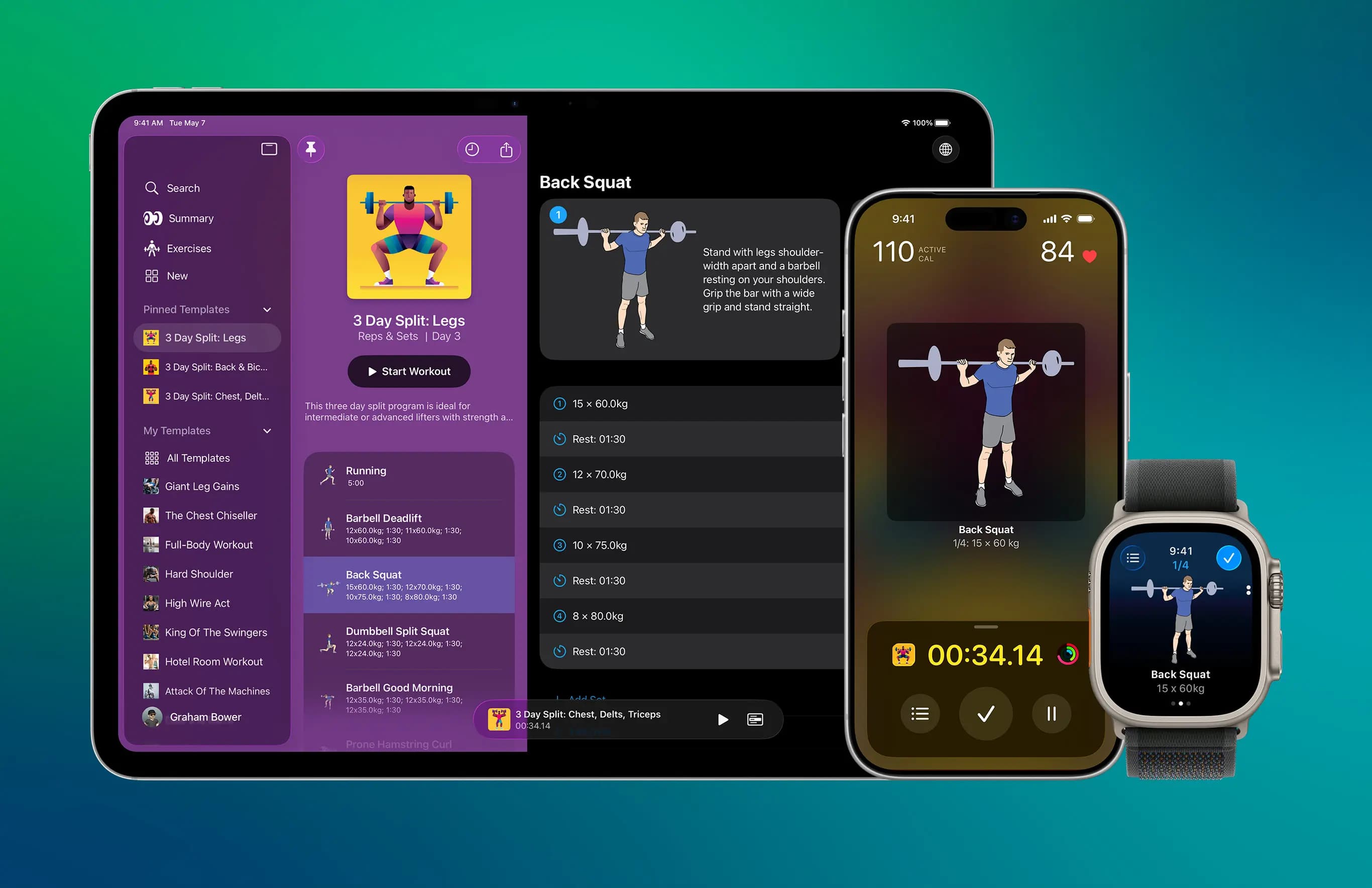
Reps & Sets is a dedicated strength training app designed for the Apple platform. It runs natively on iPhone, iPad, and Apple Watch, giving lifters a seamless way to track exercises, log sets, and monitor their progress across devices. Unlike bloated general-purpose fitness apps, Reps & Sets focuses specifically on weight training — making it a favorite among gym-goers who want a clean, focused experience without unnecessary distractions.
The app's cross-device functionality is one of its standout qualities. Whether you are reviewing your workout plan on an iPad before hitting the gym, tracking your reps on your Apple Watch mid-set, or logging notes on your iPhone, the experience is designed to feel unified and responsive. That level of polish requires constant attention to Apple's evolving developer toolkit — which is exactly what prompted this latest round of updates.
Vibe Coding: A Modern Approach to App Development
One of the more interesting aspects of this update was the developer's decision to embrace what has come to be known as "vibe coding." Rather than rigidly planning every architectural change in advance, vibe coding involves leaning into AI-assisted development tools and iterative experimentation to let the code evolve organically. It is a workflow that has gained serious traction among indie developers who need to move quickly without a large engineering team behind them.
For Reps & Sets, this approach allowed the developer to rapidly explore how Apple's newest frameworks could be integrated without getting bogged down in lengthy planning cycles. By working fluidly and iteratively — testing ideas, letting the tools suggest patterns, and refining based on results — the developer was able to modernize the app's foundation faster than a traditional development approach might have allowed.
This is not a reckless approach. Done well, vibe coding still demands a strong understanding of the underlying platform. It simply changes the rhythm of development, allowing creativity and responsiveness to drive the process rather than rigid specifications.
Leveraging Apple's Latest Frameworks
Apple's developer frameworks have matured significantly in recent years, and the latest releases introduce capabilities that make apps faster, more intelligent, and better integrated with the broader Apple ecosystem. For a fitness app like Reps & Sets, several of these advancements are particularly relevant.
- SwiftUI enhancements continue to simplify building adaptive interfaces that look great across iPhone, iPad, and Apple Watch without duplicating code. The latest improvements make it easier to craft responsive layouts that feel native on each device.
- HealthKit and WorkoutKit updates give developers deeper hooks into Apple's health and fitness data infrastructure, enabling richer integration with the Health app and more accurate workout tracking on Apple Watch.
- Swift concurrency tools make it smoother to handle real-time data syncing across devices — a critical feature for an app that needs to stay in sync as you move from your iPad in the locker room to your Apple Watch on the gym floor.
- Apple Intelligence and on-device machine learning open the door to smarter suggestions, personalized recommendations, and adaptive interfaces that learn from how individual users interact with the app over time.
By rebuilding key parts of Reps & Sets around these frameworks, the developer was able to improve performance, reduce bugs, and lay the groundwork for features that simply were not possible in earlier versions of the app.
When the Suggestions Started Rolling In
Perhaps the most rewarding part of sharing this development journey publicly was the community response. Once the developer began discussing the update process and the new capabilities being built in, users and fellow developers started offering suggestions, feature requests, and ideas that the original roadmap had not anticipated.
This kind of organic feedback loop is one of the great advantages indie developers have over large software teams. There is no bureaucratic layer between the person writing the code and the people using the app. A suggestion made by a dedicated user on a Monday can realistically become a tested feature by Friday. That responsiveness builds genuine loyalty and often results in a better product than any single developer could have envisioned alone.
The flood of suggestions following the update announcement underscored just how engaged the Reps & Sets user base is — and how much room there is to grow the app in directions that genuinely serve real lifters with real goals.
Why This Matters for Apple Fitness App Developers
The story of Reps & Sets is a useful case study for anyone building fitness or health apps in the Apple ecosystem. It illustrates that staying current with Apple's developer tools is not just a technical obligation — it is a competitive advantage. Apps that adopt new frameworks early tend to perform better, feel more polished, and unlock features that older codebases simply cannot support.
It also highlights the growing viability of modern AI-assisted development workflows for indie developers. Vibe coding, used thoughtfully, can dramatically compress the time between idea and implementation, making it possible for a small team — or a team of one — to ship updates that feel ambitious and well-crafted.
What to Expect Next from Reps & Sets
With the new framework foundation in place and a growing list of community-driven ideas to explore, the future of Reps & Sets looks promising. Users can expect continued improvements to cross-device syncing, smarter workout suggestions powered by on-device intelligence, and interface refinements that take full advantage of the latest SwiftUI capabilities.
For anyone serious about strength training on Apple hardware, Reps & Sets remains one of the most focused and thoughtfully built options available. And with a developer willing to embrace new tools, iterate quickly, and listen to the people actually using the app, it is only going to get better.