
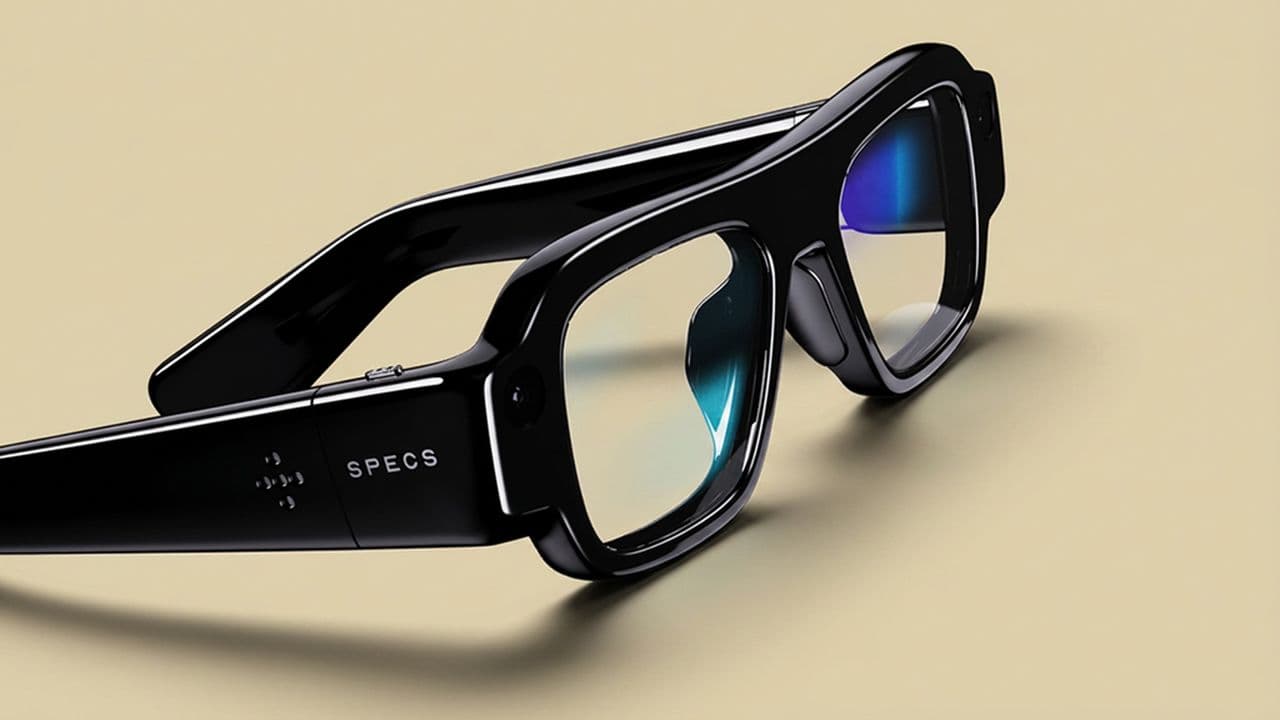
Snap Just Did What Apple Couldn't — And It Changes Everything
When Apple launched the Vision Pro in early 2024, the tech world held its breath. Here was a $3,499 spatial computing headset promising to redefine the way we interact with technology. And while the hardware left many genuinely awestruck, the device's real Achilles' heel had nothing to do with its micro-OLED displays or its groundbreaking EyeSight feature. The problem was far more fundamental: there were barely any compelling apps to use on it.
That's what made Snap's quiet but significant move so noteworthy. The company behind Snapchat — one of the most consistently creative forces in consumer augmented reality — took a hard look at what was missing from the Vision Pro experience and stepped in to fill the gap. And if you care about where spatial computing is headed, you should be paying very close attention.
The Biggest Problem Apple Vision Pro Faced at Launch
Let's be clear about what the core issue was. Apple Vision Pro shipped with an impressive suite of native visionOS capabilities, but third-party app support was thin. Many major developers either held back entirely or released watered-down iPad app ports that didn't take advantage of what the headset could actually do. Social media platforms, in particular, were conspicuously absent or underwhelming.
For a device meant to be the future of personal computing, Vision Pro felt oddly isolated from the social fabric of the internet. You couldn't fully engage with the platforms you use every day — not in a way that felt purposeful or native to the experience. That isolation was one of the most consistent criticisms from early adopters and reviewers alike. A powerful machine with nowhere interesting to go.
What Snap Did Differently
Snap has always operated a little differently from its social media peers. While Meta has poured billions into its own hardware ambitions through Quest and Ray-Ban smart glasses, and while TikTok and Instagram have largely treated spatial computing as an afterthought, Snap has quietly been building genuine AR expertise for years. Their Lens Studio platform has enabled thousands of developers to create augmented reality experiences, and the company has long viewed AR as central to its future — not a side project.
So when Snap turned its attention to visionOS and the Vision Pro, it brought that accumulated expertise with it. Rather than porting a flat version of Snapchat to the headset, Snap focused on creating an experience that made sense in three-dimensional space. The result addressed the isolation problem head-on: suddenly, Vision Pro users had access to one of the most socially active platforms in the world, designed to actually work within the spatial computing paradigm.
The significance of this cannot be overstated. Social connectivity has always been a core driver of hardware adoption. When a device can plug you into your existing social world — not just offer a workaround — it becomes fundamentally more useful and more desirable.
Why This Signals a Larger Shift in Spatial Computing
Snap's move is more than just a single app update. It represents a broader signal that the spatial computing ecosystem is beginning to mature. In the early months of Vision Pro's life, skeptics pointed to the app gap as evidence that the device was a novelty item for early adopters rather than a genuine platform. Snap's commitment helps counter that narrative.
When a company with Snap's scale and social reach decides that visionOS is worth investing in seriously, it sends a message to every other developer watching from the sidelines. It shows that the audience is real, that the use cases are emerging, and that sitting on the fence is starting to carry an opportunity cost.
The Domino Effect of Developer Confidence
Platform ecosystems live and die by developer confidence. Apple knows this better than anyone — the iPhone became what it became largely because developers trusted it enough to build seriously for it. The Vision Pro needed that same moment of credibility, and Snap's investment is exactly the kind of high-profile validation that can trigger a domino effect among other holdouts.
As more developers commit to building genuinely spatial experiences — not just glorified iPad apps — the Vision Pro becomes a more compelling device for consumers. And as the device becomes more compelling, more developers follow. This is the virtuous cycle that Apple desperately needed to kickstart.
What's Coming Next — and Why You Should Be Excited
Looking ahead, Snap's engagement with Vision Pro hints at a future where social AR and spatial computing are deeply intertwined. Imagine being able to share your spatial environment with friends, co-create AR lenses in three dimensions, or attend virtual social spaces that feel genuinely immersive rather than cartoon-like. These aren't science fiction scenarios — they're logical extensions of what Snap has already been building toward.
- Richer social AR experiences: Snap's Lens technology could eventually allow Vision Pro users to interact with augmented overlays in shared spaces, transforming how we socialize through mixed reality.
- Creator tools for spatial content: As Lens Studio evolves alongside visionOS, creators may soon have the ability to build spatial AR content accessible across both headsets and smartphones.
- Cross-platform social presence: The long-term vision may involve a seamless social layer that bridges Vision Pro, Snap Spectacles, smartphones, and eventually next-generation AR glasses into a unified experience.
The Bigger Picture for Apple Vision Pro's Future
Apple has always played a long game with its platforms. The original App Store felt sparse in its early days, and look at where it is now. The Vision Pro is at a similar inflection point, and moves like Snap's are the early indicators that the ecosystem is finding its footing faster than critics predicted.
None of this means Vision Pro's challenges are solved overnight. The price remains a significant barrier, and the device still needs more killer use cases to reach mainstream adoption. But the app gap — the single most damaging criticism of the platform — is beginning to close. And Snap, quietly and without much fanfare, played a meaningful role in making that happen.
For anyone excited about the future of spatial computing, mixed reality, and truly immersive social experiences, the direction things are heading has never looked more promising. The pieces are falling into place, one well-placed app update at a time.