
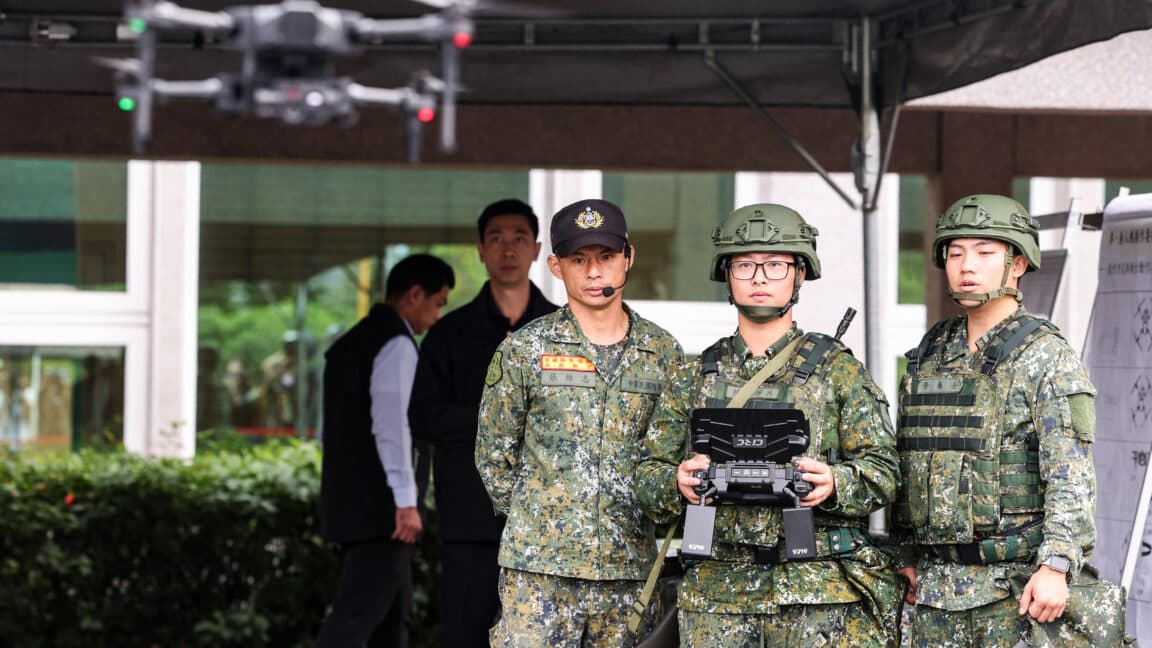
Taiwan's Drone Strategy: Building a Shield Against China
In an era defined by rapidly evolving warfare technology, Taiwan is making an unmistakable statement: it will not be caught unprepared. As tensions with China remain a persistent and defining feature of cross-strait relations, Taiwan has embarked on one of the most ambitious military drone expansion programs in Asia. With a proposed $6.6 billion budget, domestic manufacturing momentum, and deepening ties with US defense contractors, Taiwan is transforming drones into the cornerstone of its national defense strategy.
This is not just a story about hardware. It is a story about sovereignty, deterrence, and the evolving nature of modern warfare in one of the world's most geopolitically sensitive regions.
A $6.6 Billion Commitment to Domestic Drone Power
On June 18, Taiwan's Ministry of National Defense presented a landmark special budget proposal to dramatically scale up its military drone arsenal. The plan calls for spending $6.6 billion over six years, spanning 2026 to 2031, with the explicit goal of purchasing drones manufactured within Taiwan itself.
The scale of the proposal is striking. According to Taiwan's Central News Agency, the budget would fund the acquisition of more than 208,000 coastal attack drones, over 1,400 coastal reconnaissance drones, and approximately 1,320 uncrewed surface vessels. These numbers represent not just a quantitative leap but a fundamental shift in how Taiwan envisions defending its coastlines and deterring any attempted amphibious invasion by the People's Liberation Army.
Currently, Taiwan's military drone inventory stands at roughly 5,000 units — a combination of US-made attack drones and domestically produced models, according to reporting by Resilience Media. The proposed budget would increase that number by more than fortyfold, distributing drone capabilities across multiple branches of the armed forces and positioning unmanned systems as a first line of defense against naval and aerial threats.
Why Drones Are Central to Taiwan's Defense Doctrine
The strategic logic behind Taiwan's drone push is clear to military analysts. Taiwan's existence as a self-governing democracy, with its own elected government and institutions, depends on its ability to make any Chinese military invasion costly enough to deter. Taiwan lacks the manpower and conventional military assets to match China in a symmetrical conflict. Asymmetric tools — fast, expendable, and difficult to fully neutralize — offer a more viable path to deterrence.
Drones fit this doctrine perfectly. Coastal attack drones can be deployed in massive swarms to overwhelm landing craft, naval vessels, and amphibious forces before they reach shore. Reconnaissance drones extend battlefield awareness without risking pilots. Uncrewed surface vessels add a maritime dimension to Taiwan's unmanned capabilities, covering the sea lanes through which any invasion force would have to pass.
The Ukrainian conflict has reinforced these lessons on a global stage. Ukraine's effective use of cheap, commercially adapted drones against a much larger military power has provided a modern template that Taiwan's defense planners are actively studying and adapting for their own circumstances.
Live Exercises and Battlefield Readiness
Taiwan is not waiting for budget approvals to start preparing its forces. In military exercises conducted in early June, Taiwanese soldiers deployed Altius-600 loitering munition drones — manufactured by AREA-I, a subsidiary of the US defense technology firm Anduril Industries — from towed flatbed launchers to strike simulated offshore targets. Reported by USNI News, the exercises demonstrated Taiwan's growing capability to integrate advanced American drone technology into real-world combat scenarios.
In a separate exercise earlier in the year, Taiwanese Marines used domestically manufactured drones to strike naval targets at sea, signaling that Taiwan's own defense industry is producing systems capable of performing serious military missions, not just training exercises.
These exercises serve a dual purpose. They build genuine operational readiness, ensuring that soldiers know how to deploy and maintain drone systems under realistic combat conditions. They also send a deliberate signal to Beijing that Taiwan's drone capabilities are not theoretical — they are practiced, field-tested, and ready to be deployed in defense of the island.
Taiwan's International Defense Partnerships
Taiwan's drone ambitions extend well beyond its own borders. Taiwanese defense companies are actively forming international partnerships to sell military-grade drones to the US military and other allied nations. This commercial dimension is strategically important for several reasons.
Export contracts help Taiwanese drone manufacturers scale production, reduce per-unit costs, and attract the kind of investment needed to stay competitive with rapidly advancing Chinese drone technology. They also deepen Taiwan's integration into allied defense supply chains, making Taiwan's security a matter of practical interest to governments and militaries around the world.
The US military's interest in Taiwanese drones aligns with Washington's broader efforts to diversify its drone supply chain and reduce dependence on components manufactured in China. As the US Department of Defense has moved to restrict Chinese-made drones from its operations, Taiwan's defense industry finds itself well-positioned to fill that gap with allied, trusted alternatives.
Civilian Participation: Drone Training for Taiwanese Citizens
Perhaps one of the most telling indicators of Taiwan's seriousness is the civilian response. Ordinary Taiwanese citizens are signing up in meaningful numbers for drone flight training programs, preparing themselves to contribute to national defense if called upon. This mirrors trends seen in countries like Ukraine and Estonia, where civilian drone operators have become a meaningful part of national resilience strategies.
This grassroots participation reflects a broader shift in public awareness within Taiwan — a recognition that national defense is not solely the responsibility of the professional military but something that an engaged citizenry can actively support.
The Road Ahead
Taiwan's drone expansion program, if fully funded and executed, will represent one of the most significant shifts in the island's defensive posture in decades. The combination of a massive domestic procurement budget, live military exercises, international defense partnerships, and civilian training creates a layered, comprehensive approach to drone warfare that goes far beyond simple hardware acquisition.
Whether the $6.6 billion budget proposal clears Taiwan's legislature and proceeds on schedule remains to be seen. But the direction is unmistakable. Taiwan is betting that a credible, large-scale, and domestically rooted drone capability is among its best tools for preserving the democratic self-governance its people have built — and that the cost of invasion, measured in drones destroyed and losses suffered, must remain too high for Beijing to accept.
In the skies over the Taiwan Strait, the drone race is already underway.