
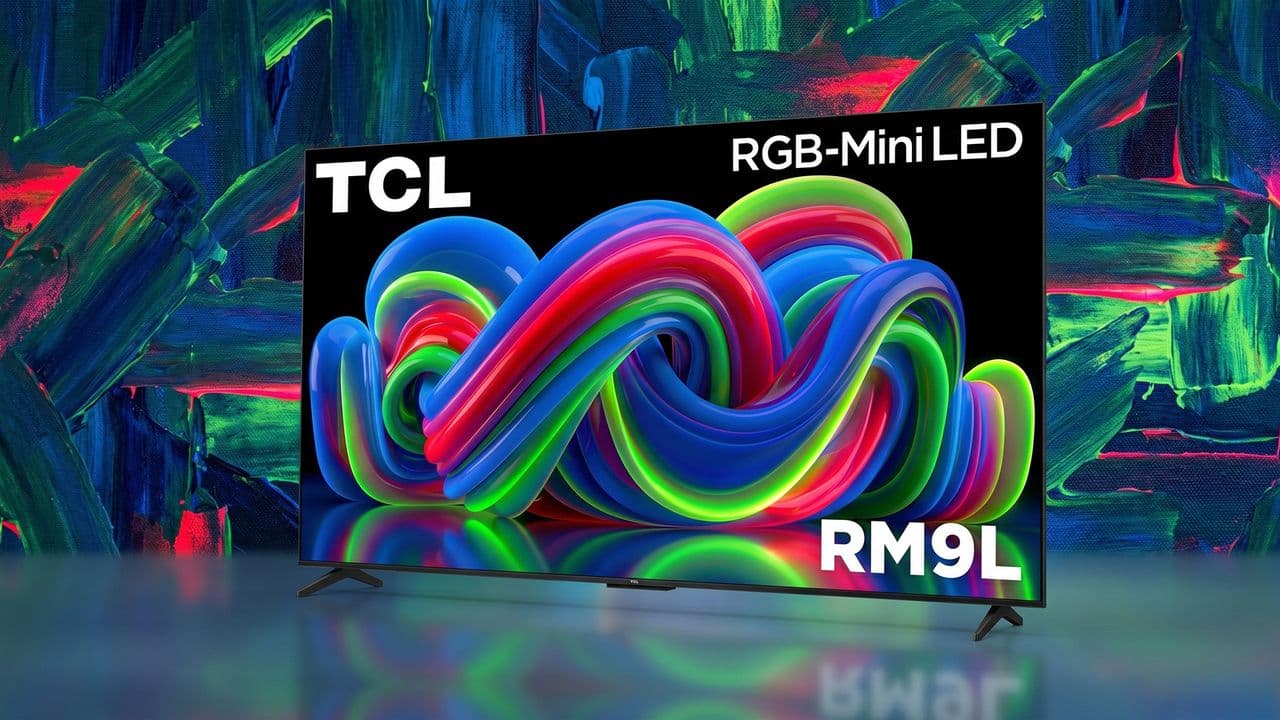
Why Your Old HDR TV Is Holding Your Home Theater Back
If you invested in a 4K HDR television a few years ago, you probably felt like you were at the cutting edge of home entertainment. Fast forward to today, and that once-impressive set might be leaving a lot of performance on the table. The rapid advancement of Mini LED backlighting technology — especially TCL's proprietary RGB-Mini LED implementation — has raised the bar so dramatically that standard HDR now feels like a relic of a less ambitious era.
Standard HDR10 and even Dolby Vision, as implemented on conventional LED panels, rely on relatively crude local dimming zones and modest peak brightness levels. The result is crushed shadow detail, blooming around bright objects, and a color volume that only scratches the surface of what modern content is mastered to display. TCL's RGB-Mini LED televisions attack every one of those weaknesses head-on, and the difference is visible from the moment you power them on.
Below, we break down the three TCL RGB-Mini LED TVs most worth considering for a serious home theater upgrade, explaining what makes each one special and why they collectively signal a new era for mid-to-premium TV performance.
What Is RGB-Mini LED and Why Does It Matter?
Before diving into specific models, it helps to understand what separates RGB-Mini LED from the conventional Mini LED displays you may have already encountered. Traditional Mini LED TVs use white LEDs shrunk down to allow thousands of them to fit behind the panel, enabling far more precise local dimming zones than older edge-lit or full-array displays.
TCL takes this foundation and adds a crucial innovation: RGB-colored Mini LEDs. Instead of white backlights filtered through a color layer, the backlight itself generates red, green, and blue light directly. This approach dramatically expands color volume, boosts peak brightness, slashes backlight blooming, and delivers blacks that rival OLED in many real-world viewing scenarios — all while maintaining the brightness advantage that OLED panels fundamentally cannot match in a bright living room.
The practical upshot is a television that can simultaneously display a blinding firework explosion and rich shadow detail in the same frame, something that exposes the limitations of standard HDR immediately on any side-by-side comparison.
1. TCL QM8 — The Flagship That Redefines Value
The TCL QM8 is the model that arguably started the serious conversation about RGB-Mini LED as a mainstream technology. Available in screen sizes ranging from 65 to 98 inches, the QM8 deploys thousands of local dimming zones powered by TCL's RGB-Mini LED backlight, achieving peak brightness figures that comfortably exceed 2,000 nits in real-world highlights — a figure that puts many far more expensive competitors to shame.
Color coverage on the QM8 exceeds 90 percent of the DCI-P3 color gamut with ease, and the set supports both HDR10+ and Dolby Vision, meaning it can extract every bit of metadata that premium streaming content, 4K Blu-ray, and gaming consoles provide. Google TV serves as the operating system, bringing a clean, app-rich interface to the experience.
For home theater enthusiasts who game, the QM8 also offers HDMI 2.1 connectivity with 4K 144Hz support and variable refresh rate, making it equally compelling as a next-generation gaming display. At its price point, the QM8 represents one of the strongest arguments for upgrading that the TV market has produced in years.
2. TCL QM9 — When You Want to Go Further
Think of the QM9 as TCL's answer to the question: what happens when you apply even greater engineering resources to an already excellent formula? The QM9 refines the RGB-Mini LED approach with a higher zone count, improved anti-reflective coating, and even more aggressive peak brightness targets, reportedly pushing past 3,000 nits under controlled conditions.
The result is a television that handles the most demanding HDR content — concert films bathed in stage lighting, sunlit sports stadiums, HDR-mastered action blockbusters — with a composure and vibrancy that no standard HDR panel can replicate. Shadow detail is preserved with remarkable fidelity while specular highlights pop with genuine physical intensity rather than the clipped, blown-out appearance common on lesser sets.
The QM9 is also a strong performer in terms of input lag and motion handling, making it suitable for both cinematic viewing sessions and competitive gaming without requiring significant compromise in either direction.
3. TCL QM851G — The Accessible Entry Point Into RGB-Mini LED
Not every home theater upgrade needs to carry a flagship price tag, and that is precisely where the TCL QM851G earns its place in the conversation. This model brings the core RGB-Mini LED technology to a more accessible price bracket without gutting the features that make the format worthwhile.
You still get wide color volume, a meaningful step up in local dimming precision over standard LED televisions, and support for major HDR formats. The brightness ceiling is lower than the QM8 or QM9, but it remains substantially higher than what conventional HDR sets can sustain, particularly in HDR peak highlights where the difference between formats is most visible.
How to Decide Which TCL RGB-Mini LED TV Is Right for You
Choosing between these three models comes down to a combination of room size, ambient lighting conditions, and budget. Consider the following:
If your viewing room gets significant daylight and you watch a mix of sports, movies, and gaming on a large screen, the QM8 offers the best overall balance of brightness, features, and value across its size range.
If you want the most technically capable TCL panel available and your budget allows it, the QM9 delivers noticeably higher peak brightness and refinement that dedicated home cinema users will appreciate, particularly with the lights dimmed.
If you are making your first serious step up from a standard LED or older HDR display and want to experience RGB-Mini LED without committing to a flagship expenditure, the QM851G offers a genuinely compelling improvement over what you are likely replacing.
The Verdict: Standard HDR's Best Days Are Behind It
The arrival of TCL's RGB-Mini LED lineup does not just represent incremental improvement — it marks a genuine inflection point in what consumers can reasonably expect from a television purchase. Where standard HDR promised a wider, brighter, richer image and frequently underdelivered due to the hardware constraints of conventional backlighting, RGB-Mini LED fulfills that promise with consistency.
Whether you choose the flagship QM9, the excellently rounded QM8, or the accessible QM851G, you are investing in a technology that makes the content you already watch look better than it ever has on a flat-panel display outside of premium OLED. Given the brightness advantages RGB-Mini LED holds over OLED in real-world conditions, these TCL models are not just alternatives — for many viewers, they are now the smarter choice for a complete home theater upgrade.