
Trump Administration Reverses Plan to Shut Down the Ocean Observatories Initiative
In a significant policy reversal, the Trump administration has backed away from its surprise May announcement to dismantle the Ocean Observatories Initiative (OOI), a federally funded network of ocean monitoring systems representing over $350 million in public investment. The decision comes after a wave of opposition from the scientific community, fisheries advocates, weather forecasters, and members of Congress — demonstrating just how critical this infrastructure has become to American science, commerce, and national resilience.
What Is the Ocean Observatories Initiative?
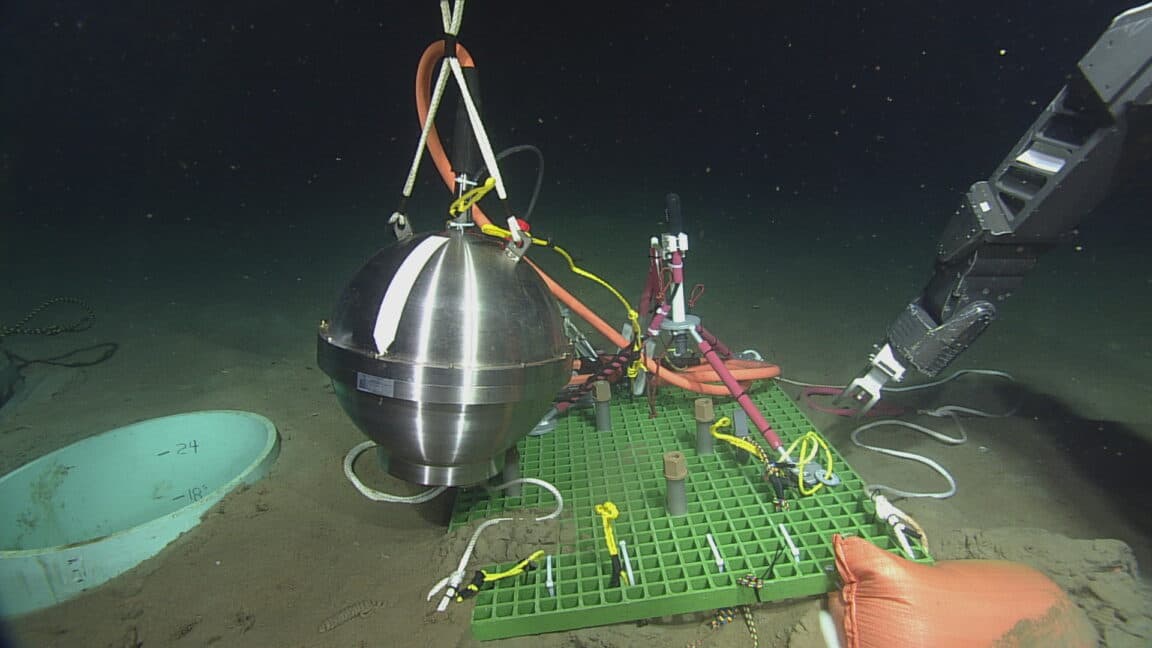
The Ocean Observatories Initiative is one of the most sophisticated ocean monitoring networks ever built. Funded and developed over many years by the federal government, the OOI consists of an interconnected array of sensors, buoys, underwater vehicles, and seafloor systems spread across the Atlantic and Pacific Oceans. Together, these instruments collect continuous, real-time data on ocean temperature, salinity, currents, chemical composition, and biological activity.
The data generated by the OOI serves a remarkably wide range of purposes. Scientists use it to study long-term climate trends, track ocean acidification, and monitor the health of marine ecosystems. Meteorologists rely on ocean data to improve the accuracy of weather forecasts, particularly for coastal storms and hurricanes. Commercial and regulatory fisheries managers use it to understand fish population dynamics and habitat conditions. In short, the OOI is not a niche scientific instrument — it is foundational infrastructure with real-world consequences across multiple sectors of American life.
A Sudden and Unexplained Shutdown Announcement
The May announcement that the federal government intended to shut down the OOI came without warning and, crucially, without any stated justification. No cost-benefit analysis was made public. No phased transition plan was offered. No replacement network was proposed. The network was simply to be taken apart, despite representing more than $350 million in taxpayer investment and years of scientific development.
The abrupt nature of the decision drew immediate suspicion. The OOI plays an important role in tracking ocean temperature changes and other variables closely associated with climate science. Given the current administration's well-documented skepticism toward climate research and its broader effort to reduce the federal government's footprint in scientific data collection, many observers concluded that the shutdown was ideologically motivated rather than fiscally or operationally driven.
Researchers and institutions that depend on OOI data were alarmed. Universities, federal agencies, and international science partners all stood to lose access to irreplaceable, continuous datasets that, in some cases, represent decades of baseline measurements.
Why the Opposition Was So Broad
What made the pushback against the OOI shutdown particularly powerful was how broad the coalition of opposition turned out to be. This was not simply a dispute between the administration and climate scientists. The objections came from voices that are difficult to dismiss on political grounds.
- Weather forecasters pointed out that ocean monitoring data feeds directly into the models used to predict storms, helping protect lives and property in coastal communities.
- Fisheries managers and commercial fishing interests noted that understanding ocean conditions is essential for sustainable fish stock management and for the economic viability of a multi-billion-dollar industry.
- Members of Congress from both parties, particularly those representing coastal states, recognized that their constituents had direct, tangible stakes in the continuation of the OOI.
- Academic and research institutions across the country raised concerns about the loss of long-term data continuity, which cannot be recovered once a monitoring gap occurs.
This diverse coalition made it politically costly to proceed with the shutdown. A Senate vote signaled that lawmakers were not willing to simply allow a $350 million asset to be discarded without explanation.
The Reversal and What It Means
According to reporting by The New York Times and a statement from Representative Zoe Lofgren, the ranking Democrat on the House Science Committee, the federal government has decided to reverse course. An official announcement was expected to follow. The reversal represents a meaningful, if incomplete, victory for those who fought to preserve the network.
It is also a reminder of the role that public pressure, legislative engagement, and clear communication about the practical value of science can play in shaping policy outcomes. The OOI's survival, at least for now, was not guaranteed — it had to be defended.
The Lingering Question: How Much Damage Was Done?
Even with the reversal confirmed, serious questions remain. The original shutdown announcement was made in May, and an unknown amount of operational disruption occurred in the weeks that followed. Monitoring systems require continuous maintenance, staffing, and data management. Any interruption to those activities — even a brief one — can result in data gaps, equipment degradation, or loss of trained personnel.
Scientists and program managers will now need to assess exactly what happened to the OOI during the intervening period. If critical sensors went unmaintained, if data pipelines were disrupted, or if key staff departed, the damage could take months or years to fully repair. Some data gaps, once created, simply cannot be filled retroactively.
Looking Ahead: The Broader Lesson for Science Policy
The OOI episode highlights a broader vulnerability in how the United States manages its scientific infrastructure. Long-term monitoring networks are uniquely susceptible to policy disruption because their value is cumulative and sometimes invisible in the short term. The benefit of decades of continuous ocean data is not immediately obvious in a single budget cycle — but losing that continuity has irreversible consequences.
As the administration continues to review federal science spending, advocates and lawmakers will need to remain vigilant. The OOI survived this particular threat, but the conditions that produced the shutdown announcement have not fundamentally changed. Protecting the infrastructure that supports American science, public safety, and economic resilience will require ongoing attention — not just reactive defense when a crisis emerges.
For now, the ocean is still being watched. That matters more than many people realize.