
Trump Administration Backs Off Plans to Shut Down Ocean Monitoring Network After Senate Vote
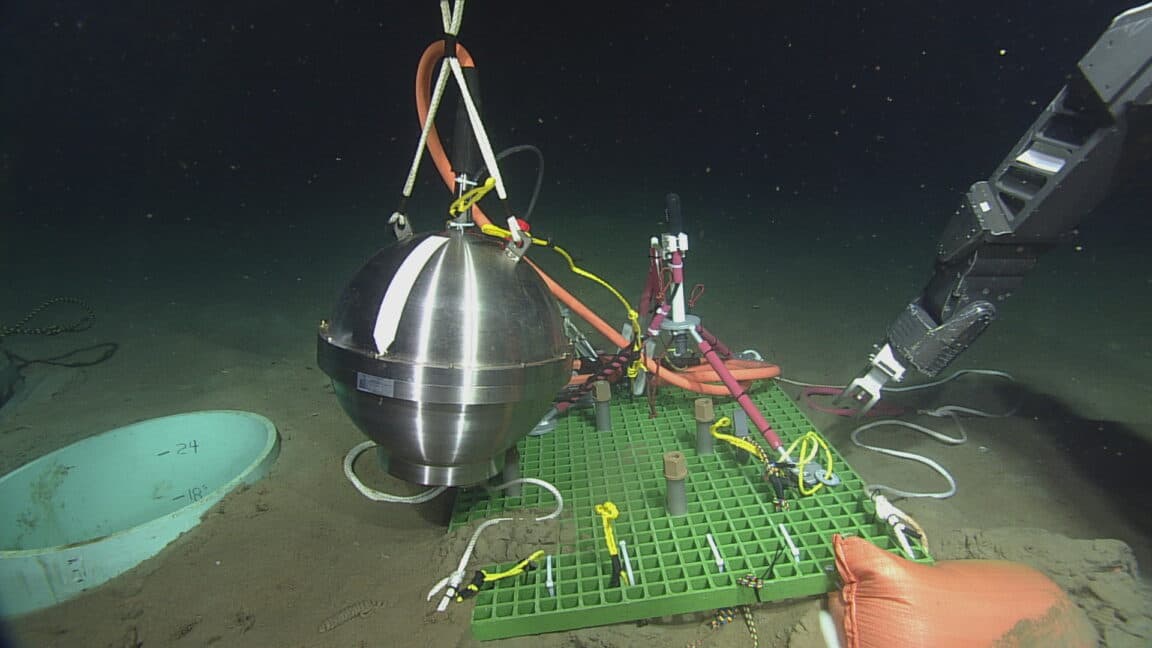
In a significant policy reversal, the Trump administration has announced it will abandon its plans to dismantle the Ocean Observatories Initiative (OOI), a sprawling network of ocean monitoring systems that cost over $350 million to build. The decision to walk back the shutdown comes after intense opposition from scientists, fisheries managers, weather forecasters, and members of Congress — a rare coalition that proved powerful enough to change course in Washington. The reversal raises important questions, however, about how much damage the network may have sustained during the weeks it spent in limbo.
What Is the Ocean Observatories Initiative?
The Ocean Observatories Initiative is one of the most ambitious ocean monitoring programs ever constructed in the United States. Funded largely by the National Science Foundation, the OOI consists of a network of sensors, underwater robots, and monitoring platforms distributed across multiple ocean regions. These instruments collect continuous, real-time data on ocean temperature, chemistry, currents, and biological activity, providing scientists with an unprecedented window into the health and behavior of the world's oceans.
The OOI is not just a scientific curiosity — it serves practical, life-affecting purposes that stretch well beyond academic research. Among its most critical functions are contributions to national weather forecasting, enabling meteorologists to make more accurate short- and long-term predictions. Its data also supports commercial and subsistence fisheries management, helping regulators understand fish population dynamics, migratory patterns, and habitat conditions. Additionally, the network plays a central role in tracking ocean-based indicators of climate change, including sea surface temperature anomalies and ocean acidification trends.
The Sudden and Unexplained Shutdown Announcement
In May, the federal government announced without warning that it intended to dismantle the OOI. No official explanation was provided for the decision, leaving scientists and policymakers scrambling to understand what had driven the move. The abrupt nature of the announcement — with no transition plan, no stakeholder consultation, and no public justification — immediately raised red flags across the scientific community.
Many observers were quick to point to the OOI's role in documenting climate change as a likely motivation. The Trump administration has historically sought to reduce federal investment in climate-related science and monitoring, and shuttering a major ocean observation network would have significantly degraded the country's ability to track one of the most closely monitored indicators of global warming — ocean heat content and temperature rise. While this reasoning was never confirmed officially, the timing and lack of explanation made the climate connection difficult to ignore.
Why the Opposition Was So Broad and Effective
What made the pushback against the OOI shutdown particularly forceful was the diversity of interests that stood to lose from the network going dark. This was not simply a battle fought by climate activists or academic researchers — the coalition that formed against the shutdown included stakeholders from across the political and economic spectrum.
- Weather forecasting agencies warned that losing OOI data would degrade forecast accuracy, with real consequences for public safety, agriculture, and disaster preparedness.
- Commercial fishing industries relied on OOI data for fisheries management, meaning livelihoods were directly on the line.
- University research programs across the country depend on OOI infrastructure for ongoing studies that cannot easily be replicated through other means.
- Congressional representatives from both parties voiced concern, recognizing that the shutdown would harm constituents in coastal and fishing-dependent communities.
The Senate's involvement appears to have been a turning point. Following a vote that signaled strong opposition to the shutdown, the administration found itself politically exposed in a way that made maintaining the decision untenable. Zoe Lofgren, the ranking Democrat on the House Science Committee, confirmed the reversal, issuing a statement indicating that the government had made the decision to restore the OOI's funding and operations.
What the Reversal Means — and What It Doesn't
The announcement that the OOI will not be shut down is unambiguously good news for ocean science in the United States. But it would be premature to declare a complete victory. The intervening weeks between the initial shutdown announcement and the reversal were not without consequence. Ocean monitoring networks are not like software that can simply be switched off and back on without incident — sensors require maintenance, data streams need continuity, and some instruments may have been powered down, removed, or allowed to fall into disrepair during the period of uncertainty.
The critical question now is how much damage was done during that window. If key instruments were taken offline or maintenance was deferred, restoring full operational capacity could take months and require additional funding. Data gaps introduced during the shutdown period could also compromise ongoing longitudinal studies that depend on continuous records — some of which span years or decades.
The Bigger Picture: Science Funding and Political Vulnerability
Beyond the immediate story of the OOI, this episode illustrates a broader and troubling pattern in the relationship between federal science funding and political decision-making. The fact that a $350 million, nationally critical monitoring network could be slated for elimination without warning, without explanation, and without any formal review process reflects how vulnerable scientific infrastructure has become to sudden policy shifts.
The reversal is a reminder that public pressure, legislative engagement, and cross-sector coalitions can still protect scientific resources when mobilized effectively. It also underscores the need for more durable statutory protections for federally funded scientific infrastructure, so that networks like the OOI are not left exposed to the whims of any single administration.
What Comes Next for the Ocean Observatories Initiative
With the reversal now confirmed, attention turns to recovery and stabilization. Scientists and administrators will need to assess the current state of OOI equipment, identify any data gaps created during the shutdown period, and work to restore full operational capacity as quickly as possible. Longer term, advocates will likely push for legislative measures that would make it harder for future administrations to shutter critical research infrastructure on short notice and without justification.
The Ocean Observatories Initiative represents decades of planning, hundreds of millions of dollars in public investment, and an irreplaceable scientific asset. Its near-dismantling — and its survival — should serve as a wake-up call about how science is funded, protected, and valued in the United States.