
Turkey's Homegrown Fighter Jet Is Impressive — But It Still Needs America's Help
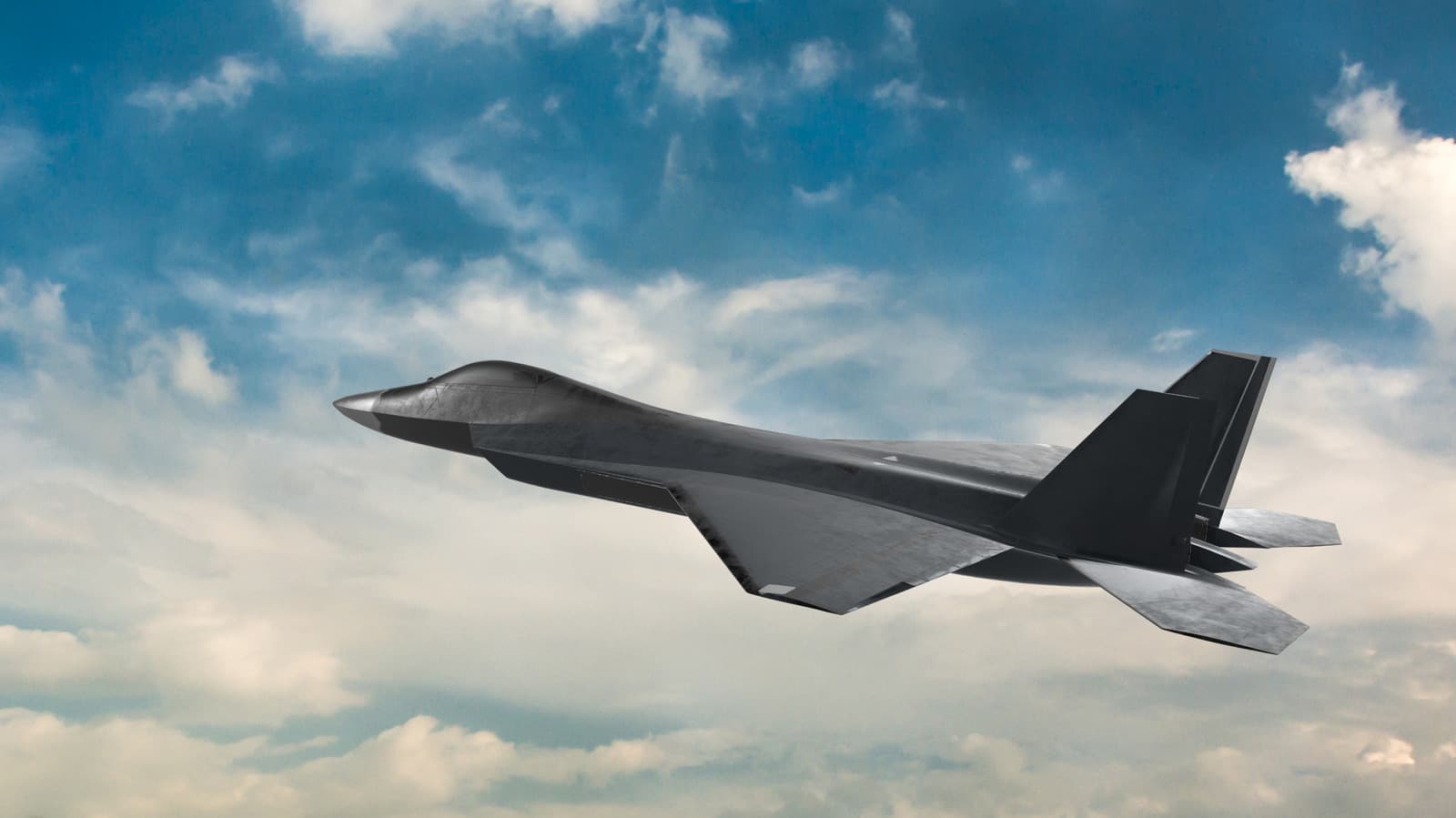
Turkey has made extraordinary strides in its domestic defense industry over the past two decades. From armed drones that have reshaped modern battlefields to locally produced armored vehicles and warships, Ankara has poured enormous resources into building a self-sufficient military-industrial complex. The crown jewel of that ambition is the KAAN — Turkey's homegrown fifth-generation stealth fighter jet, developed by Turkish Aerospace Industries (TAI) as a direct answer to the country's exclusion from the F-35 program. There's just one problem: as impressive as the KAAN is, Turkey still needs a United States-made engine to get it off the ground.
Understanding why this dependency exists, what engine is currently powering the KAAN, and what Turkey plans to do about it tells a broader story about the challenges every nation faces when trying to develop truly sovereign military aviation capabilities.
What Is the KAAN Fighter Jet?
The KAAN (formerly known as the TF-X or MMU) is Turkey's ambitious attempt to build a domestically produced, fifth-generation combat aircraft capable of replacing its aging fleet of F-16s and filling the role that F-35s would have occupied had Turkey not been removed from the Joint Strike Fighter program in 2019. That removal came after Turkey purchased Russia's S-400 surface-to-air missile system, which the United States and NATO deemed incompatible with alliance security standards and a potential risk to F-35 stealth technology.
Rather than accept the setback as a permanent limitation, Turkey doubled down on its own fighter program. The KAAN made its maiden flight in February 2023, a milestone that placed Turkey in an exclusive club of nations capable of designing and flying their own fifth-generation aircraft. The aircraft features a twin-engine configuration, internal weapons bays to preserve its radar cross-section, and advanced avionics developed largely with domestic Turkish technology.
The Engine at the Heart of the Problem
Despite those achievements, the KAAN's flight test program has been running on General Electric F110 turbofan engines — the same engine family that powers many of Turkey's existing F-16s. The F110 is a proven, high-performance engine, and its use in the KAAN's early development and testing phases made practical sense. TAI and the Turkish government needed to validate the airframe, flight characteristics, and avionics without the added complexity of simultaneously integrating an unproven domestic powerplant.
However, relying on a US-made engine for a platform designed to assert Turkish defense sovereignty is a deeply uncomfortable arrangement — and both sides know it. The United States retains export control over the F110 under International Traffic in Arms Regulations (ITAR), meaning Washington has significant leverage over how and where the engines can be used. In a geopolitical environment where US-Turkish relations remain complicated by issues ranging from the S-400 dispute to tensions over Syria, that dependency is a strategic vulnerability Turkey cannot ignore.
Why Building a Domestic Jet Engine Is So Hard
Designing a world-class jet engine from scratch is one of the most technically demanding endeavors in all of engineering. Only a handful of countries — the United States, Russia, the United Kingdom, France, and China — have demonstrated the ability to independently develop high-thrust turbofan engines capable of powering frontline combat aircraft. The metallurgy required for turbine blades that operate at temperatures exceeding the melting point of the alloys they're made from, the precision machining tolerances, the computational fluid dynamics expertise, and the decades of accumulated test data all represent barriers that money alone cannot quickly overcome.
Turkey is acutely aware of this challenge. Through its domestic engine developer TUSAŞ Engine Industries (TEI), Turkey has been working on the TF6000 — a domestically developed turbofan engine intended to eventually power the KAAN. TEI has made meaningful progress, but developing an engine capable of meeting the thrust, reliability, and longevity demands of a fifth-generation fighter is expected to take several more years. Experts and Turkish defense officials have suggested a domestic engine could be ready for integration into the KAAN sometime in the late 2020s to early 2030s, though timelines in defense development programs frequently slip.
Turkey's Strategic Path Forward
Turkey's plan is not simply to wait for TEI to finish the TF6000 and swap it in. The country has pursued several parallel strategies to manage its engine dependency and accelerate the transition to full domestic production.
- Investing heavily in TEI: The Turkish government has significantly increased funding for TEI's engine development programs, recognizing that propulsion is the single biggest remaining gap in its defense self-sufficiency goals.
- Seeking international partnerships: Turkey has explored cooperation agreements with countries including the United Kingdom, which has its own advanced engine development capabilities through Rolls-Royce, and has maintained discussions with other potential partners to gain access to technology and expertise.
- Phased production strategy: Rather than waiting for a domestic engine before beginning serial production of the KAAN, Turkey plans to produce an initial batch of aircraft powered by the GE F110 while the domestic engine matures — similar to how other nations have managed transitional phases in major aviation programs.
The Bigger Picture for Turkish Defense Ambitions
The KAAN engine situation reflects a tension that nearly every country pursuing strategic defense autonomy encounters. Building a next-generation fighter jet involves hundreds of critical subsystems, and achieving 100% domestic production is an extraordinarily long and expensive journey. Turkey has already achieved remarkable things — the airframe, radar, avionics, and weapons systems for the KAAN involve substantial Turkish-developed content — but the engine remains the hardest piece of the puzzle.
What makes Turkey's situation particularly interesting is the geopolitical dimension. Unlike a country developing a fighter purely for export or prestige, Turkey has genuine operational urgency. Its F-16 fleet is aging, its relationship with the US remains unpredictable, and it operates in one of the world's most complex and contested strategic environments. The pressure to achieve engine independence is therefore not just industrial pride — it is a matter of national security.
Conclusion: Progress With an Asterisk
Turkey's KAAN program is a genuine achievement and a testament to what a determined middle power can accomplish with sustained investment and political will. The maiden flight in 2023 was a historic moment, and the program continues to advance through its test phases. But until TEI's domestic engine is ready and proven, the KAAN's story will always carry an asterisk — a reminder that true defense sovereignty means owning every critical component of your most powerful weapons, right down to the engine that makes them fly. Turkey knows this, and the race to close that final gap is already well underway.