
UK Government Plans AI Facial Age Scans for Asylum Seekers—Despite Acknowledging the Technology Is Flawed
Artificial intelligence is reshaping how governments and platforms verify who we are, how old we are, and whether we qualify for certain rights and protections. From age-gating social media platforms in Australia to porn restrictions sweeping across US states, age verification has become one of the defining digital policy debates of our time. Now, that same underlying technology is about to move beyond screens and into one of the most high-stakes environments imaginable: the processing of asylum seekers arriving at the United Kingdom's border.
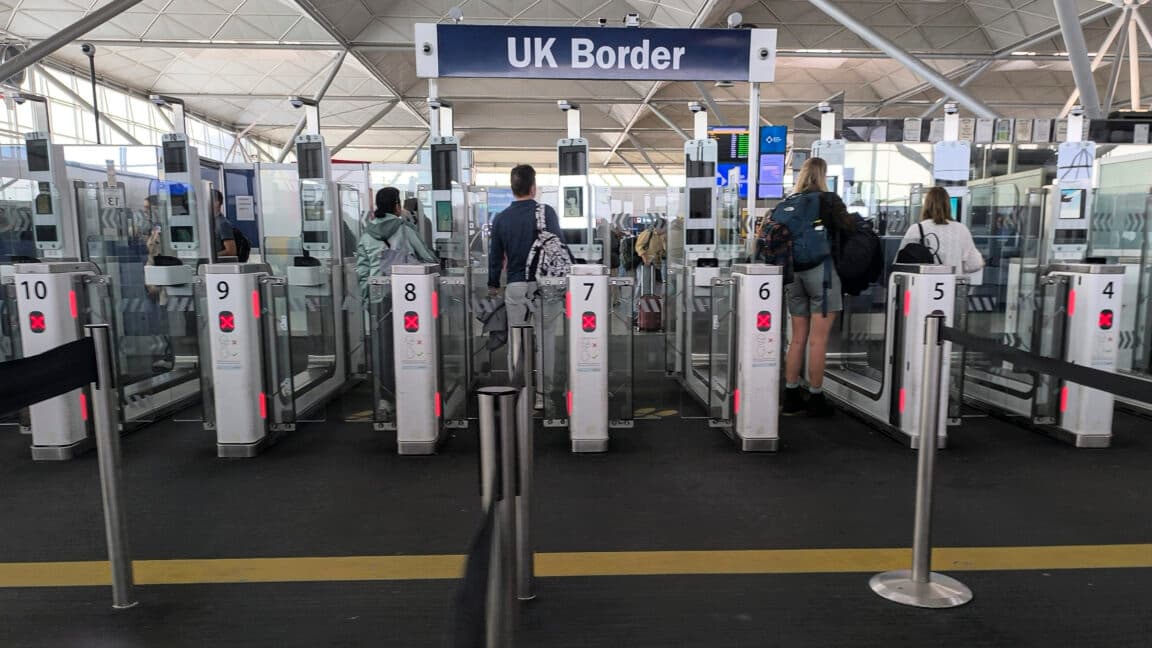
Starting next year, the British government is set to deploy facial age estimation (FAE)—a form of AI that analyzes a person's face and attempts to predict their age—as part of its process for determining whether arriving migrants are adults or children. According to an investigation by WIRED and Lighthouse Reports, conducted in collaboration with The Independent, the government's own internal testing reveals the technology is significantly flawed. Yet plans to deploy it are moving forward regardless.
What Is Facial Age Estimation and How Does It Work?
Facial age estimation is a branch of computer vision and artificial intelligence that attempts to predict a person's biological age from a photograph or video scan of their face. The system analyzes facial features—skin texture, bone structure, wrinkle patterns, and other visual markers—and compares them against training datasets to generate an age estimate or range.
Unlike facial recognition, which seeks to identify a specific individual, FAE does not match a face to a known identity. Instead, it produces a probabilistic guess about how old someone appears to be. While the technology has been applied in commercial settings—such as verifying a customer's age at a self-checkout kiosk when purchasing alcohol—its use in government immigration processing would represent a fundamentally new and far more consequential application.
This would reportedly be the first time any government has used facial age estimation to help determine the legal classification of asylum seekers. That distinction matters enormously, because the consequences of getting it wrong are severe.
Why Age Classification Matters for Asylum Seekers
Many asylum seekers who arrive in the UK do not carry documents that prove their age. This is not unusual—people fleeing conflict, persecution, or extreme poverty often do so with little or no paperwork. When documentation is absent, authorities must use other methods to determine whether an individual is a child or an adult, because that classification carries major legal implications.
Children are entitled to a range of protections under UK and international law. They cannot lawfully be held in adult-only immigration detention centers, they are entitled to specialized support and safeguarding, and they qualify for different legal processes than adult asylum claimants. If a child is incorrectly classified as an adult, they can be stripped of these protections, placed in environments that may be dangerous or inappropriate, and denied legal rights they are entitled to.
The stakes, in other words, could not be higher. An error made by an AI system does not just inconvenience someone—it can fundamentally alter the trajectory of a vulnerable young person's life.
What the Internal Government Report Found
The investigation obtained an internal UK government report that details the results of testing conducted on facial age estimation technologies being considered for deployment. The findings are troubling. According to the report, FAE systems regularly misclassify children as adults—exactly the error that poses the greatest risk to vulnerable minors in the asylum process.
Perhaps more concerning still, the report reveals apparent bias problems embedded within the technology. Bias in AI age estimation systems typically arises from imbalanced training data—if the datasets used to train these models are not sufficiently representative of diverse ethnicities, skin tones, and facial structures, the system will perform less accurately for underrepresented groups. This is a well-documented problem across numerous AI applications, and it appears to affect FAE in a way that has direct, real-world consequences.
The investigation notes that these bias issues appear to disproportionately impact the largest group of migrants subject to age assessments in 2025, according to data from the Home Office. This means the people most likely to be affected by errors are those who are already among the most marginalized and least able to challenge incorrect determinations.
A Pattern Across Global Age Verification Policy
The UK's use of FAE for asylum seekers sits within a broader global trend toward AI-powered age verification. Governments and regulators around the world are under pressure to enforce age-based restrictions online—particularly around social media use for minors and access to adult content. Facial age estimation has emerged as one of the leading proposed solutions, precisely because it does not require users to submit identity documents.
However, civil liberties advocates, digital rights organizations, and technologists have consistently raised alarms about deploying this technology at scale. Concerns include accuracy limitations, racial and demographic bias, privacy implications, and the risk of normalizing biometric surveillance in everyday life. The UK asylum case illustrates exactly why those concerns are legitimate—when FAE moves from gating access to a website into determining a person's legal status and physical safety, the margin for error shrinks to near zero.
Questions of Ethics, Accountability, and Oversight
The investigation raises pointed questions about the decision to proceed with FAE deployment in the face of the government's own evidence that the technology is unreliable. Critics argue that using a known-flawed system in a context where errors cause serious harm to children is not only irresponsible but potentially unlawful under existing human rights frameworks.
Key questions remain unanswered. Will FAE be used as a determinative tool or only as one signal among many? What appeal or review mechanisms will exist for individuals who are misclassified? How will the government address the bias findings identified in its own testing? And who bears accountability when a child is wrongly detained as an adult as a result of an AI prediction?
The Broader Lesson: High-Stakes AI Demands a Higher Standard
Artificial intelligence can be a powerful tool when applied thoughtfully and in appropriate contexts. But the UK's facial age estimation plan is a reminder that technology readiness and deployment readiness are not the same thing. A system that regularly mistakes children for adults and shows signs of demographic bias has not cleared the bar required for use in life-altering government decisions—regardless of how pressing the policy need feels.
As AI age verification continues to expand across both digital and physical domains, the asylum seeker case should serve as a critical reference point for policymakers, technologists, and advocates alike. The question is not simply whether AI can do something, but whether it should—and what safeguards must be in place before it ever does.