
The UK Is About to Use AI to Guess Asylum Seekers' Ages—And the Tech Is Already Failing
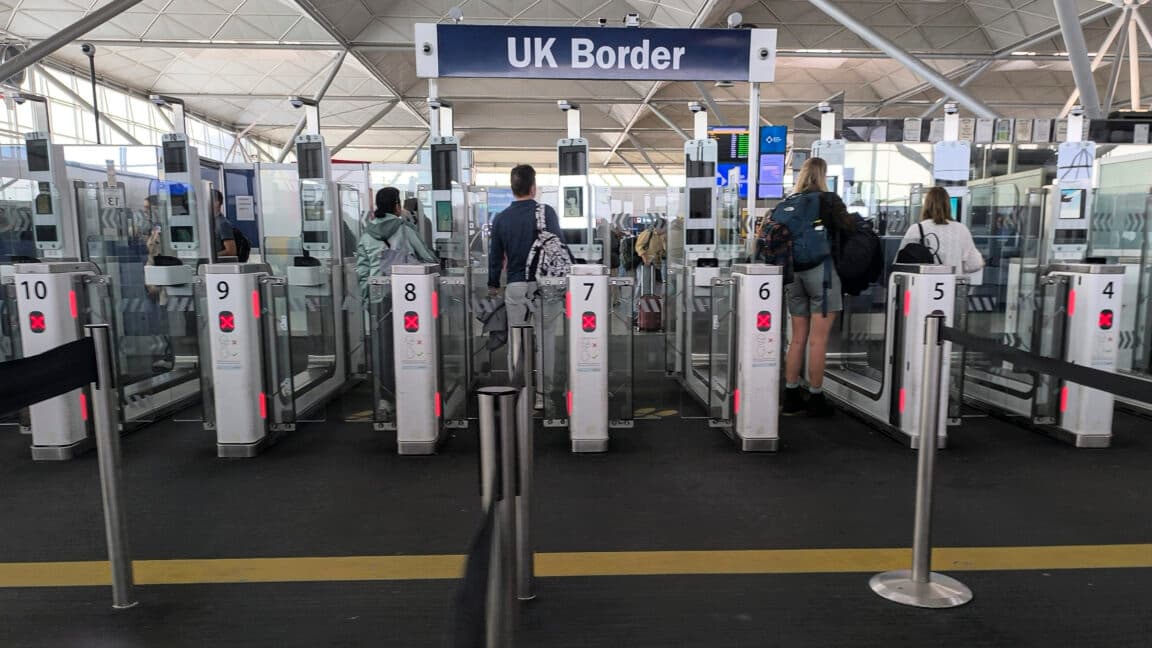
Artificial intelligence is increasingly being deployed to make decisions that were once left entirely to human judgment. From hiring algorithms to medical diagnostics, the promise of faster and more objective processing is hard to resist—especially for governments under pressure to manage complex, resource-intensive processes. But a new plan from the British government is pushing this trend into deeply troubling territory, introducing facial age estimation (FAE) technology to help determine how old asylum seekers are when they arrive at the UK border.
What makes this development particularly alarming is not just what the technology does, but what the government already knows about how it performs. An internal report obtained by WIRED and Lighthouse Reports, in collaboration with The Independent, reveals that the systems being considered regularly misclassify children as adults and show significant bias against the very demographic groups most likely to be assessed. Despite this knowledge, the rollout is reportedly still on track to begin next year.
What Is Facial Age Estimation and How Does It Work?
Facial age estimation is a subset of AI-powered facial analysis technology. Rather than identifying who someone is, as traditional facial recognition does, FAE systems analyze physical characteristics of a person's face—things like skin texture, bone structure, and proportions—and use machine learning models to predict their approximate age.
This technology has already found widespread commercial use. Online platforms and adult content websites in numerous US states, as well as social media services responding to new legislation in Australia, have begun using age verification tools that rely partly on FAE. For most users in those contexts, an incorrect guess means a momentary inconvenience—perhaps being asked to verify their identity through an additional step.
In the context of asylum seekers arriving at the UK border, however, the stakes are incomparably higher.
Why Age Classification Matters So Much at the UK Border
Many asylum seekers who arrive in the United Kingdom do not carry documentation. Passports, birth certificates, and identity cards are often lost, destroyed, or simply never possessed. When age cannot be confirmed through documents, authorities must find another way to classify individuals—because the legal consequences of that classification are significant and immediate.
Under UK law, children are entitled to a range of protections that adults are not. Unaccompanied minors are supposed to be placed in the care of local authorities, provided with appropriate support, and shielded from adult detention environments. If a child is incorrectly assessed as an adult, those protections disappear. They can be placed in adult-only detention centers, denied appropriate social care, and processed through a legal framework that was never designed for someone their age.
This is not a hypothetical concern. Misclassification of young asylum seekers has been documented in the UK for years, and the consequences for those individuals can be severe and lasting. Introducing an AI system that compounds the problem with known bias issues raises urgent ethical and legal questions.
What the Internal Government Report Actually Found
The obtained report is damning in its detail. According to the investigation, tests of FAE systems showed that the technology regularly mistakes children for adults. This alone would be enough to warrant serious caution before deployment. But the report goes further, indicating that the systems appear to contain meaningful bias problems—specifically affecting the demographic groups most frequently subject to age assessments at the UK border in 2025, according to data from the Home Office.
Bias in AI facial analysis systems is a well-documented problem across the industry. Studies have repeatedly shown that models trained predominantly on certain demographic groups perform less accurately when applied to others. Darker skin tones, in particular, have historically been associated with higher error rates in facial analysis tools. Given that the largest groups of asylum seekers arriving in the UK come from countries including Afghanistan, Eritrea, Iran, and Sudan, the potential for disproportionate misclassification is not a theoretical risk—it is a predictable outcome based on existing evidence about how these systems perform.
The Broader Age Verification Wave—and Why Offline Use Is Different
The UK's plan does not exist in isolation. Age verification has become one of the defining digital policy battles of the mid-2020s. Legislators in dozens of jurisdictions are scrambling to limit children's access to social media, pornography, gambling, and other online content, and facial age estimation has emerged as one of the tools being proposed or adopted to enforce those restrictions.
But there is a critical difference between using FAE to gate access to a website and using it to determine the legal status of a vulnerable person crossing a border. When an algorithm decides you cannot watch a video without additional verification, you can appeal, log off, or use a different device. When an algorithm decides you are an adult rather than a child seeking asylum, the consequences can include detention, denial of care, and potentially years of disruption to a young person's life and future.
Accountability, Transparency, and the Question of Deployment
The investigation raises two interconnected questions that the British government has not yet adequately answered. The first is whether facial age estimation technology, in its current state of development, is accurate and fair enough to be used in high-stakes immigration decisions at all. Based on the internal report's own findings, there are strong reasons to doubt it is.
The second question is about transparency and oversight. If a government proceeds with deploying a technology it knows to be flawed and biased, what mechanisms exist to catch and correct the errors it produces? Who is accountable when a child is misclassified and detained alongside adults? And who has the power to challenge a determination made partly by an algorithm?
What Comes Next
Civil liberties groups, immigration lawyers, and child welfare organizations are likely to mount significant opposition to the rollout as it approaches. The legal framework around algorithmic decision-making in immigration contexts is still developing in the UK and across Europe, and this case could become a landmark test of how far governments can go in delegating consequential human decisions to AI systems.
For now, the story of the UK's facial age estimation plans serves as a sharp reminder that the speed at which governments adopt new technology does not always match the pace at which that technology becomes reliable or equitable. When the people on the receiving end of these systems are among the most vulnerable in society—children fleeing conflict and persecution—getting it wrong is not simply a technical failure. It is a moral one.