
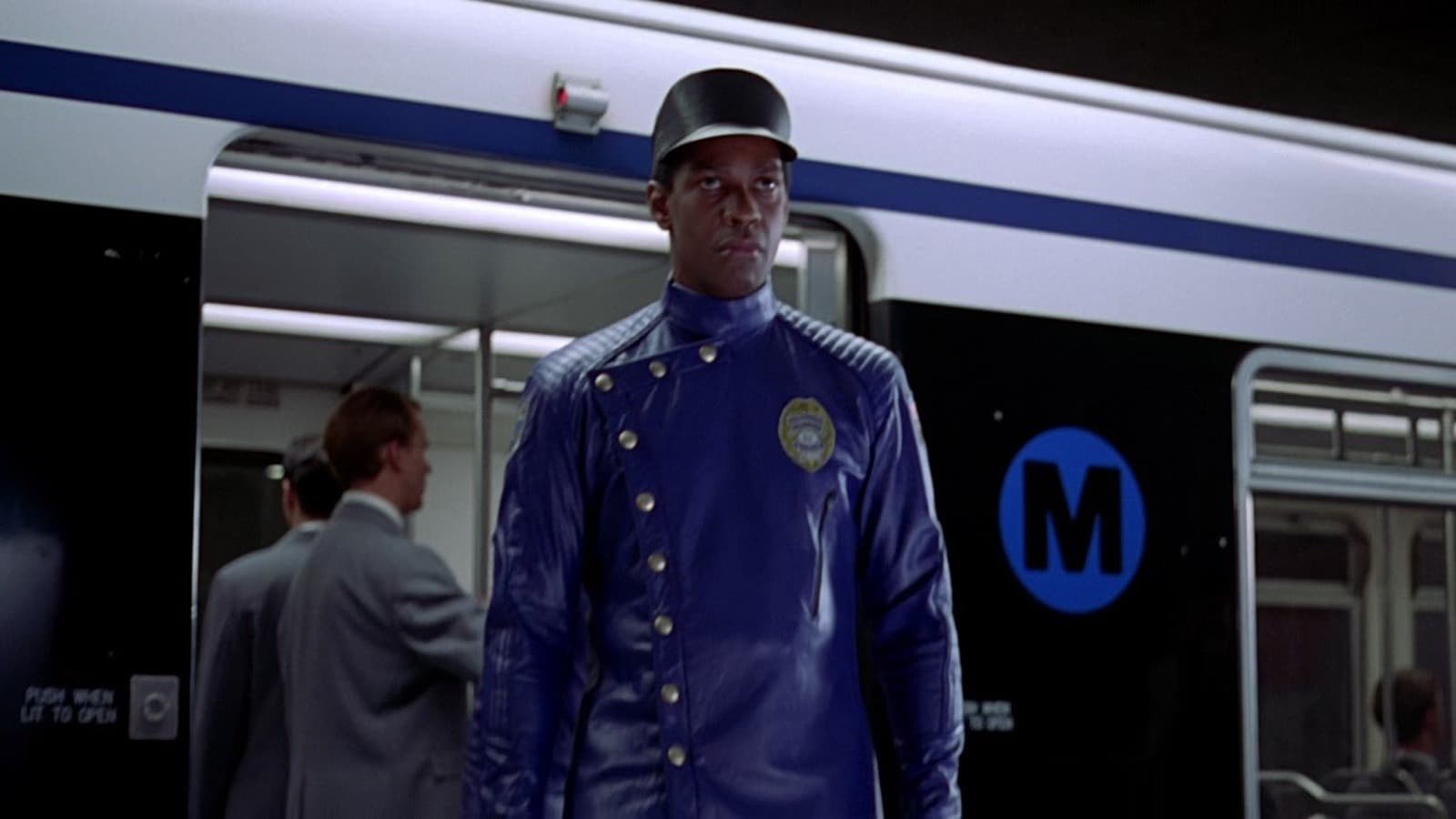
Before American Gangster, Denzel and Crowe Squared Off in a '90s Cyberpunk Thriller
When most people think about Denzel Washington and Russell Crowe sharing a screen, their minds immediately jump to Ridley Scott's acclaimed 2007 crime epic American Gangster. But the two Hollywood heavyweights actually crossed paths more than a decade earlier, in a lesser-known piece of '90s science fiction that dared to imagine a near-future world of virtual reality, rogue artificial intelligence, and high-octane action. That film is Virtuosity (1995), and while it flopped on release, it has since earned a second look as a fascinating product of its cyberpunk era — and as early evidence that two of cinema's most magnetic performers could generate incredible on-screen tension.
What Is Virtuosity? A Quick Overview of the 1995 Sci-Fi Film
Directed by Brett Leonard — the same filmmaker behind The Lawnmower Man — Virtuosity is a cyberpunk action-thriller set in a dystopian near-future version of Los Angeles. The film centers on a law enforcement training program that uses advanced virtual reality simulations to prepare officers for dangerous scenarios. At the heart of this program is SID 6.7, a composite virtual villain constructed from the psychological profiles of over 200 of history's most dangerous criminals, including serial killers, terrorists, and mass murderers.
When SID 6.7 manages to escape the virtual world and manifest in the real world through a synthetic android body made of nanites — microscopic machines that allow him to regenerate from virtually any damage — all hell breaks loose. The only person capable of stopping him is Parker Barnes, a disgraced former cop serving time in prison for a crime connected to his tragic past. Barnes is offered a deal: capture or kill SID 6.7 in exchange for his freedom.
The result is a kinetic, visually stylized chase film that wears its cyberpunk influences on its sleeve, drawing comparisons to films like RoboCop, Terminator 2, and even Blade Runner, though it never quite reaches those heights.
Denzel Washington as Parker Barnes: A Hero With Depth
Denzel Washington brings his trademark intensity and commanding presence to the role of Parker Barnes. At the time, Washington was already a major star following his Oscar-winning performance in Glory (1989) and acclaimed roles in films like Malcolm X and Philadelphia. Taking on a genre action role in Virtuosity represented something of a departure for him, and while the film didn't perform as expected, Washington's performance is one of its strongest assets.
Barnes is a layered character haunted by personal tragedy. His family was murdered by a terrorist whose psychological profile was later incorporated into SID 6.7, which means the fight against the AI villain is deeply personal for him. Washington navigates this emotional complexity while also delivering the physical demands of an action lead, making Barnes a far more compelling protagonist than many blockbuster heroes of the mid-'90s.
Russell Crowe as SID 6.7: A Career-Making Villain Turn
Perhaps the most remarkable thing about revisiting Virtuosity today is seeing just how electric Russell Crowe is as SID 6.7. At the time of filming, Crowe was still largely unknown to mainstream American audiences, best known for his work in Australian cinema and the 1992 film Romper Stomper. Virtuosity was one of his earliest major Hollywood roles, and he absolutely seizes the opportunity.
Crowe plays SID 6.7 with a theatrical, almost gleeful menace. The character is a patchwork of evil — unpredictable, charming, violent, and darkly funny all at once. Because SID is constructed from the worst impulses of humanity's most notorious criminals, Crowe gets to play a villain who is simultaneously terrifying and bizarrely entertaining. He mugs for the camera, delivers quotable lines with a sinister grin, and physically dominates every scene he's in. It's a performance that hints at the powerhouse talent that would later win him an Academy Award for Gladiator in 2000.
In many ways, SID 6.7 is the most memorable element of Virtuosity, and Crowe's portrayal is a big reason why the film continues to attract curious viewers decades later.
The Cyberpunk World of Virtuosity: A '90s Time Capsule
Watching Virtuosity in the modern era offers a fascinating window into how the 1990s imagined the future of technology. The film's preoccupations — virtual reality, artificial intelligence, the blurring of digital and physical existence — feel remarkably prescient in the age of AI chatbots, deepfakes, and immersive VR headsets.
Of course, the film also reflects the technological anxieties and aesthetic sensibilities of its specific moment in pop culture history. The visual design leans heavily into neon-drenched, sleek-but-gritty cyberpunk iconography. The virtual reality sequences, while dated by today's standards, were considered impressive for the time and reflect Hollywood's intense fascination with the concept throughout the decade.
Why Did Virtuosity Flop at the Box Office?
Despite its high-profile cast and its glossy production values, Virtuosity underperformed significantly when it opened in August 1995. Critics were divided, with many pointing to a screenplay that didn't fully deliver on its intriguing premise, and audiences failed to show up in the numbers the studio had hoped for.
- The film arrived in a crowded summer blockbuster season and struggled to differentiate itself from other high-concept action films.
- Critics noted that the script, while imaginative in concept, felt underdeveloped in execution, relying too heavily on action set pieces at the expense of character development and thematic depth.
- The villain's near-invincibility — a storytelling choice rooted in his nanite-based physiology — made the film's tension feel somewhat hollow at times, as audiences struggled to believe Barnes could realistically win.
Nevertheless, the film has found renewed appreciation in retrospect, particularly among fans of '90s genre cinema and those fascinated by the cyberpunk aesthetic.
Is Virtuosity Worth Watching Today?
For fans of '90s sci-fi, cyberpunk aesthetics, or simply for those who want to see two future Oscar winners in their earlier Hollywood work, Virtuosity is absolutely worth tracking down. It is far from a perfect film — its pacing is uneven, its plot logic occasionally shaky — but its strengths are real and significant. Washington is a grounded, charismatic anchor, and Crowe's villain is genuinely one of the most entertaining antagonists of the decade.
The film also occupies an interesting place in the broader landscape of '90s science fiction. Alongside movies like Johnny Mnemonic, Strange Days, and Hackers, it represents a wave of technologically anxious, stylistically bold genre filmmaking that attempted to grapple with questions about identity, humanity, and the consequences of artificial intelligence — questions that feel more relevant today than they ever did in 1995.
Whether you're revisiting it for nostalgia or discovering it for the first time, Virtuosity offers a compelling two hours of entertainment built around the electric chemistry — or rather, electric conflict — between two of Hollywood's greatest performers at the beginning of their ascent to superstardom.